
Components from the laser powder bed: studies for industrial customers
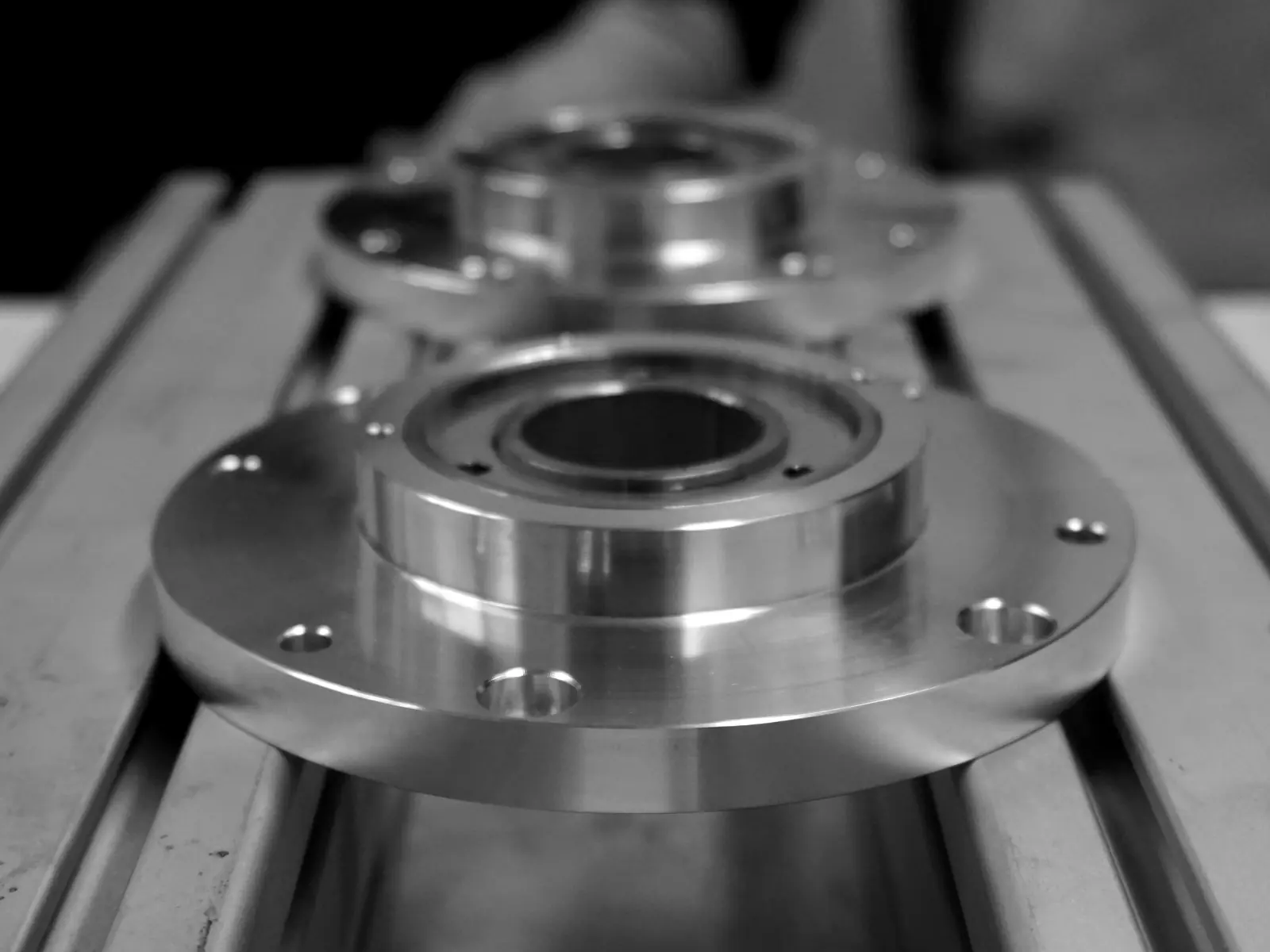
Geometry, material and strength tested
Project at a glance
| Project type: | Engineering |
|---|---|
| Process: | selective laser melting (SLM) in the powder bed |
| Clients: | Drive specialist and seal manufacturer |
| Our scope: | Short studies, component adaptation, material selection, tensile specimens |
| Requirement: | surface quality down to Rz 16 µm |
| Implemented by: | pyropower group |
From component to printable geometry
Starting point
Two industrial customers, a drive specialist and a seal manufacturer, wanted to know whether their components could be manufactured in the laser powder bed. This often requires geometry and material to be adapted, for example because of support structures, wall thicknesses or thermal distortion.
Implementation
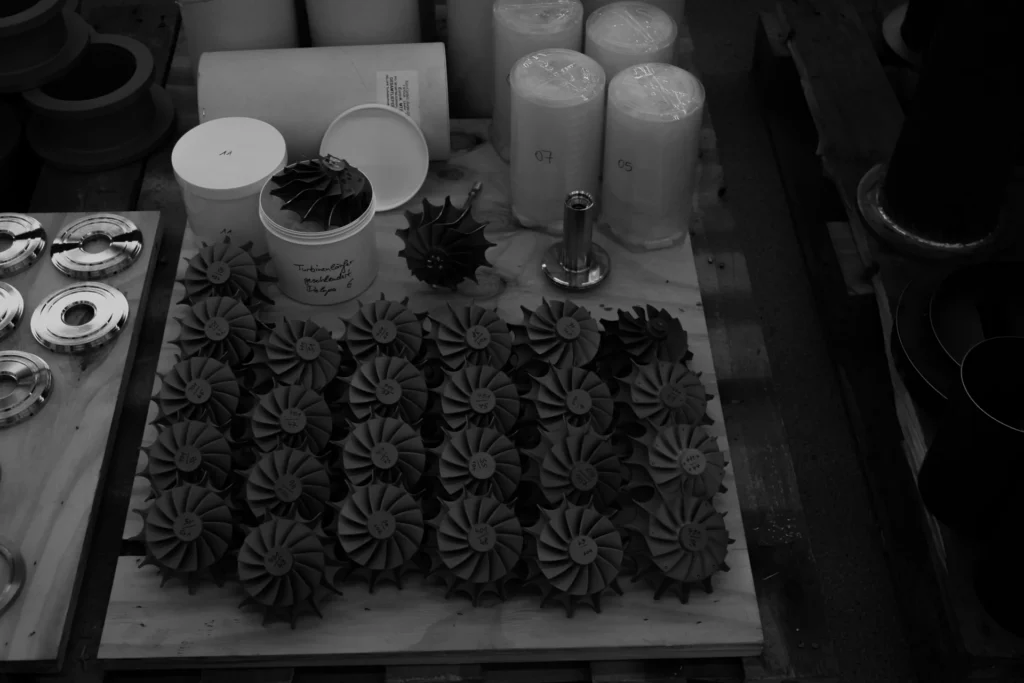
Short studies were carried out for this. The geometry of the components was adapted for printing, suitable materials were selected and strength was tested with tensile specimens. One of the customers required a surface quality of Rz 16 µm.
Result
Both customers received an assessment of whether and under what conditions their components can be manufactured additively.
Experience for the turbine
The knowledge from such studies fed into the work on additively manufactured components for gas turbines.
[ Knowledge ]
Laser powder bed fusion: process, support structures, surfaces
- Standard designation: PBF-LB/M according to ISO/ASTM 52900, also known as SLM
- Layer thickness: typically 20 to 60 µm
- Volumetric energy density: laser power divided by scan speed, hatch spacing and layer thickness
- Overhangs: flatter than about 45° to the build plate require support structures
In laser powder bed fusion, metal powder is applied in thin layers and melted by a laser along the component contour. Layer by layer, a dense component is created. The most important control variable is the volumetric energy density: if it is too low, lack-of-fusion defects remain between the layers; if it is too high, pores form from vaporising metal in what is known as keyhole mode.
Because each layer melts and solidifies quickly, residual stresses build up. They can distort the component or detach it from the build plate. Support structures dissipate heat and hold overhangs, but have to be removed later. The design is therefore adapted to the process, for example with self-supporting angles, adapted wall thicknesses and a favourable orientation in the build space.
Because of adhering powder particles and the layer structure, the surface of a printed component is considerably rougher than a milled one. Tight roughness requirements therefore usually call for post-processing. Strength can also depend on the build direction, which is why tensile specimens in different orientations are part of the assessment.
[ Technology ]
Engineering and concepts
From the pre-project phase through concept and economic viability to detailed engineering: we design energy plants for residues, process heat and heating networks.
[ References ]
Latest projects
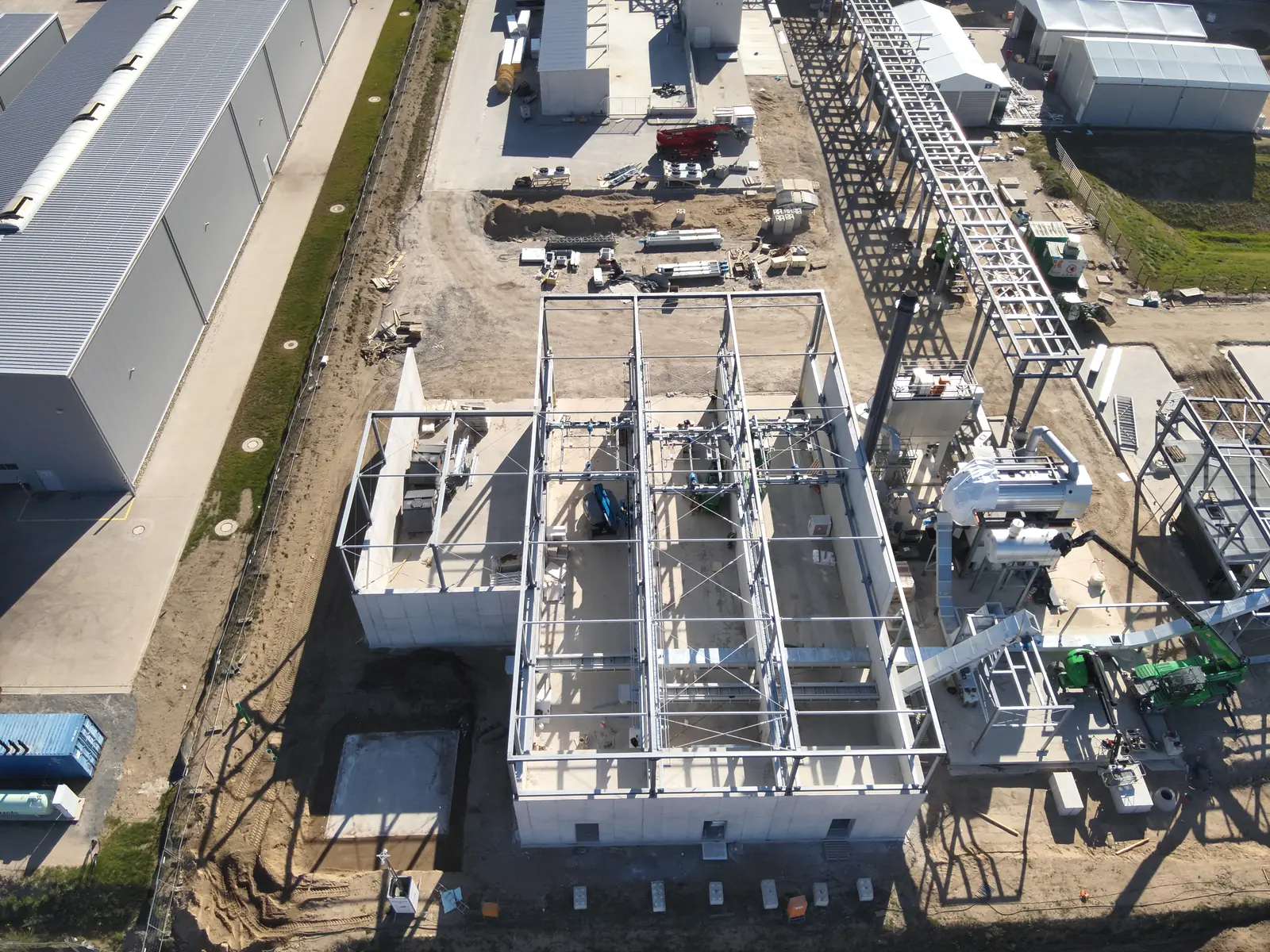
Biochar production at an industrial site in Mecklenburg-Western Pomerania
Three Pyro-ClinX 150 plants produce power, heat and biochar from industrial wood residues at an industrial site in Mecklenburg-Western Pomerania.

PyroPark Forst
PyroPark Forst is being developed in Lusatia as an integrated energy site that converts woody residues into electricity, usable heat, biochar and certified carbon removal.

ClinX Heat Power Generation from a Carbonization Plant in Darmstadt
ClinX Heat uses high-temperature energy from an existing carbonization plant to generate additional electricity on site.
 info@pyro-power.com
 +49 355 866 870 82
 pyropower GmbH