
Power, heat and biochar for the chemical industry
Three Pyro-ClinX 150 use residual wood from the immediate surroundings
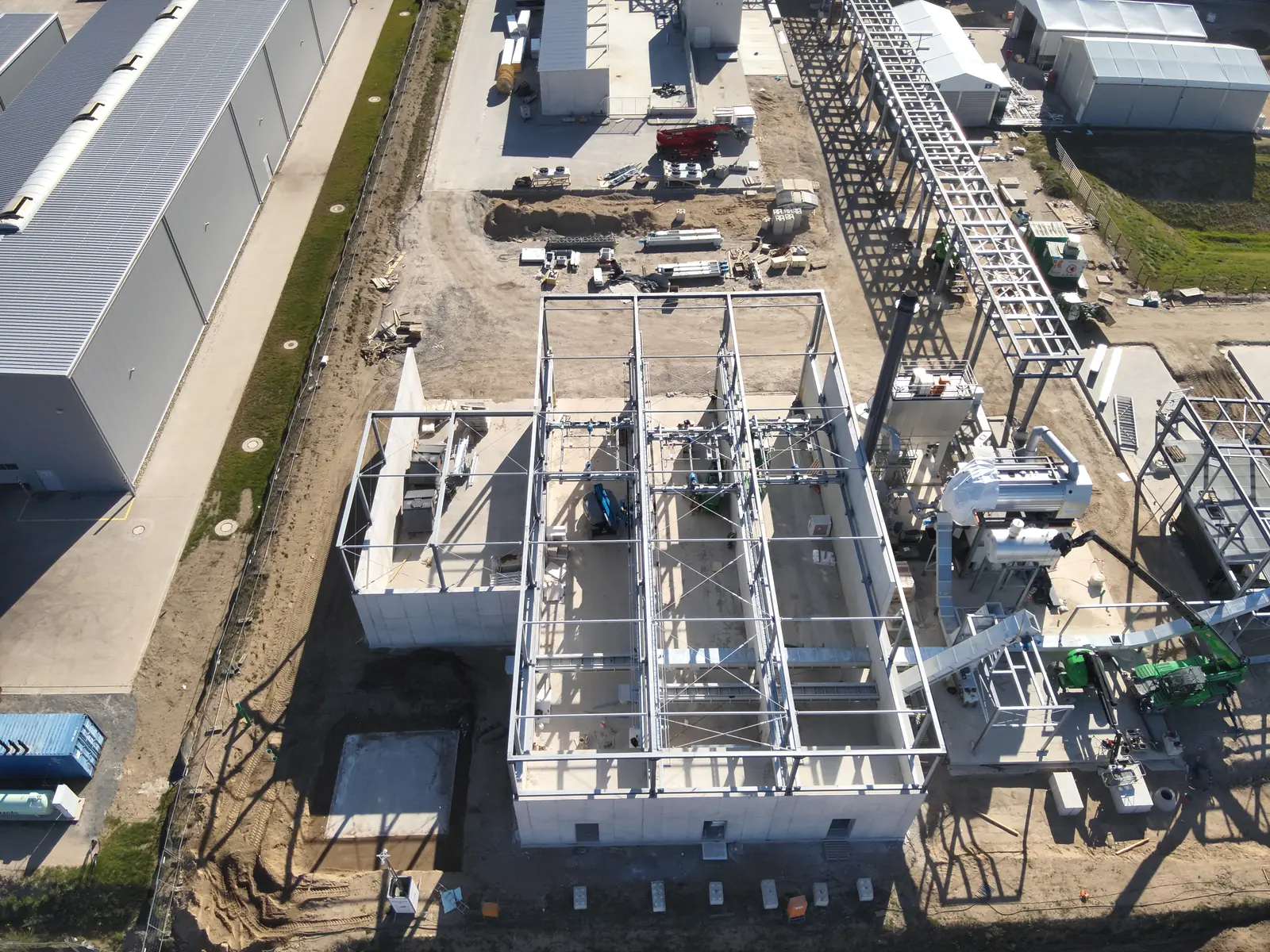
Project at a glance
| Project type: | Plant |
|---|---|
| Technology: | 3 × Pyro-ClinX 150 |
| Application: | Power and process heat |
| Client: | Company in the chemical industry |
| Location: | Mecklenburg-Western Pomerania |
| Fuel: | Residual wood from the immediate surroundings |
| Power: | 3 × 150 kW gross |
| Heat: | 3 × max. 450 kW |
| Biochar: | approx. 1,800 t per year |
| Products: | Power, heat, biochar and CO₂ certificates |
| Implemented by: | pyropower GmbH as specialist planner and general contractor |
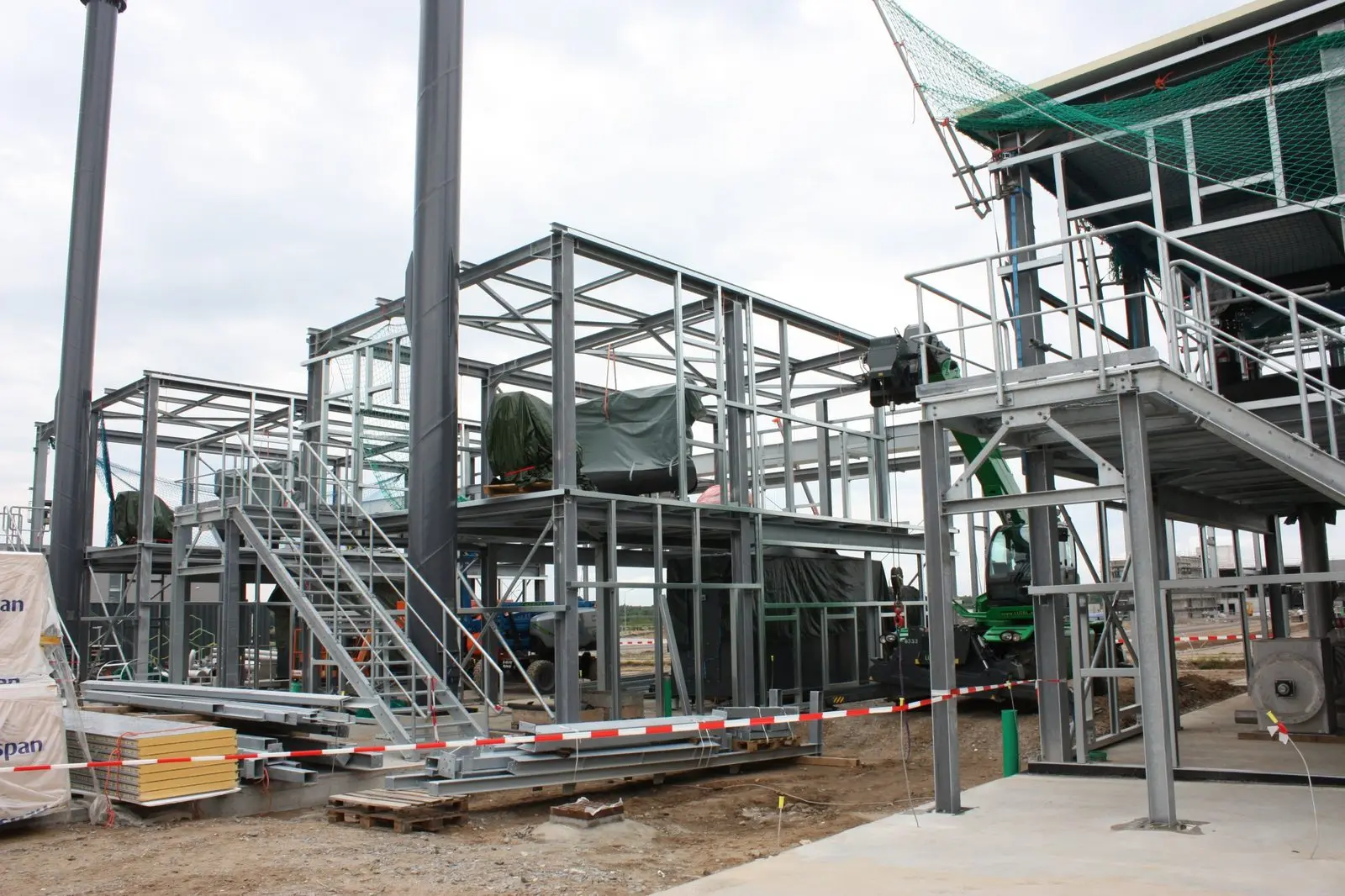
From residual wood to power, heat, biochar and CO₂ certificates
Starting point
The chemical industry is one of the most energy-intensive sectors. Many processes run around the clock and need heat at a constant level. A chemical industry site in Mecklenburg-Western Pomerania also needs a reliable supply of power and heat. Residual wood is available in the immediate surroundings. The aim was to use this wood on site: for its own power, for heat and for biochar as an additional product. This makes the site more independent of purchased energy.
Implementation
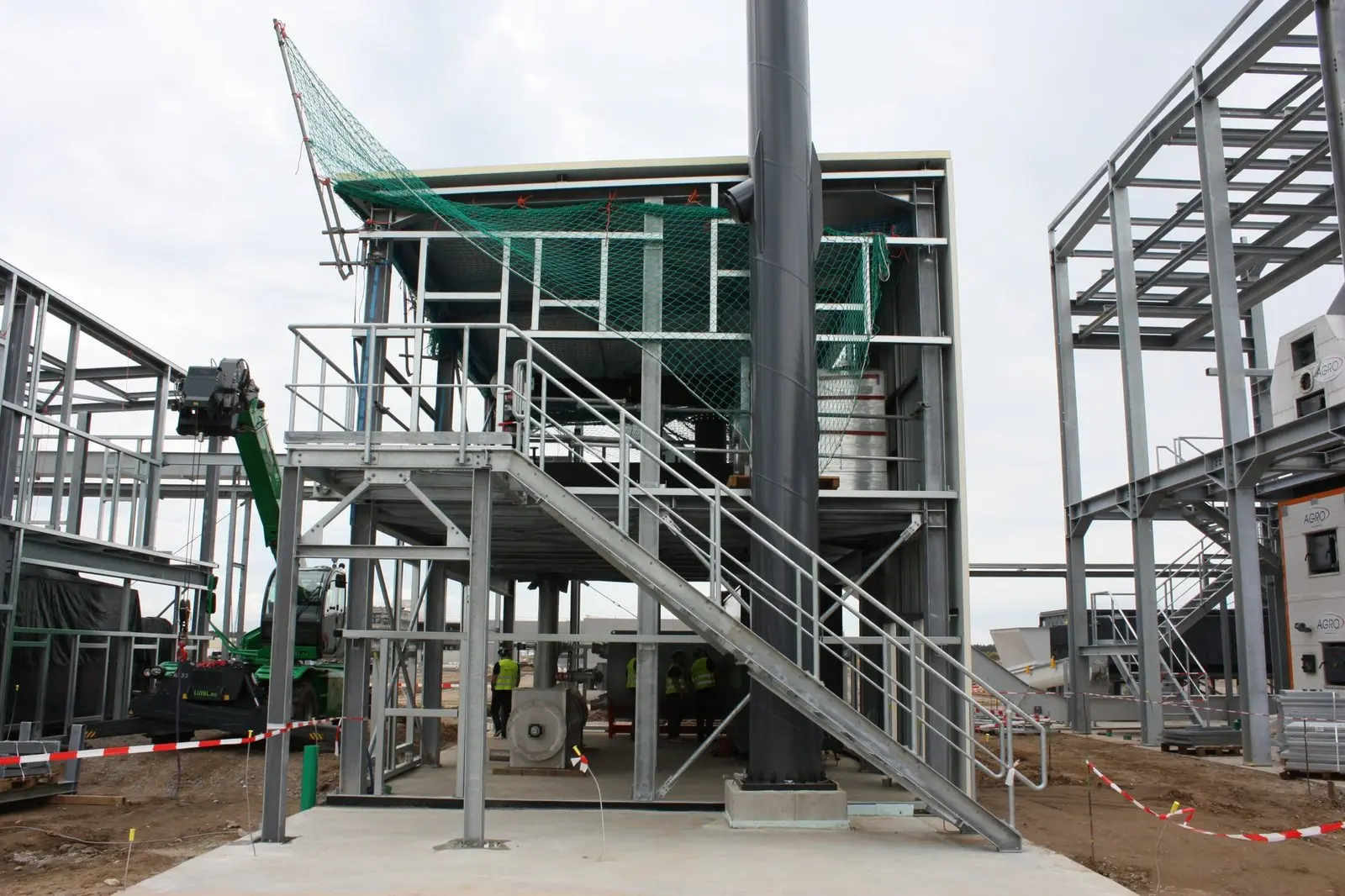
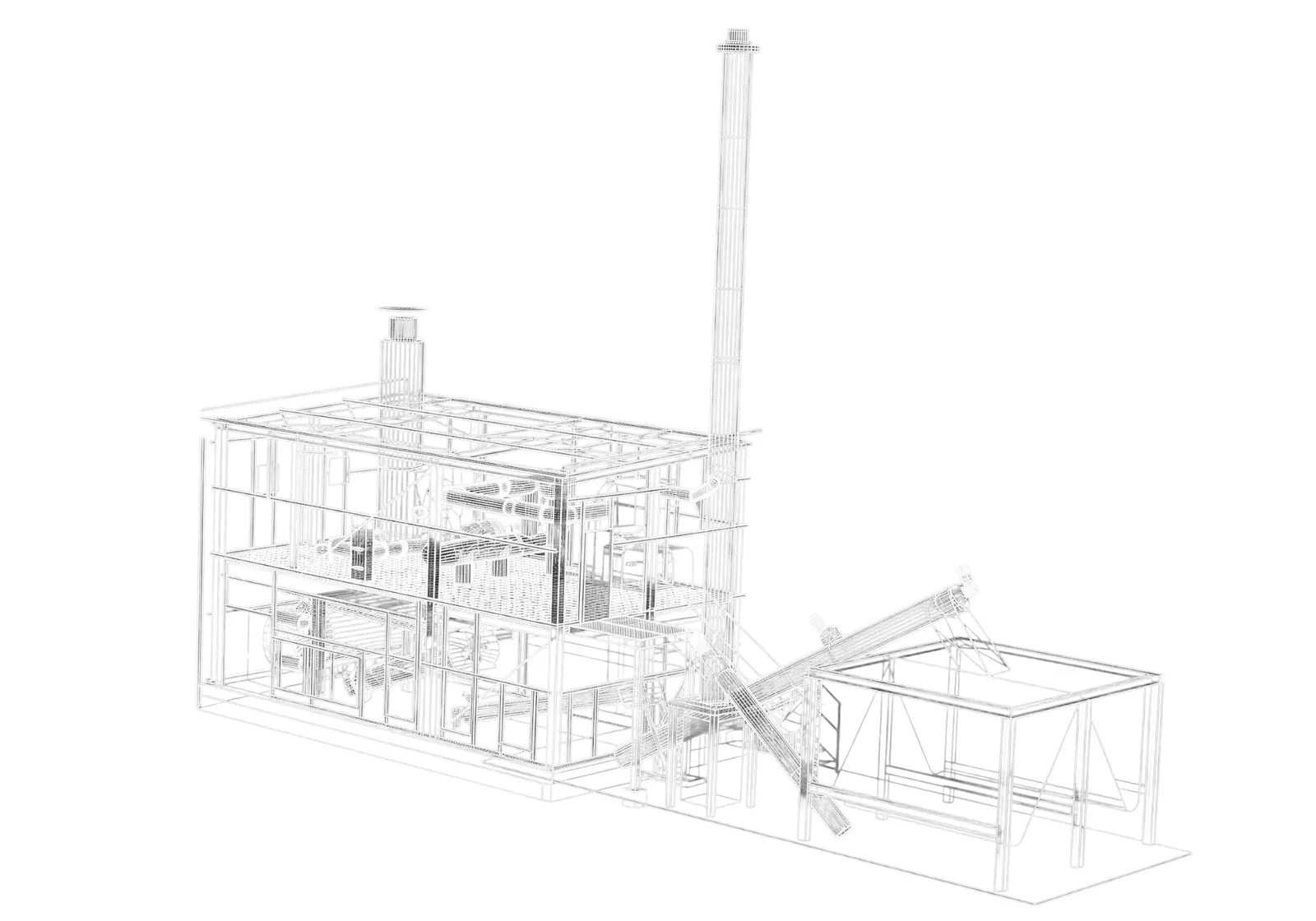
pyropower is the specialist planner and general contractor for the project, from the concept and detailed engineering to the construction of the three Pyro-ClinX 150. pyropower commissioned subcontractors for individual trades. Buildings and foundations for the plants were built on site, together with steel construction and conveyor technology. The conveyor technology feeds the residual wood into the three plants, where it is pyrolysed at 650 to 800 °C. The pyrolysis gas burns in the combustion chamber, and a high-temperature heat exchanger transfers the heat to the externally fired micro gas turbine. It generates power, and its waste heat is available as heat. What remains is the biochar.
Result
The three plants are designed for 3 × 150 kW power gross and 3 × max. 450 kW heat, at around 8,000 operating hours a year. In addition, there are around 1,800 tonnes of biochar a year. The carbon bound in it can be certified as a carbon sink, and the CO₂ certificates form a further source of revenue.
Suitable for sites with high power and heat demand
The solution fits wherever power and heat are needed around the clock, for example in the chemical industry and in other production businesses with a continuous demand for process heat. The fuel is residual wood from the region. Several Pyro-ClinX 150 can be combined into a cluster, as here with three plants at one site.
[ Setup ]
How the project is set up
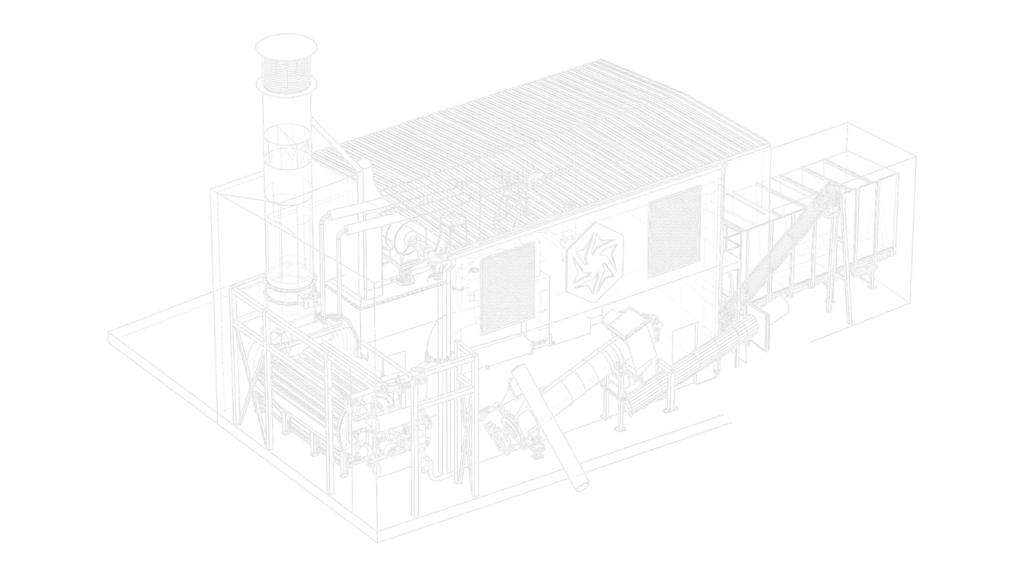
[ Construction site ]
A look at the construction site
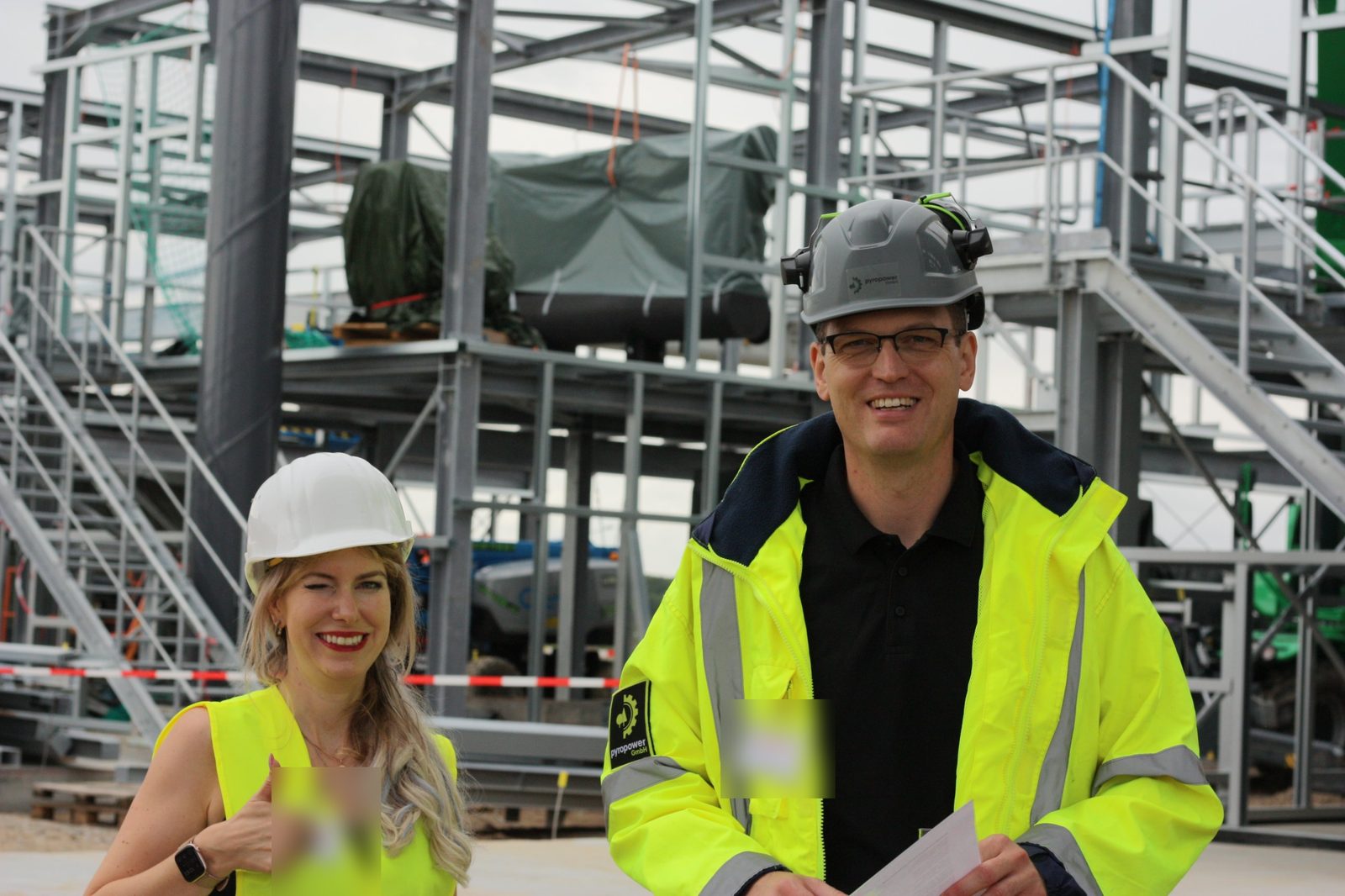
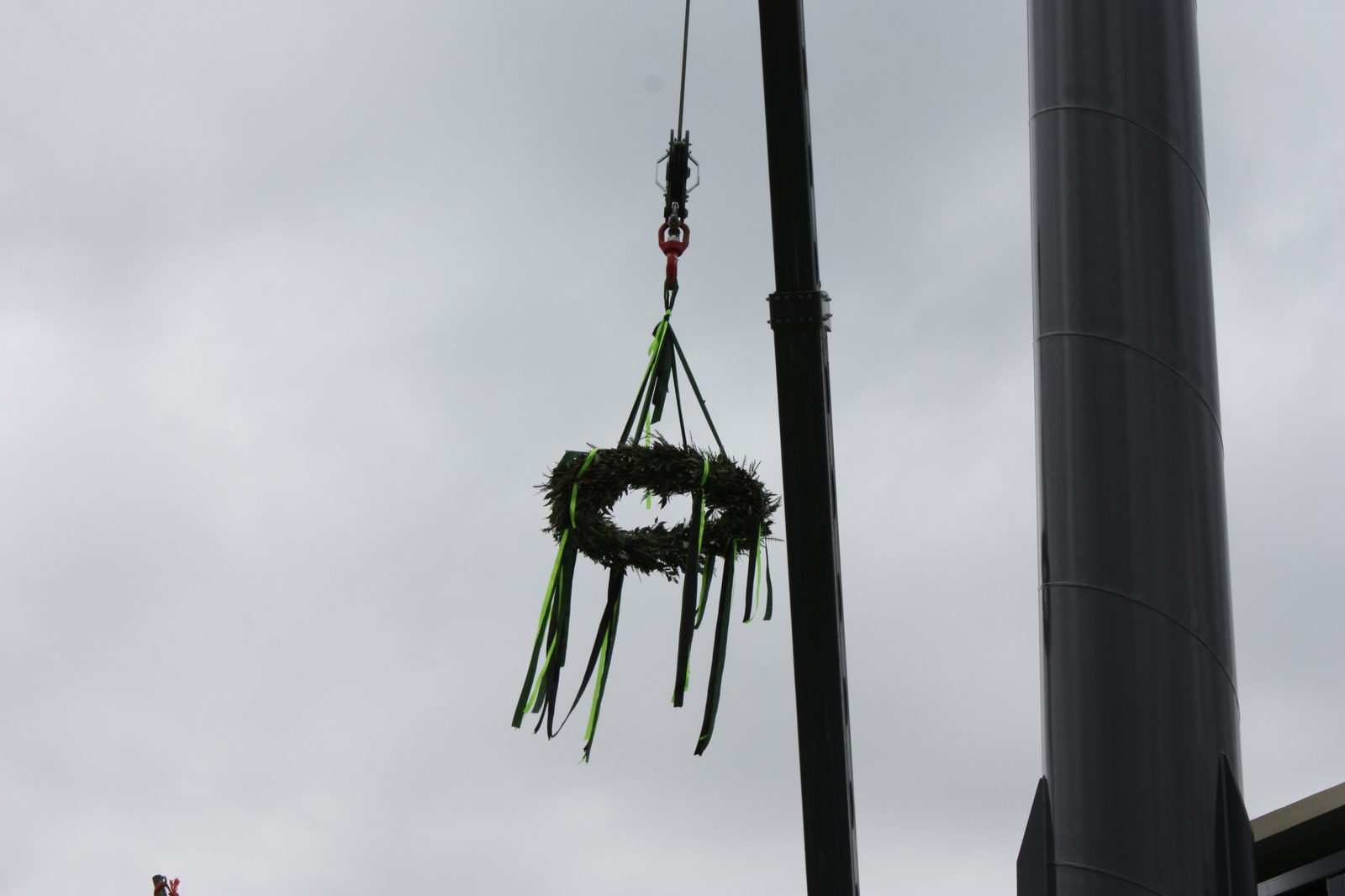
Three Pyro-ClinX 150 are being built on the site. The video shows the construction site with foundations, floor slabs and the steel construction for buildings and conveyor technology. You can read how things progressed and how the topping-out ceremony was celebrated in our article.
[ Impressions ]
The construction site in pictures
Three Pyro-ClinX 150 for power, heat and biochar at an industrial site in Mecklenburg-Western Pomerania.

[ Knowledge ]
Biochar as a certified carbon sink
- Feedstock: approved biomass, such as untreated residual wood
- Production: in line with the EBC standard, with documented process values
- Use: an application in which the biochar does not burn
During pyrolysis, a large part of the carbon from the wood remains bound in the biochar. If the biochar is used in such a way that it does not burn, for example in soil, in substrates or in building materials, this carbon remains stored in the long term.
This storage can be certified as a carbon sink, for example according to the guidelines of the European Biochar Certificate (EBC) or via Puro.earth. For this, the feedstock, production and use of the biochar are documented. The respective standard determines how much bound carbon is credited, minus the emissions from production and transport.
The certificates are sold on the voluntary carbon market. For operators of a Pyro-ClinX, this can create a fourth source of revenue alongside power, heat and biochar.
More about biochar ›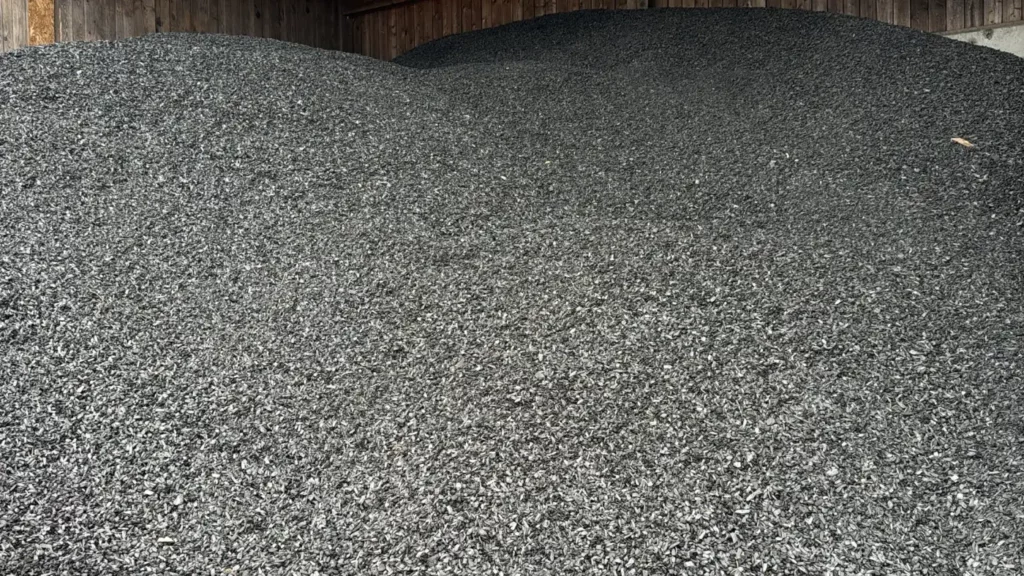 From the blogFrom sink to certificate: biochar as certified carbon removalRead more ›
[ Technology ]
Pyro-ClinX 150
Pyrolysis and an externally fired micro gas turbine in one plant: power, heat and biochar from wood chips.
150 kW power gross · max. 450 kW heat · 600 t biochar per year
[ References ]
Latest projects
Biochar production at an industrial site in Mecklenburg-Western Pomerania
Three Pyro-ClinX 150 plants produce power, heat and biochar from industrial wood residues at an industrial site in Mecklenburg-Western Pomerania.

PyroPark Forst
PyroPark Forst is being developed in Lusatia as an integrated energy site that converts woody residues into electricity, usable heat, biochar and certified carbon removal.

ClinX Heat Power Generation from a Carbonization Plant in Darmstadt
ClinX Heat uses high-temperature energy from an existing carbonization plant to generate additional electricity on site.
ClinX Heat project planning for a tyre pyrolysis plant in Greece
For a planned tyre pyrolysis plant in Greece, pyropower is planning five ClinX Heat 150 units that convert the pyrolysis gas into power and heat.
 info@pyro-power.com
 +49 355 866 870 82
 pyropower GmbH