
The best route for every residue.
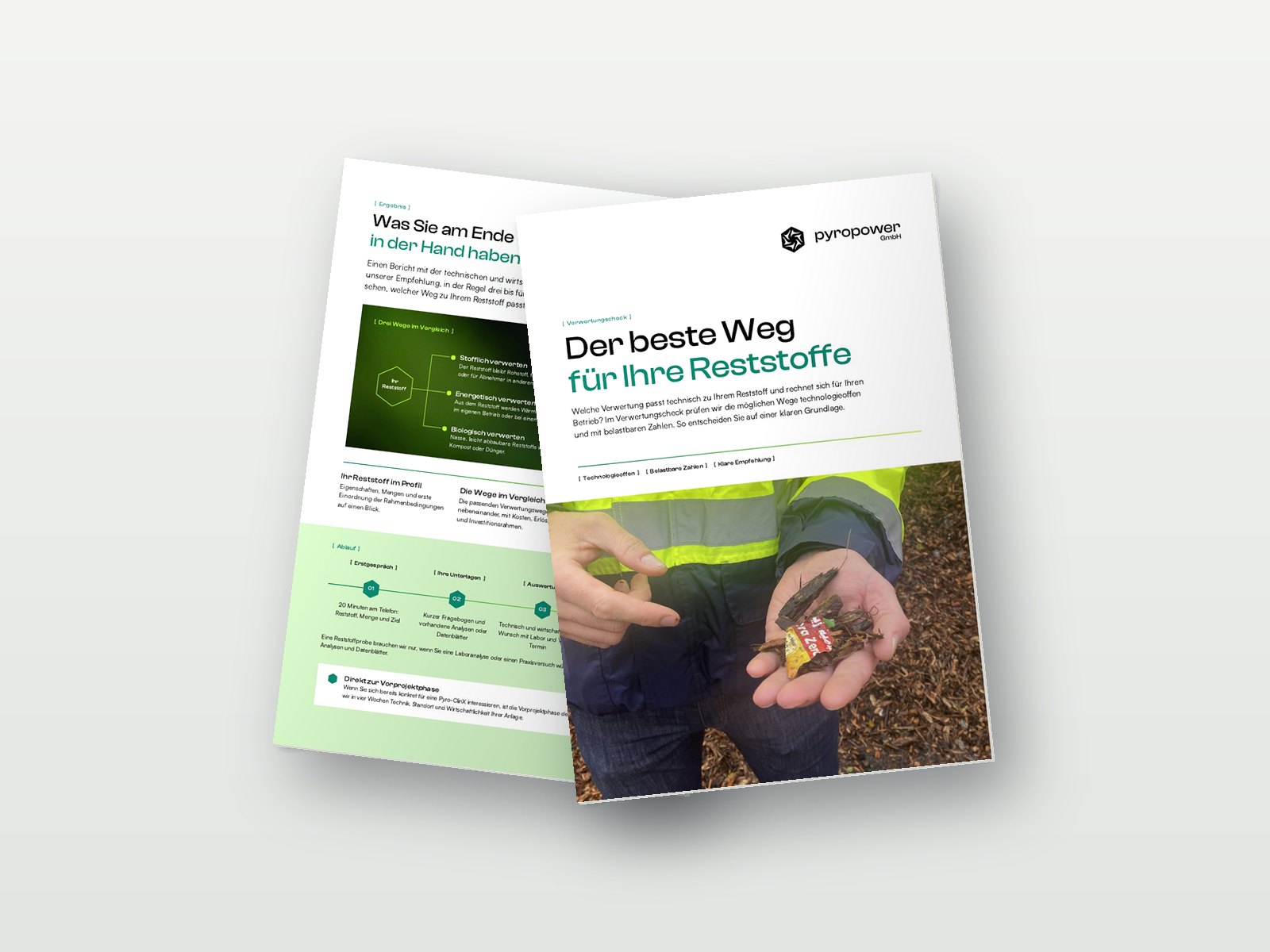
[ Utilization Check ]
Which utilization route fits the residue, technically and economically?
Starting point
One residue, many possible routes. Whether material, energy or biological recovery works best depends on its properties, the volume and the site.
Utilization routes
One residue, three routes
We assess every utilization route by the same standards: material, energy and biological. The result is a recommendation for the route that suits your residue.
That can also be a better deal with a buyer. You carry out the implementation with the partner, buyer or technology of your choice.
Technology-neutral
The utilization routes we compare
01 Material recovery
The residue stays a raw material, for your own production or for buyers in other industries. For example, processing by drying, screening or pelletizing, or sale to companies that process the material further.
02 Energy recovery
The residue becomes heat, electricity or fuel, on your own site or at a buyer’s. Combustion, gasification, pyrolysis and other thermal processes, in your own plant or at heating and power plants.
03 Biological treatment
Wet, readily degradable residues become biogas, compost or fertilizer. Anaerobic digestion and composting, in your own plant or at biogas and composting facilities.
Who it is for
Typical residues and questions
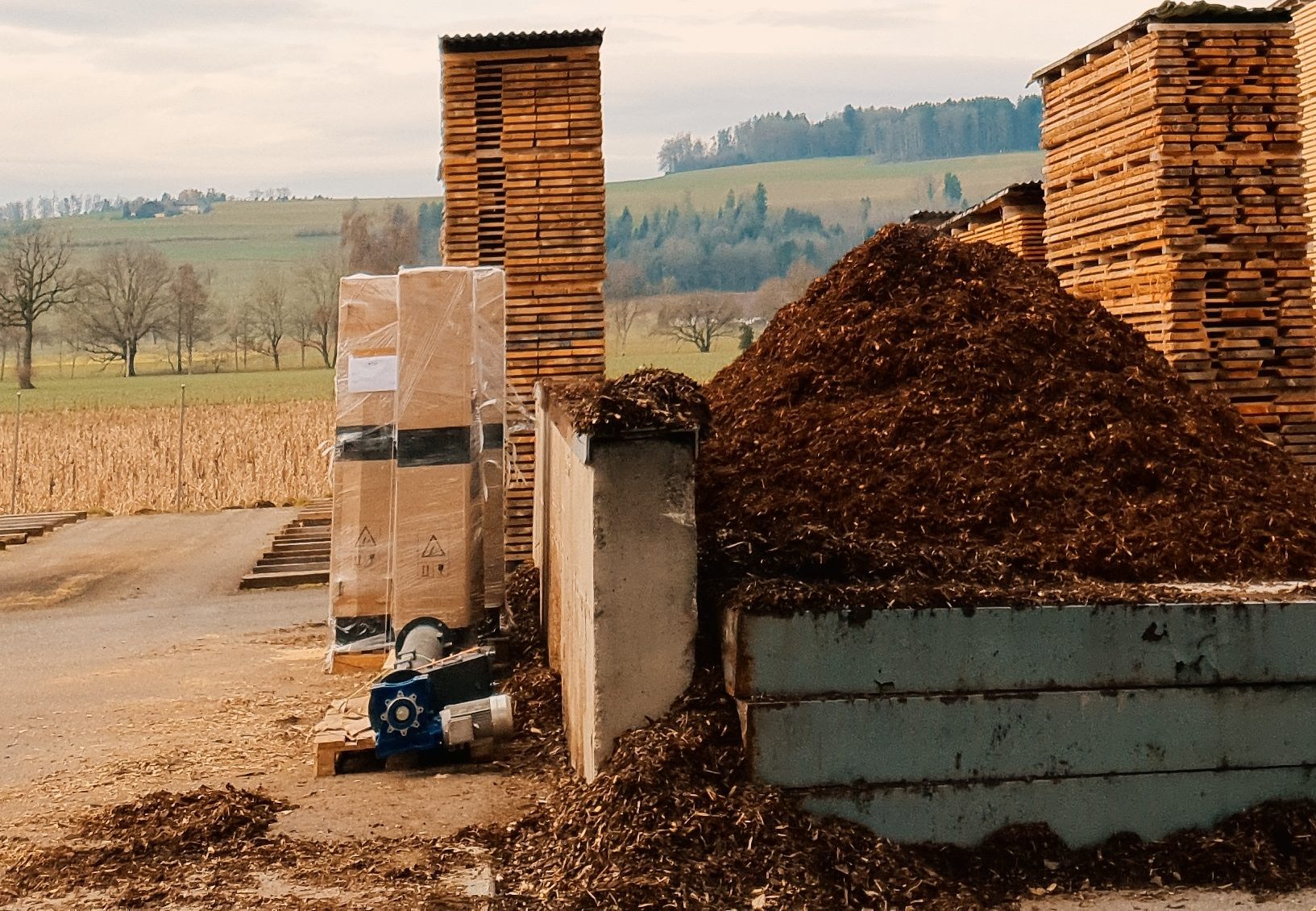
Wood industry and sawmills
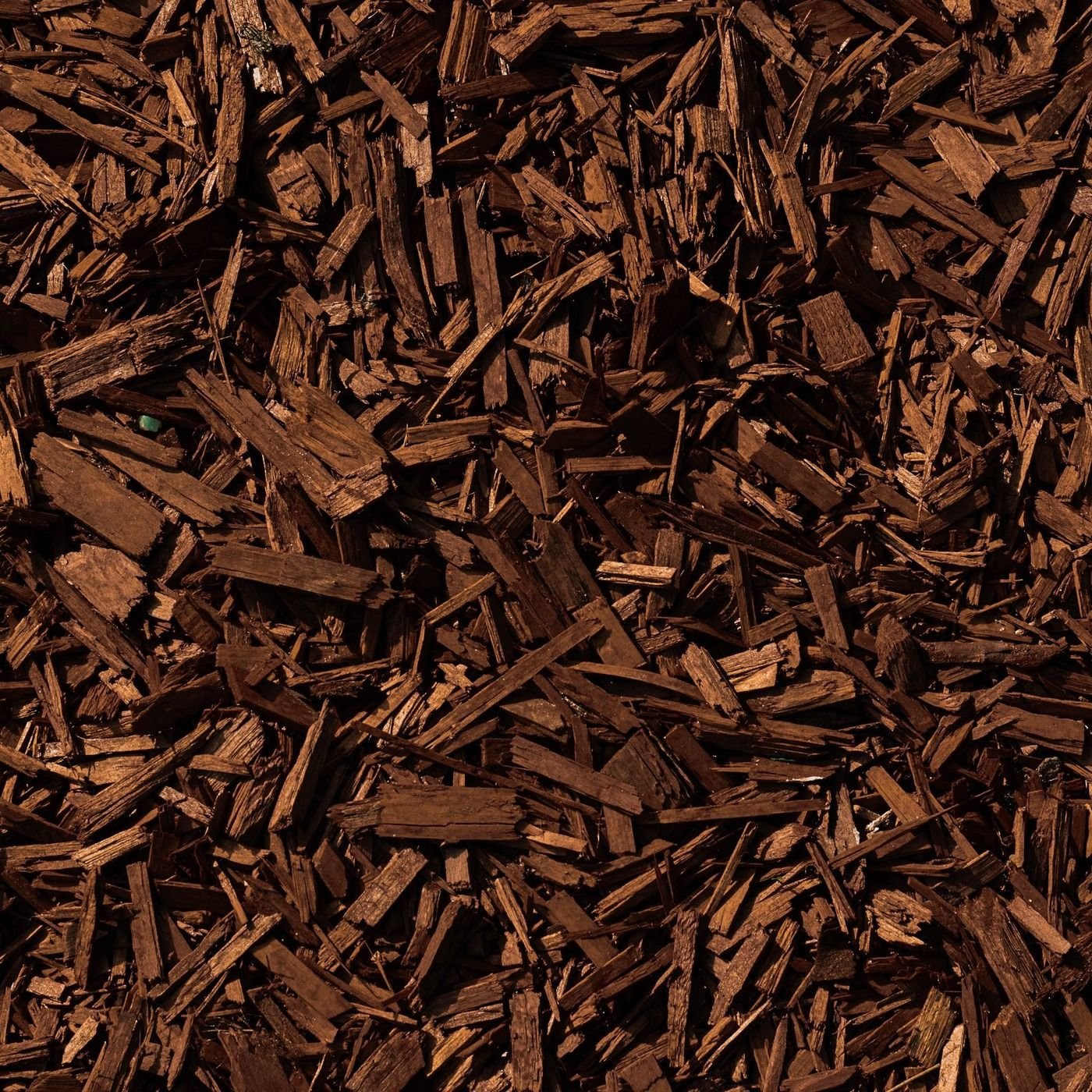
Shavings, wood chips, bark and coated panel offcuts. Coated offcuts are not untreated wood, which narrows the routes.
Paper and packaging
Label waste and matrix waste with an adhesive layer. Hardly suitable for standard paper recycling, and disposal is expensive.
Food industry
Husks, pits and pomace. They arise wet and often seasonally, and storage is difficult.
Municipalities, agriculture and forestry
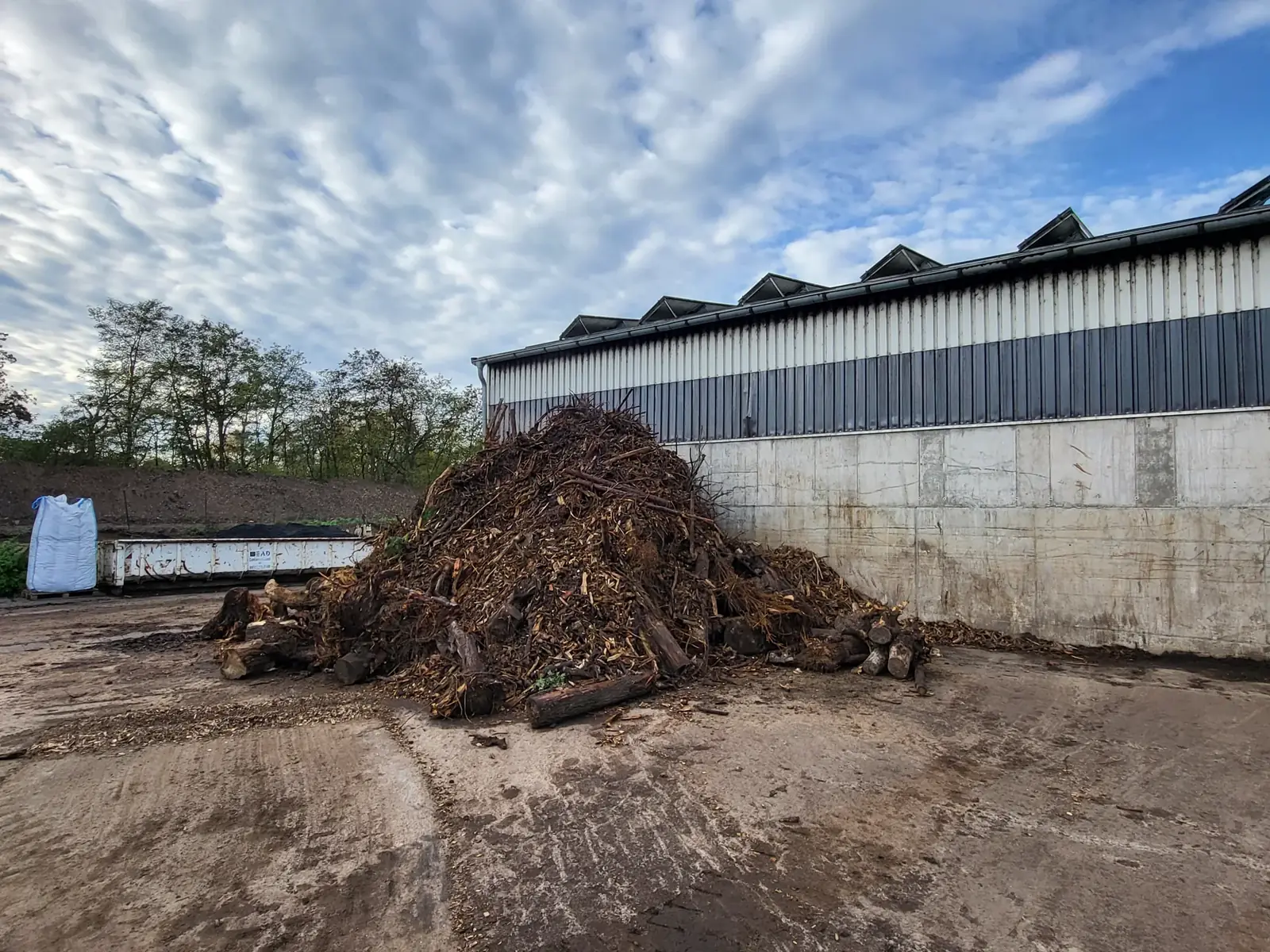
Green waste, landscape maintenance material, forest residues and straw. Volume and quality vary with the season.
Typical residues:




















Utilization Check
What the Utilization Check covers
Volume and occurrence
How much residue accumulates, how evenly over the year, and how is it stored and transported today? This determines which plant size and logistics are feasible.
Material properties
Moisture content, calorific value, ash content, particle size, impurities and contaminants. We evaluate existing analyses and data sheets and show which technology can process your residue.
Regulatory framework
Waste or by-product, waste wood category, permitting route for each option and, for biochar, eligibility under the EBC standard. We classify your residue and show the consequences for each route; this does not replace legal advice.
Energy demand on site
Electricity and heat demand, temperature level and base load. This is decisive for every route in which you use the energy yourself.
Economic viability
Current costs, revenues per route, investment range and payback as a range, plus suitable funding programs. Every figure is labeled: measured, calculated, assumed or open.
Optional: lab analysis, practical test and site visit
Where existing data is not sufficient, we analyze a sample in the lab or test your residue in a pilot plant. During a site visit, we inspect where the residue accumulates and is stored and document everything in a photo log.
Report, recommendation and personal presentation
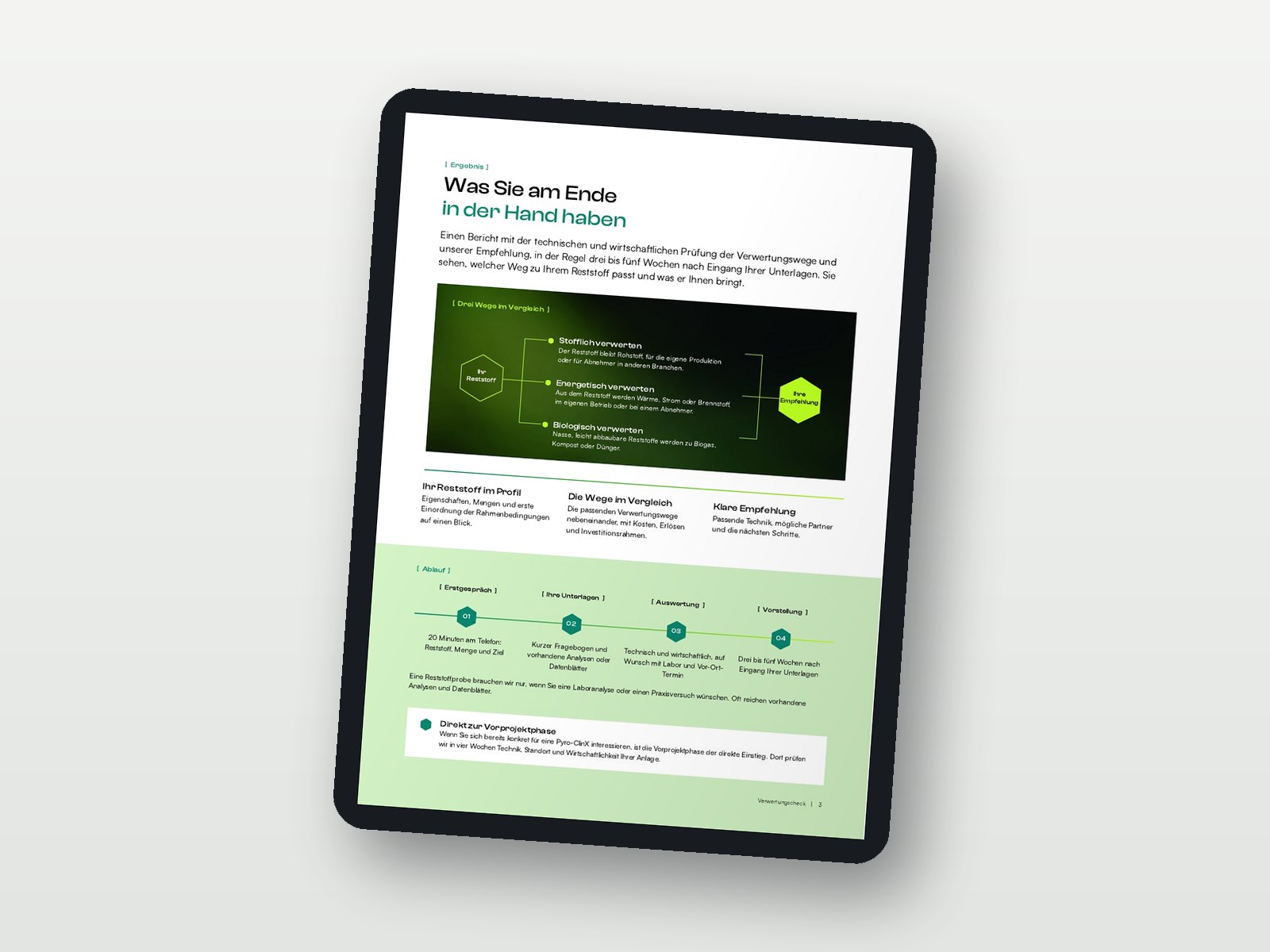
You receive a report with the technical and economic assessment of the utilization routes and our recommendation, including suitable technology and potential suppliers or buyers. We present the results to you personally, by video conference or on site.
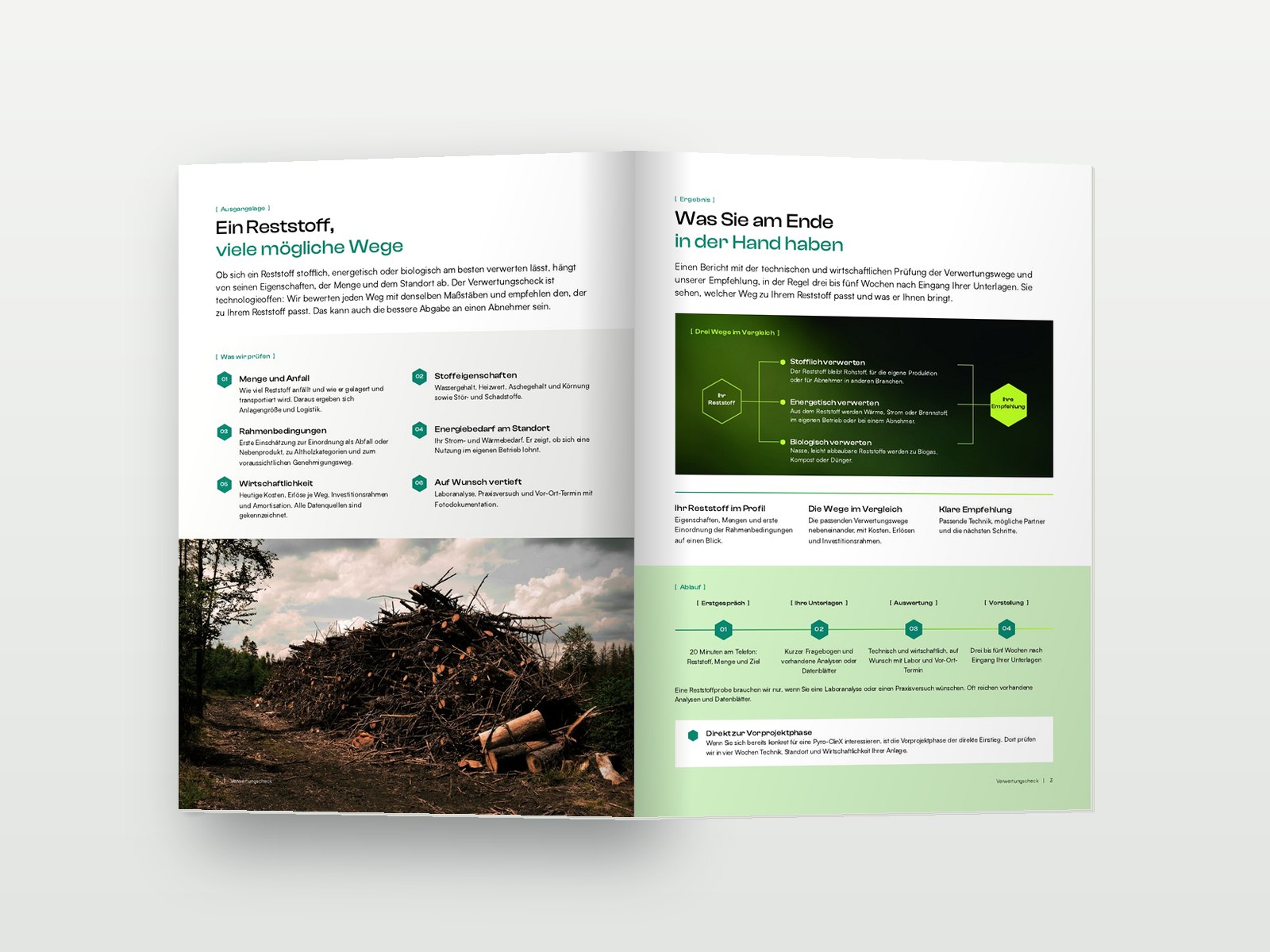
Result
A report with a clear recommendation
You receive a report with the technical and economic assessment of the utilization routes and our recommendation. You see which route suits your residue and what it brings you.
- Your residue in profile: properties, volumes, framework conditions
- The routes compared: costs, revenues, investment range
- A clear recommendation: suitable technology, potential partners, next steps
FAQ
Frequently asked questions about residue utilization
01 Which residues do you assess?
Mainly biogenic residues: wood, wood residues and industrial wood residues, bark, green waste, landscape maintenance material, straw, husks, pits and pomace. Also composites such as label waste with adhesive layers or coated panel offcuts. For waste wood or digestate, we clarify in advance whether an assessment makes sense.
02 Do you need a sample?
Only if you want a lab analysis or a practical test. Existing analyses and data sheets are often sufficient. We agree on the quantity and packaging of a sample with you.
03 From what volume does your own plant pay off?
That depends on the route: a wood chip boiler pays off at different volumes than a wood chip CHP plant that also generates electricity. For each route, the check states the volume from which it becomes viable.
04 Is my residue waste?
That depends on its origin, treatment and use. Classification as waste or by-product determines the permits and costs of each route. We classify your residue and show the consequences; this does not replace legal advice.
05 Can my residue be turned into biochar?
That depends on the residue, because the EBC standard only permits certain types of biomass. Whether and in what quality can be clarified on request with a lab analysis and a practical test.
06 Are you tied to a particular technology?
We assess every route by the same standards and recommend the one that suits your residue and your site. That can also be a better deal with a buyer.
07 What does the Utilization Check cost?
That depends on the residue and the scope. After a first conversation, you receive a fixed-price offer; lab analysis, practical test and site visit are optional.
08 What will I have in hand after the check?
A report with the technical and economic assessment of the utilization routes and our recommendation, including suitable technology and potential partners. We discuss the results with you personally, by video conference or on site.
09 Do you also support implementation?
You carry out the implementation with the partner, buyer or technology of your choice. In the report, we name suitable technology and potential partners.
 info@pyro-power.com
  +49 355 866 870 82
  pyropower GmbH