
ClinX Heat
Generating electricity and heat from industrial waste heat
ClinX Heat converts high-temperature waste heat from industrial processes into electricity and usable process heat. Directly at the source. Without additional fuel. Without interfering with the main process.
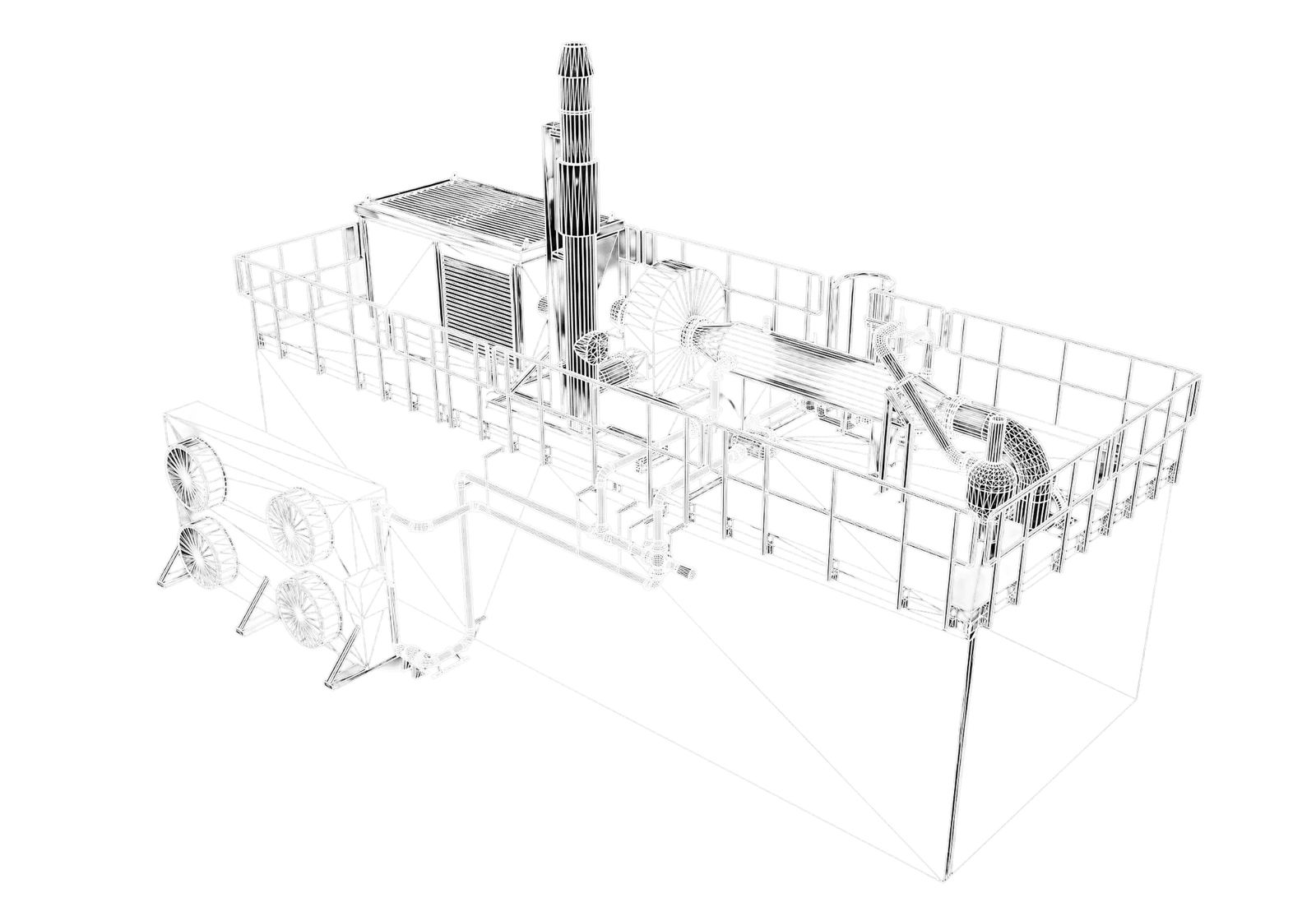
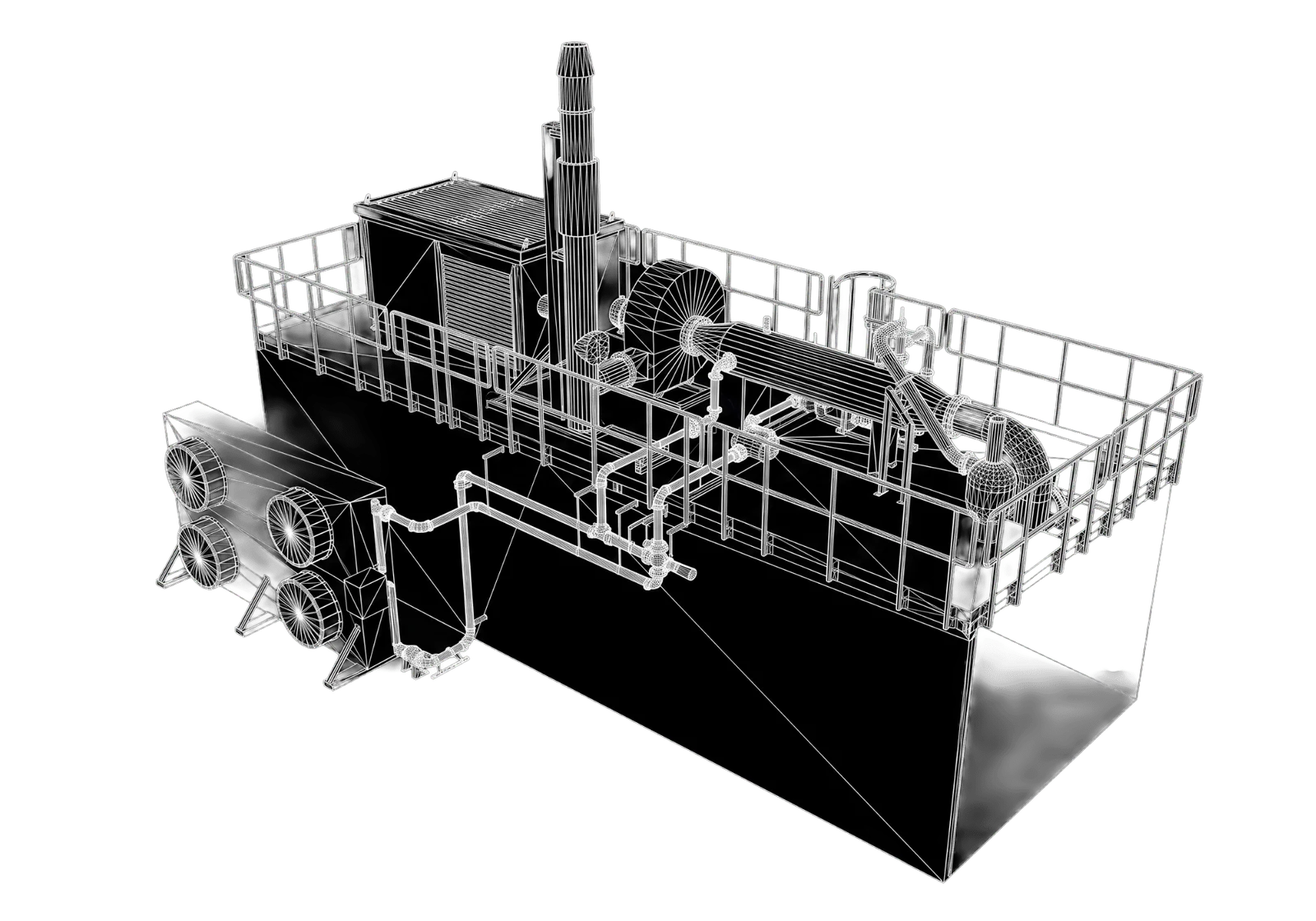
What is ClinX Heat?
ClinX Heat is an externally fired micro gas turbine system that converts industrial waste heat of around 950 °C into electrical energy and usable process heat. Delivered in a 40-foot container, the system connects directly to existing hot gas streams and operates fully automated in continuous operation.
Input: Available waste heat.
Output: Up to 150 kW gross electrical power, 450 kW thermal power, and a measurably reduced carbon footprint.
[ Overview ]
Two products from waste heat
ClinX Heat uses hot exhaust gases and waste heat from industrial processes and turns them into two products:
› Electricity for own use or grid feed-in
› Heat for processes, halls and heating networks
Technical Data
ClinX Heat Details

01 Technical Data
- Gross electrical output* 150 kW
- Net electrical power* 130 kW
- Nominal thermal power* 450 kW
- Auxiliary power consumption max. 20 kW
02 Efficiencies
- Electrical, gross 19.9%
- Electrical, net 17.3%
- Thermal 52.1%
- Overall 72%
03 Heat Source Requirements
- Heat source output > 750 kW_th continuous
- Temperature 900 to 1,000 °C
- Permissible dust content of the heat source < 10 mg/m³
- Connection Customer-side connection
04 Dimensions and connections
- Dimension 40 ft container
- Foundation load 40 t
- Heating system interface min. DN65
- Voltage/Frequency 400 VAC / 50 Hz
05 Exhaust Emissions
Exhaust emissions specified at 6% residual oxygen content in the exhaust gas.
- Exhaust gas volume flow (wet) 4,700 Nm³/h
- Particulate matter < 20 mg/Nm³
- Carbon monoxide (CO) < 150 mg/Nm³
- Nitrogen oxides (NOₓ) < 370 mg/Nm³
06 Heat Transfer Medium
- Heat transfer medium Water/Glycol
- Temperature level 90/70 °C
- High-temperature circuit Hot air or thermal oil
- Control system PLC control / remote maintenance
07 Annual Balance (8,000 operating hours)
- Net electricity approx. 1,040 MWh
- Avoided CO₂ emissions* approx. 350 t
- *If the electricity generated replaces grid electricity. Calculation basis: 344 g CO₂ per kWh, German electricity mix 2025 according to the German Environment Agency (UBA)
08 Applications
- Glass, ceramics, bricks melting and kiln furnaces
- Metal processing foundries, heat treatment
- Cement and lime rotary and shaft kilns
- Chemical and petrochemical high-temperature processes
- Wood and biomass thermal drying processes
ClinX Heat key figures
Net electrical power
Nominal thermal power
Operating mode
In many plants, industrial waste heat is the largest untapped energy source. ClinX Heat taps into this source and delivers three economically valuable outputs simultaneously.
Power, heat and CO₂ reduction from waste heat
Electricity
Up to 150 kW gross electrical power per module, available directly on-site. Electricity that was previously lost as waste heat now replaces grid electricity or is fed back into the grid. The gross electrical efficiency is 19.9%, while the net efficiency is 17.3%.
Heat
450 kW nominal thermal power via a water/glycol heat transfer medium at a temperature level of 90/70 °C. This heat can be fed directly into existing heating and process networks or used for drying, preheating, and service water heating. The thermal efficiency is 52.1%.
CO₂ reduction through efficiency
With an overall efficiency of 72%, ClinX Heat takes energy efficiency to a new level. Every kilowatt-hour of waste heat converted into electricity replaces fossil-fueled grid power, without any additional fuel input. Here, CO₂ reduction is achieved through efficiency, not offsetting.

Industrial waste heat recovery: applications
This technology is suitable wherever high-temperature waste heat is continuously generated and previously released into the environment unused.
Industries with thermally intensive processes
- Glass, ceramics, and brick industries (melting furnaces, kilns, tunnel kilns)
- Metal processing and foundries (electric arc furnaces, shaft furnaces, and rotary kilns)
- Cement and lime industries (clinker coolers, preheaters)
- Chemical and petrochemical industries (reformers, crackers, reactors)
- Wood and biomass processing with thermal drying processes
Energy utilities and infrastructure
Municipal utilities, heating network operators, and industrial power plants use ClinX Heat to increase the efficiency of existing systems, for example, as a topping stage upstream of a heating network or for the auxiliary power supply of pumps and auxiliary units.
Waste heat-intensive processes with continuous operation
Waste incineration plants, sewage sludge drying, industrial bakeries, calcining and sintering kilns, wherever waste heat cannot be recycled within the internal process, ClinX Heat creates a second stage of value creation. Reference: power generation in Darmstadt
Technical Classification
How does an externally fired micro gas turbine work?
In a conventional gas turbine, the hot combustion gas flows directly through the turbine. In contrast, the externally fired micro gas turbine used by ClinX Heat relies on compressed, clean ambient air to drive the turbine. The heat is transferred to this air from the outside via a high-temperature heat exchanger. As a result, the turbine components never come into contact with dust, corrosive particles, or harmful gases from the waste heat source. The benefits include a longer service life, lower maintenance requirements, and the ability to utilize even contaminated hot gas streams that would be completely unsuitable for conventional turbines. pyropower has been developing externally fired micro gas turbines for this field of application since 2012.


The Role of High-Temperature Waste Heat
ClinX Heat requires a heat source with a continuous thermal output of at least 750 kW and a temperature of around 950 °C. This temperature is necessary for the heat exchanger to heat the turbine air to a thermodynamically optimal level. Hot gas streams exceeding 950 °C are standard in many industries, but are currently mostly cooled down without being utilized, this is precisely where the technology comes into play. The permissible dust content of the heat source is below 10 mg/m³. If the dust content is higher, the hot gas stream can be treated using upstream filtration solutions, this is assessed and handled as part of the project engineering phase.
Power from waste heat
How is waste heat converted into electricity?
With ClinX Heat, the conversion of industrial waste heat into electricity takes place within a closed-loop system. The hot exhaust gases from the process transfer their heat to clean, compressed air via a high-temperature heat exchanger. This heated air then expands in a micro gas turbine, driving a generator to produce electricity.
The residual heat still contained within the system is extracted and utilized as process heat. There is no direct contact between the exhaust gases and the turbine components, and no need for additional fuel.
Process
The process in eight steps
1. Waste Heat Input
Hot gas from the industrial process at ≥ 950 °C and with at least 750 kW of thermal power is routed into the ClinX Heat container.
2. High-Temperature Heat Exchange
In the high-temperature heat exchanger, the energy from the exhaust gases is transferred to compressed, clean air, completely separate, with no mixing of the media.
3. Compression
Ambient air is drawn in by the micro gas turbine’s compressor wheel and brought to high pressure.
4. Heating the Process Air
The compressed air flows through the heat exchanger, where it absorbs the heat from the waste heat source.
5. Expansion in the Turbine
The hot, compressed air expands across the turbine wheel. The released mechanical energy drives the generator via the shaft.
6. Power Generation
The generator converts the mechanical energy into electrical energy. The result: up to 150 kW of gross electrical power.
7. Heat Recovery
The residual heat from the turbine exhaust is transferred to the water/glycol loop via an economizer, delivering 450 kW of usable process heat at 90/70 °C.
8. Exhaust Gas Discharge
The cooled exhaust gases leave the system through the stack, low-emission and within the documented limit values (dust < 20 mg/Nm³, CO < 150 mg/Nm³, NOₓ < 370 mg/Nm³).
Solutions
Four problems that ClinX Heat solves

01 Energy losses that no longer pay off
In many industrial processes, a significant portion of the primary energy used is lost as waste heat. ClinX Heat unlocks this unused potential and turns it into a measurable output, without interfering with the main process.

02 Security of supply and grid independence
On-site power generation reduces dependence on the grid and stabilizes your energy supply, especially at a time when grid fees and load fluctuations are becoming major financial risks.

03 Rising energy costs
Every kilowatt-hour generated on-site is a kilowatt-hour that doesn't need to be purchased. ClinX Heat shifts a portion of your energy costs from variable utility expenses to predictable capital investment.

04 Regulatory and market-driven CO₂ pressure
CSRD, EU ETS, supply chain requirements, Scope 1 and Scope 2 reporting obligations: industrial companies must measurably reduce their emissions. ClinX Heat directly lowers Scope 2 emissions, without offsetting, without certificates, but through real, tangible efficiency.
Target Audiences
Who ClinX Heat was developed for
Industry
- Glass, ceramics, cement, and brick industries
- Metal processing, foundries, steel, and aluminum plants
- Chemical, petrochemical, and thermal process engineering
- Wood and biomass processing with thermal drying processes

Project Developers and Engineering Partners
Planning offices, engineering firms, and EPC contractors implementing waste heat utilization as part of larger industrial projects integrate ClinX Heat as a modular power generation stage in both existing and new plants.
Energy Utilities and Municipal Operators
Municipal utilities, district heating network operators, and energy cooperatives use ClinX Heat as a decentralized efficiency component, especially at sites with industrial heat sources that are to be integrated into heating networks.

Infrastructure and Public Services
Waste incineration plants, sewage treatment plants with thermal sludge treatment, and large public sector industrial enterprises deploy this technology to increase efficiency and reduce CO₂ emissions.

Download
Technical Data Sheet ClinX Heat 150
Performance data, efficiencies, heat source requirements, emission values and applications on two pages. As of October 2026, PDF, 1.3 MB.
Download data sheet (PDF)FAQ
Frequently asked questions: power from waste heat
01 What is ClinX Heat?
ClinX Heat is an externally fired micro gas turbine system in a 40-foot container. It converts industrial high-temperature waste heat into 150 kW of electricity (gross) and 450 kW of usable heat, with no additional fuel.
02 How can waste heat be converted into electricity?
The hot exhaust gas transfers its heat to clean, compressed air via a high-temperature heat exchanger. This air drives the micro gas turbine and the generator. Because the turbine is externally fired, it never comes into contact with the exhaust gas.
03 What does the heat source need to provide?
ClinX Heat needs a continuous thermal output of at least 750 kW at 900 to 1,000 °C and a dust content below 10 mg/m³. Higher dust levels can be handled with upstream filters. We clarify this during project engineering.
04 How does ClinX Heat differ from an ORC system?
ORC systems use an organic working fluid in a closed loop. ClinX Heat uses air as the working medium and is designed for high-temperature waste heat from around 900 °C. The turbine runs on air bearings, without oil or lubricants. An ORC unit can be added downstream if required, using the residual heat for additional electricity.
05 How is ClinX Heat integrated into existing production?
Without any changes to the main process. ClinX Heat sits in a container next to your plant and is connected to the existing hot gas stream. Your production keeps running as before.
06 How much grid power and CO₂ does one module save?
At 8,000 operating hours per year, one module generates around 1,040 MWh of net electricity. If this replaces grid power, it corresponds to around 350 t of CO₂ per year. Basis: 344 g CO₂ per kWh, German electricity mix 2025 according to the German Environment Agency (UBA).
07 Which industries is ClinX Heat suitable for?
For all processes with continuous high-temperature waste heat: glass, ceramics and bricks, cement and lime, metal processing and foundries, chemicals, and pyrolysis and carbonization plants.
08 How does a ClinX Heat project work?
It starts with an assessment of your waste heat potential: temperature, output, dust content and heat demand. This is followed by design, delivery in a container, connection to the hot gas stream and commissioning. The system runs fully automated with remote maintenance.
 info@pyro-power.com
  +49 355 866 870 82
  pyropower GmbH