
Pyro-Hex 315
Pyrolysis plant for heat and biochar
[ Starting point ]
Anyone who needs a lot of heat pays for gas or oil and depends on their prices. Pyro-Hex 315 generates this heat from woody residues and also produces biochar, which binds carbon permanently.
[ Overview ]
Three products from woody residues
One plant turns woody residues into three products:
› Heat up to 990 kW, as hot water at 90/70 °C or as process heat up to 300 °C
› Biochar, around 75 kg per hour, for agriculture and industry
› CO₂ certificates, because the carbon stays bound in the biochar
[ How it works ]
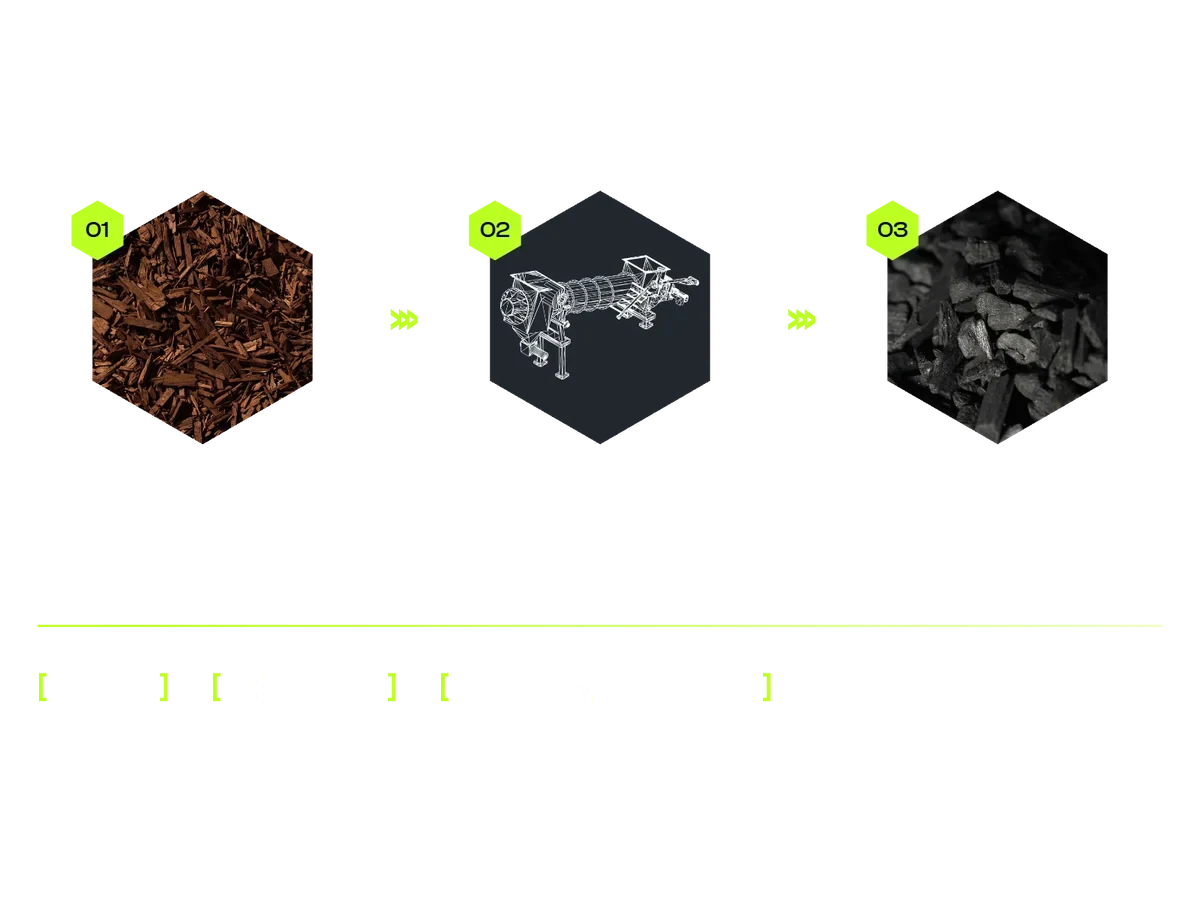
Pyrolysis with post-combustion
In the reactor, wood is heated in the absence of oxygen and breaks down into pyrolysis gas and biochar. › Post-combustion of the gas at up to 1,200 °C › A heat exchanger extracts the usable heat › Continuous and fully automatic, with remote maintenance
[ Technical data ]
Technical data of Pyro-Hex 315
01 Output and process
- Fuel heat input 1,400 kW
- Rated thermal output 990 kW
- Own power consumption max. 20 kW
- Process Continuous pyrolysis
- Process temperature 650 to 800 °C
- Post-combustion up to 1,200 °C
02 Heat
- Heat transfer medium Water/glycol/thermal oil
- Temperature level (standard) 90/70 °C
- Process heat (optional) up to 300 °C
- Heat extraction via heat exchanger
03 Fuel
- Wood chips G30 to G50
- Maximum particle length 150 mm
- Throughput (10 % moisture content) 315 kg/h
- Max. permissible moisture content 25 %, reduced output
- Other residues on request after approval
04 Biochar
- Production (dry matter) 20 to 25 % of input
- Output 75 kg/h
- EPA16-PAH (EBC method) < 4 mg/kg
- CO₂ equivalent (sequestered) 1.720 t/a
- Biochar EBC AgroBio capable
- CO₂ sink C-Sink certifiable
05 Dimensions and emissions
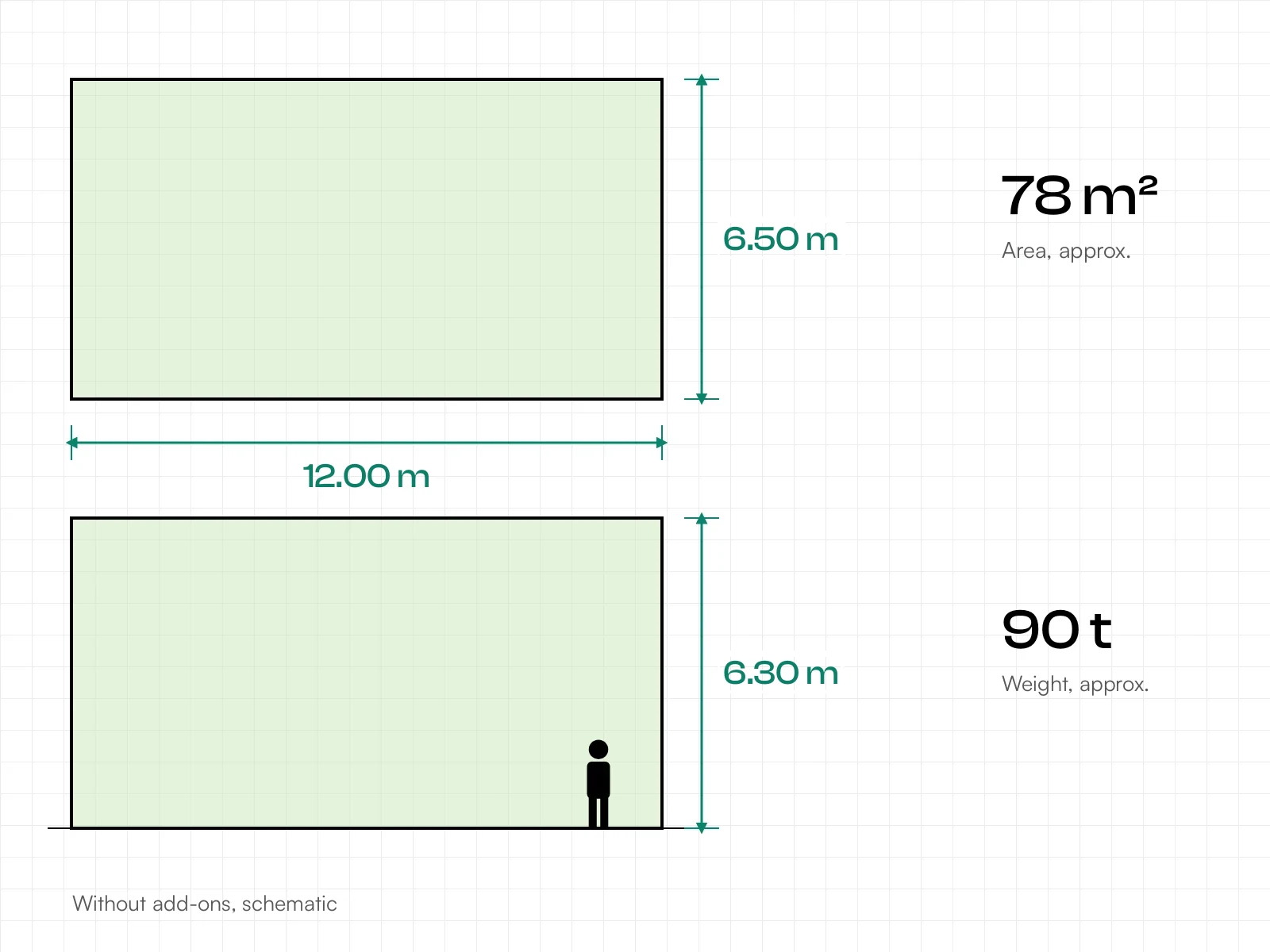
Without add-ons. Emission values based on 6 % residual oxygen.
- Length × width × height 12,00 × 6,50 × 6,30 m
- Weight approx. 90 t
- Flue gas volume flow (wet) 4,700 Nm³/h
- Dust < 20 mg/Nm³
- Carbon monoxide (CO) < 150 mg/Nm³
- Nitrogen oxides (NOx) < 370 mg/Nm³
- Control PLC, remote maintenance
[ FAQ ]
Frequently asked questions about Pyro-Hex 315
01 What is Pyro-Hex 315?
Pyro-Hex 315 is a pyrolysis plant by pyropower that produces heat and biochar from woody residues, without power generation. It delivers up to 990 kW of heat and around 75 kg of biochar per hour.
02 What is the difference to Pyro-ClinX 150?
Pyro-ClinX 150 combines pyrolysis with an externally fired micro gas turbine and additionally generates power. Pyro-Hex 315 works without a turbine and is designed entirely for heat.
03 Which residues can Pyro-Hex 315 process?
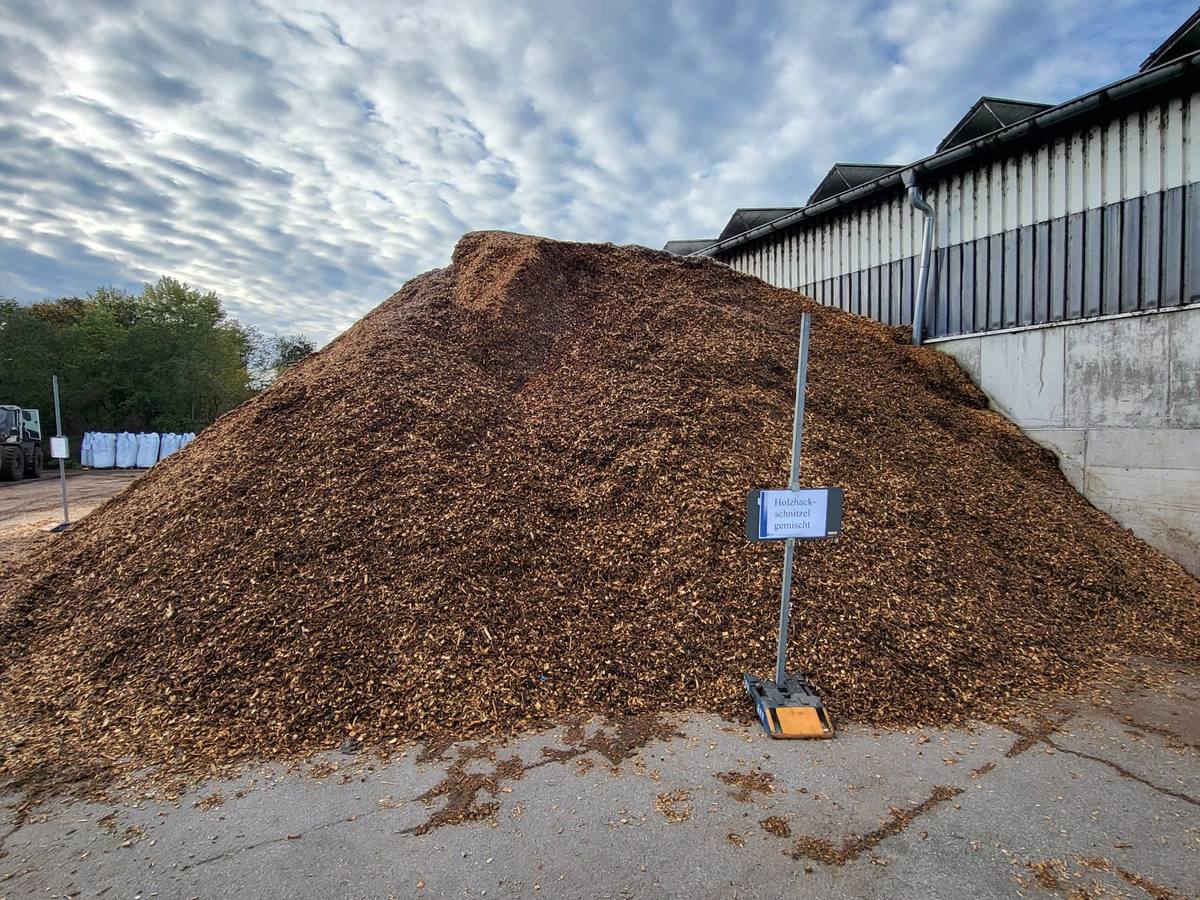
The plant is designed for wood chips G30 to G50 with a maximum particle length of up to 150 mm and up to 25 % moisture content. We test and approve other residues in advance.
04 In what form is the heat available?
As hot water at 90/70 °C via water or glycol, optionally as process heat up to 300 °C via thermal oil. The heat is extracted via the heat exchanger.
05 What is the quality of the biochar?
The biochar stays below 4 mg/kg in PAH content (EPA16) and is EBC AgroBio capable. Which class is achieved depends on the feedstock.
06 Can the CO₂ sink be certified?
Yes. The biochar binds around 1,720 t of CO₂ equivalent per year, and the sink can be certified as a C-Sink. On request, we take care of certification and marketing.
07 How much space does the plant need?
The plant measures 12.00 × 6.50 m with a height of 6.30 m and weighs around 90 t. Fuel storage and delivery come on top. We plan the space requirement in the pre-project phase.
08 How does a project work?
After the first conversation, we check site, fuel and economics in the pre-project phase. This is followed by project planning, construction and commissioning.
[ Downloads ]
Data sheet Pyro-Hex 315
All technical data, dimensions and emission values on two pages.
Download data sheet (PDF)[ Your path to the plant ]
From the first conversation to the running plant
In the first conversation, we clarify demand, fuel and site. The conversation is free of charge.
 info@pyro-power.com
  +49 355 866 870 82
  pyropower GmbH