
Five ClinX Heat 150 for a tyre pyrolysis plant in Greece
Follow-up project within the group of an existing customer
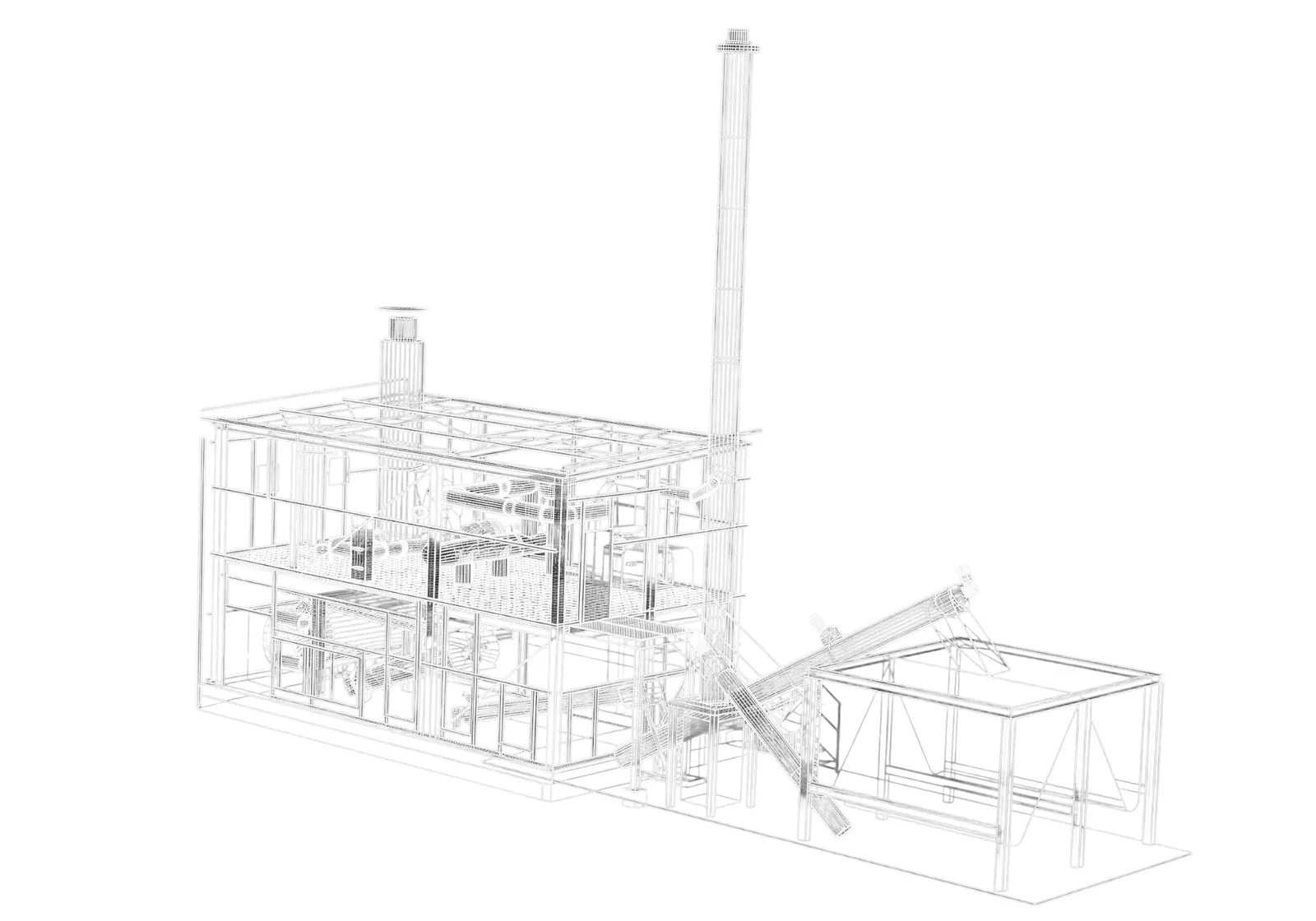
Project at a glance
| Project type: | Engineering, follow-up project |
|---|---|
| Technology: | 5 × ClinX Heat 150 |
| Power: | 5 × 150 kW gross |
| Client: | Company from the group of an existing customer, operator of tyre pyrolysis plants |
| Location: | Greece |
| Pyrolysis: | up to 20,000 t of end-of-life tyres per year |
| Special feature: | Gas treatment with intermediate tank, LPG instead of natural gas as support fuel |
| Implemented by: | pyropower GmbH |
A proven concept for a new site
Starting point
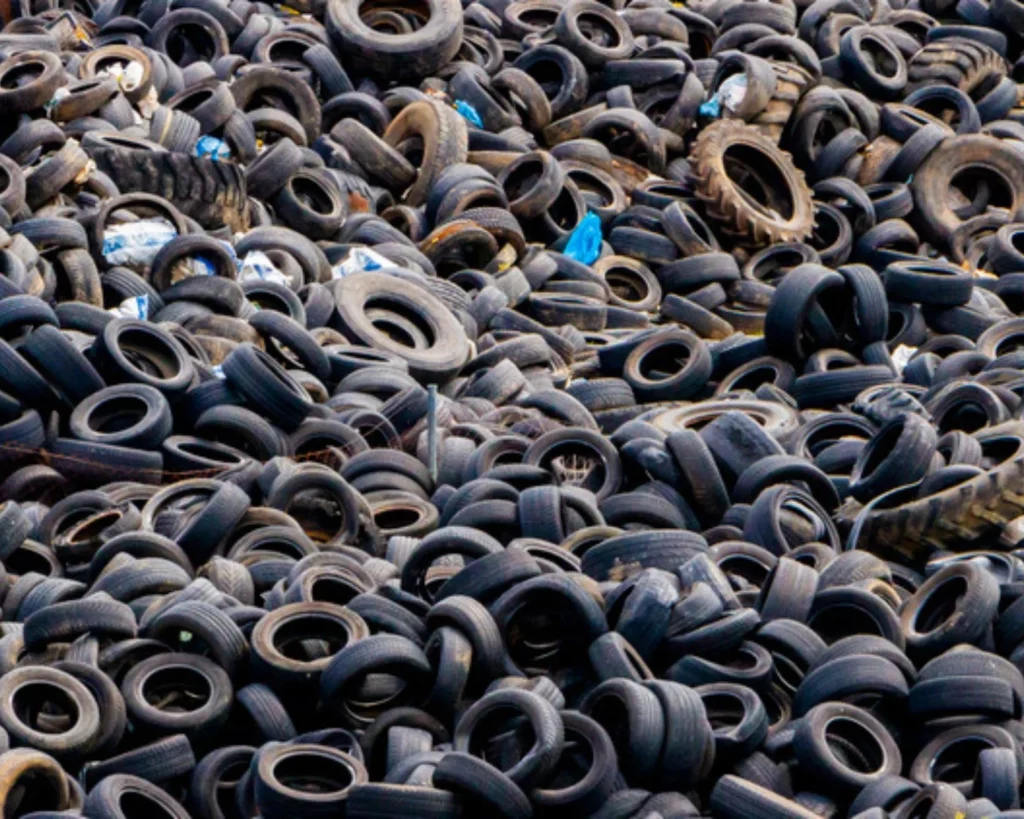
A plant for the pyrolysis of end-of-life tyres with a capacity of up to 20,000 tonnes a year is being built in Greece. During pyrolysis, the tyres break down in the absence of oxygen into oil, gas, carbon black and steel. The pyrolysis gas is not to go unused, but to supply power and heat directly on site.
Implementation
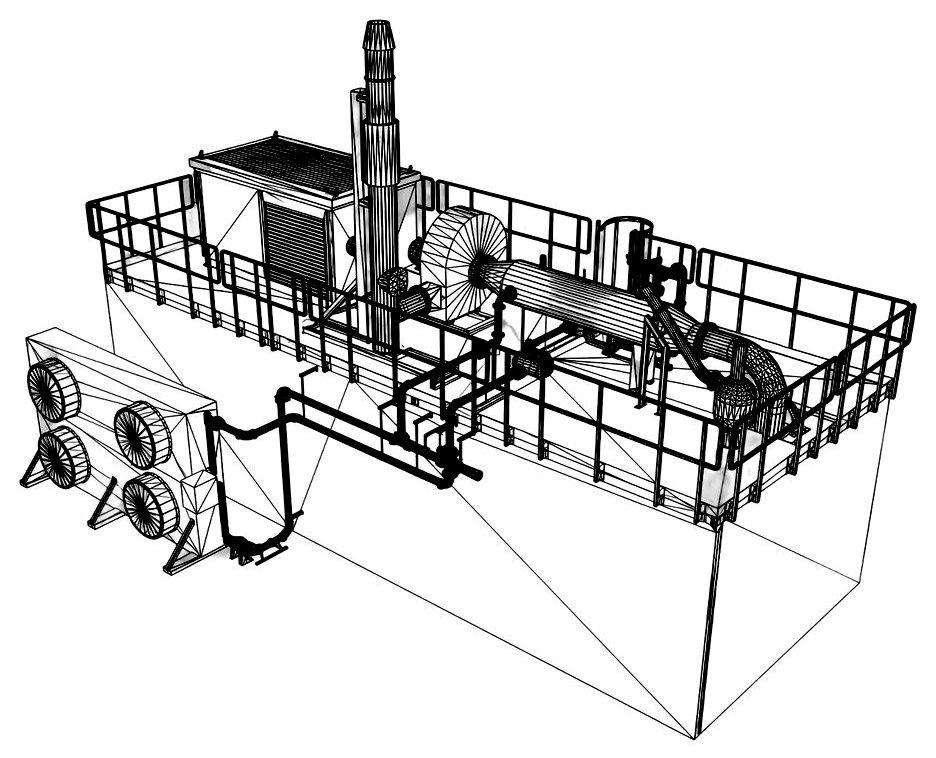
For this, pyropower is planning five ClinX Heat 150 with 150 kW gross each. The concept comes from a previous project: a company from the same group already uses five ClinX Heat 150 at a tyre pyrolysis plant in Saarland. The gas is burned centrally, the hot flue gas transfers its energy via high-temperature heat exchangers to clean, compressed air, and only this air drives the micro gas turbines.
New at this site
LPG instead of natural gas is planned as the support fuel. In addition, there is gas treatment with an intermediate tank as a buffer between pyrolysis and combustion. The project planning covers the design of the five plants and their integration into the planned pyrolysis plant.
Suitable for operators of pyrolysis plants
Wherever a combustible gas is produced in the pyrolysis of tyres, plastics or biomass, its energy can be converted into power with ClinX Heat. Because the turbine only sees clean air, impurities from the gas stay away from it.
[ Setup ]
How the project is set up
[ Knowledge ]
End-of-life tyres: recovery routes compared
- Granulate and rubber powder: around 36 percent of German end-of-life tyres (2024)
- Cement plant: around 17 percent, energy recovery
- Export: around 23 percent, plus around 19 percent with unknown whereabouts
- Pyrolysis: Oil, carbon black, steel and gas, so far small capacities in Germany
According to the industry association wdk, around 533,000 tonnes of end-of-life tyres were generated in Germany in 2024. Landfilling is banned in the EU. A large part is processed into granulate or burned in cement plants, and a considerable part is exported, where some of it ends up in simple plants without flue gas cleaning.
Life cycle assessments show a clear pattern: material recovery routes perform better for the climate than co-incineration in cement plants. In a study by Fraunhofer UMSICHT (2023), the net saving from pyrolysis was 703 kg CO₂e per tonne of end-of-life tyres, compared with 309 kg for cement plants under German conditions. How large the advantage is depends mainly on how much new industrial carbon black the recovered carbon black (rCB) replaces. Other studies see a smaller gap.
The prerequisite is clean operation: permitted plants with gas cleaning and flue gas treatment whose oil and carbon black are used as materials. The pyrolysis gas can also supply power and heat, as here with ClinX Heat.
[ Technology ]
ClinX Heat 150
Power and heat from high-temperature waste heat from 900 °C: a heat exchanger transfers the heat to clean air, which drives an externally fired micro gas turbine.
150 kW power gross · max. 450 kW heat
[ References ]
Latest projects
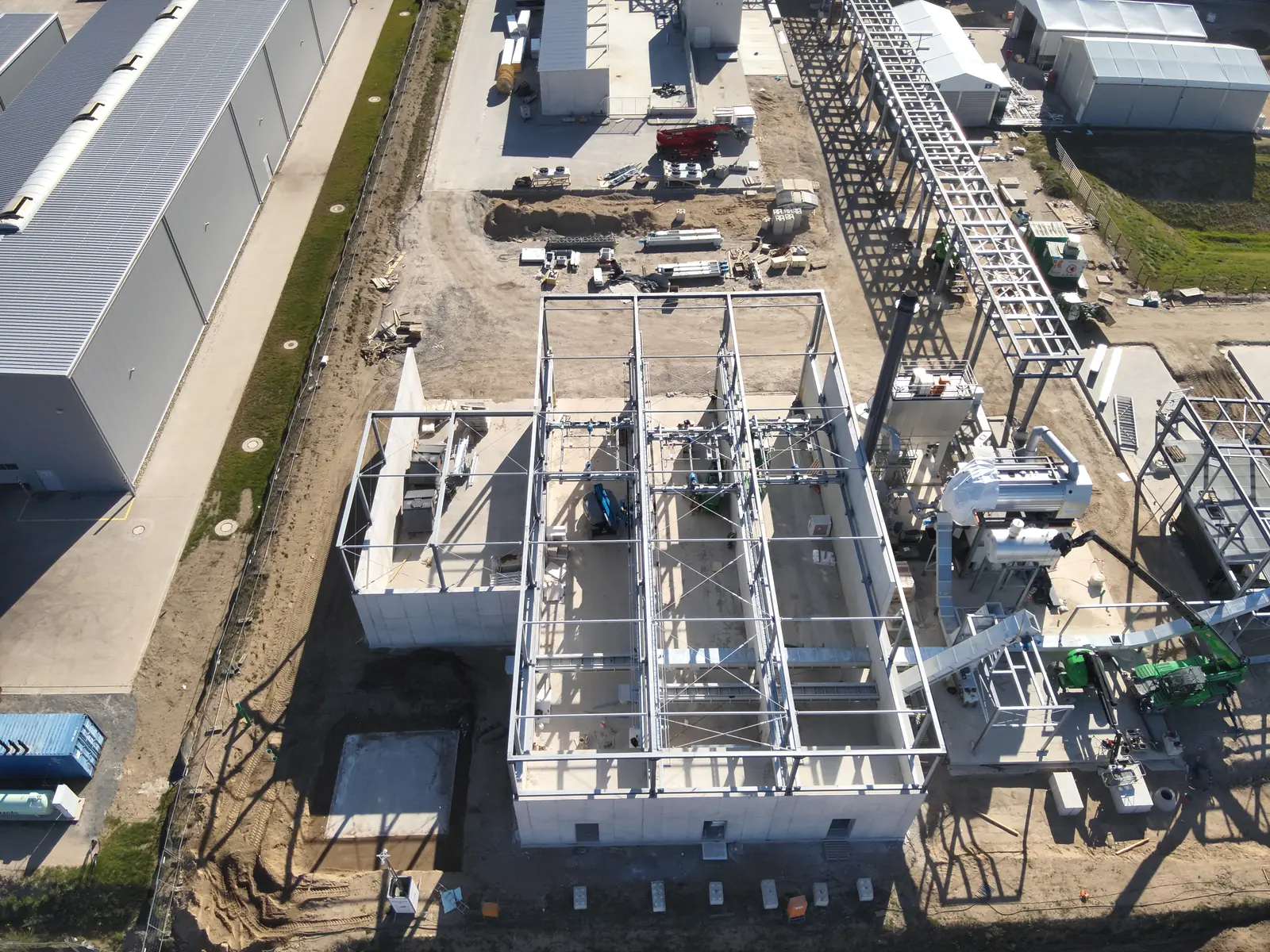
Biochar production at an industrial site in Mecklenburg-Western Pomerania
Three Pyro-ClinX 150 plants produce power, heat and biochar from industrial wood residues at an industrial site in Mecklenburg-Western Pomerania.

PyroPark Forst
PyroPark Forst is being developed in Lusatia as an integrated energy site that converts woody residues into electricity, usable heat, biochar and certified carbon removal.

ClinX Heat Power Generation from a Carbonization Plant in Darmstadt
ClinX Heat uses high-temperature energy from an existing carbonization plant to generate additional electricity on site.
 info@pyro-power.com
 +49 355 866 870 82
 pyropower GmbH