
Ceramic components for more efficient micro gas turbines
Joint project funded by the BMBF
Project at a glance
| Project type: | Research and development |
|---|---|
| Subject: | ceramic components for micro gas turbines |
| Partners: | Specialist ceramics manufacturer, research institute and associated industrial partners |
| Funding: | BMBF via Projektträger Jülich |
| Duration: | 2016 to 2019 |
| Implemented by: | pyropower group |
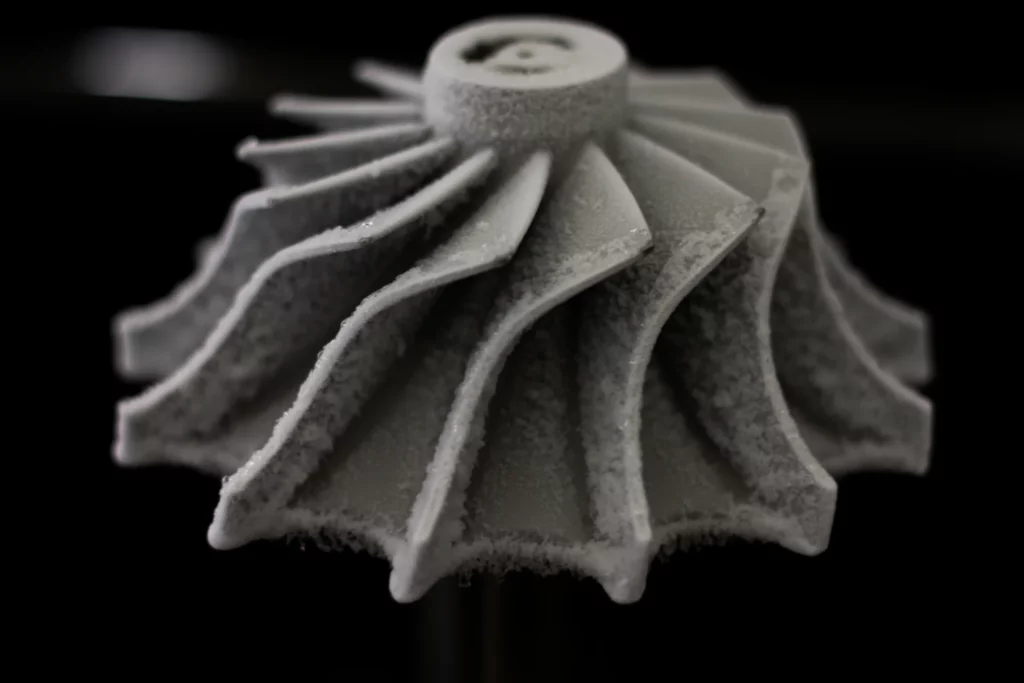
Ceramic components for the micro gas turbine
Starting point
The efficiency of a gas turbine rises with the temperature at which it operates. Metallic components limit this temperature. Ceramic materials can withstand considerably more heat.
Implementation
In the CeramTurbo joint project, ceramic components for micro gas turbines were developed. The group of companies worked with a specialist ceramics manufacturer and a research institute, and two large industrial companies were associated. The project was funded by the German Federal Ministry of Education and Research (BMBF) via Projektträger Jülich.
Result
The joint project was completed after a three-year term. Work on ceramic turbine components continued in further projects.
Manufacturing and measurement
A ceramic turbine wheel must be dimensionally accurate after sintering. How the shape changes in the process was later examined on a rotor using a 3D scan.
[ Knowledge ]
Ceramics in the turbine wheel: material, density and design
- Silicon nitride: high fracture toughness thanks to rod-shaped grains, good thermal shock resistance
- Density: around 3.2 g/cm³, about 40 percent of a nickel alloy
- Design: statistical according to Weibull, because strength depends on the distribution of small defects
Uncooled metallic turbine wheels in small gas turbines usually operate with inlet temperatures below 1,000 °C. Higher temperatures would increase efficiency but exceed the creep limit of the alloys. Technical ceramics retain their strength up to considerably higher temperatures, making them an obvious approach for more efficient micro gas turbines.
Silicon nitride is considered particularly suitable for rotating components. During manufacture, rod-shaped grains grow that deflect cracks and make the fracture toughness unusually high for a ceramic. In addition, at around 3.2 g/cm³, silicon nitride is considerably lighter than nickel alloys. Because the centrifugal stresses in a wheel are proportional to density, the mechanical load decreases accordingly at the same speed.
Design follows different rules than for metal. Ceramics fail in a brittle manner, starting from the largest defect in the most highly stressed volume. Strength is therefore described statistically, usually with the Weibull distribution, and large, highly stressed components have a lower strength than small specimens. Overload proof tests before use sort out defective parts.
[ Technology ]
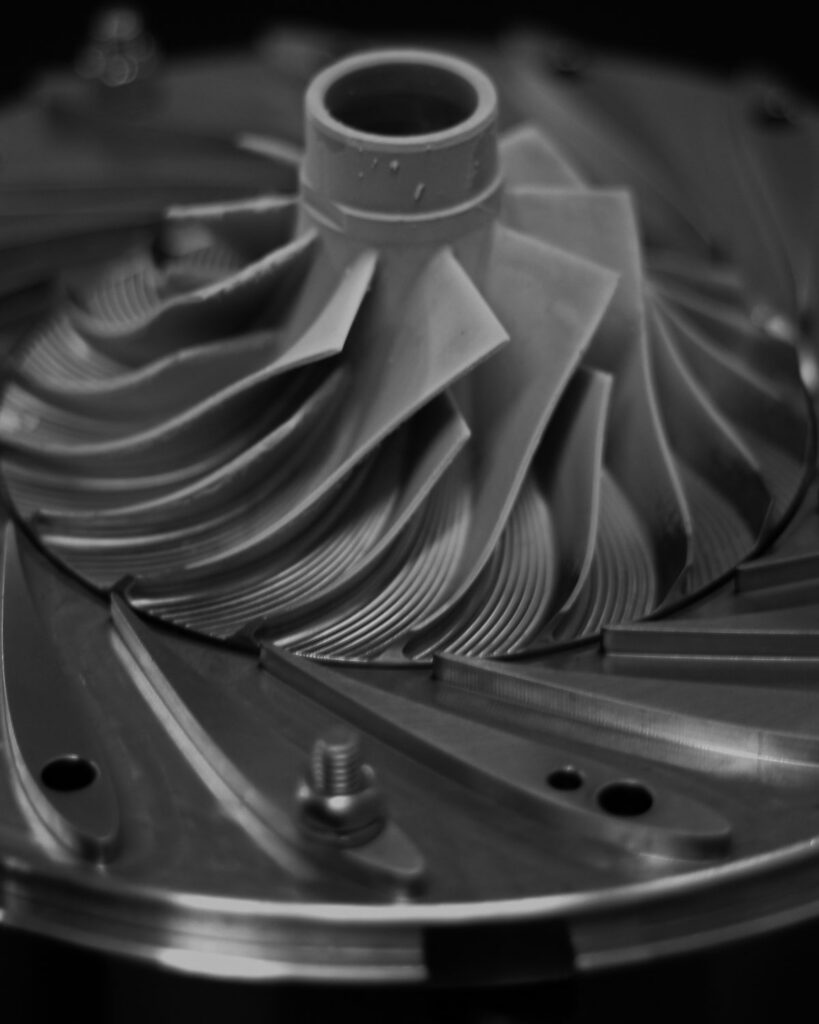
Externally fired micro gas turbine
Clean air instead of gas in the turbine and air bearings without oil: this is how the technology works that we have been developing within our group of companies for years.
[ References ]
Latest projects
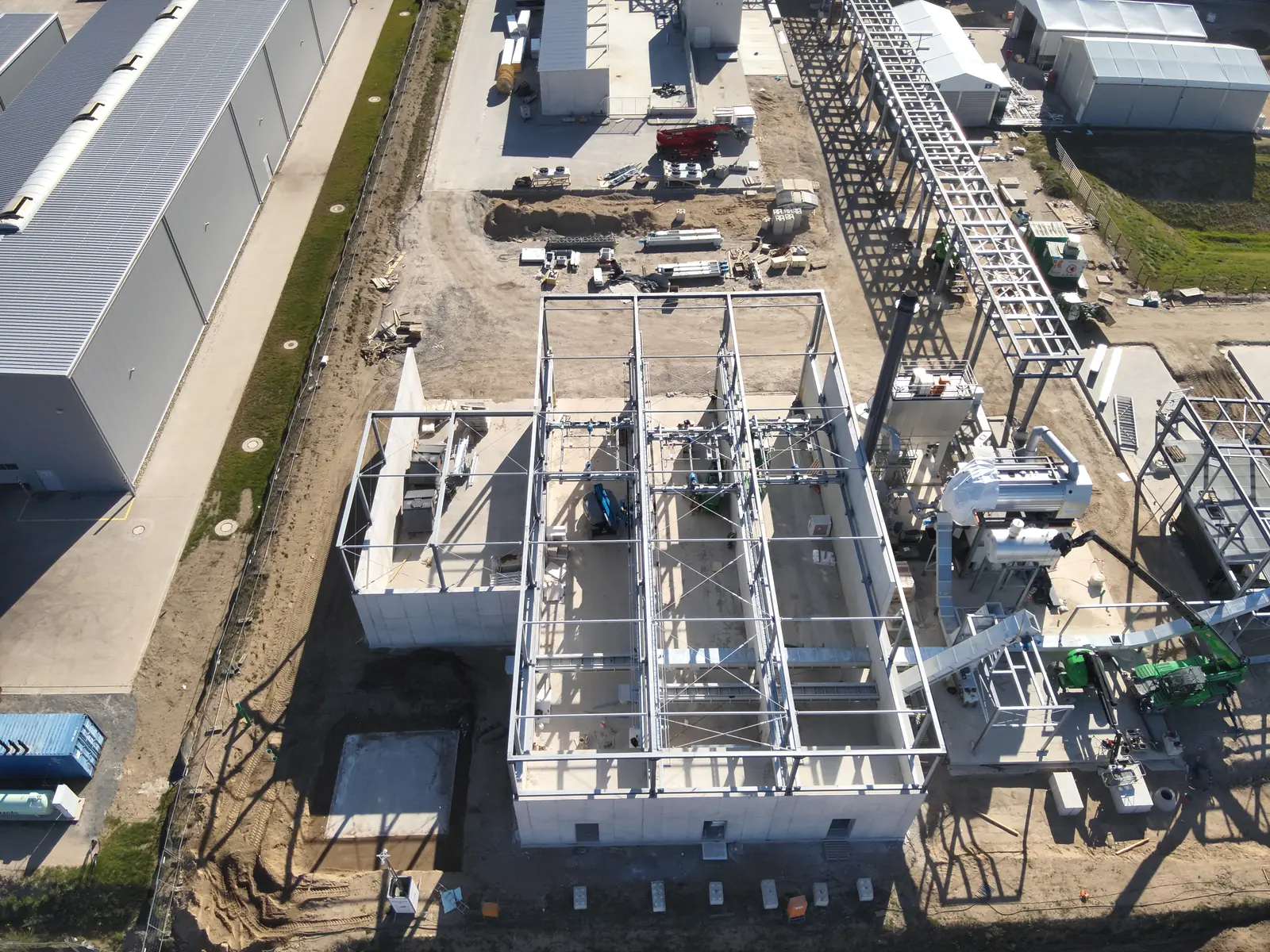
Biochar production at an industrial site in Mecklenburg-Western Pomerania
Three Pyro-ClinX 150 plants produce power, heat and biochar from industrial wood residues at an industrial site in Mecklenburg-Western Pomerania.

PyroPark Forst
PyroPark Forst is being developed in Lusatia as an integrated energy site that converts woody residues into electricity, usable heat, biochar and certified carbon removal.

ClinX Heat Power Generation from a Carbonization Plant in Darmstadt
ClinX Heat uses high-temperature energy from an existing carbonization plant to generate additional electricity on site.
 info@pyro-power.com
 +49 355 866 870 82
 pyropower GmbH