
3D measurement: shrinkage of a ceramic turbine rotor during sintering
Green body and sintered part in a point cloud comparison
Project at a glance
| Project type: | Research and development |
|---|---|
| Subject: | ceramic turbine rotor |
| Process: | 3D scan and point cloud comparison |
| Measurement areas: | turbine inlet and turbine outlet |
| Comparison: | green body and sintered component |
| Implemented by: | pyropower group |
Shrinkage during sintering made visible
Starting point
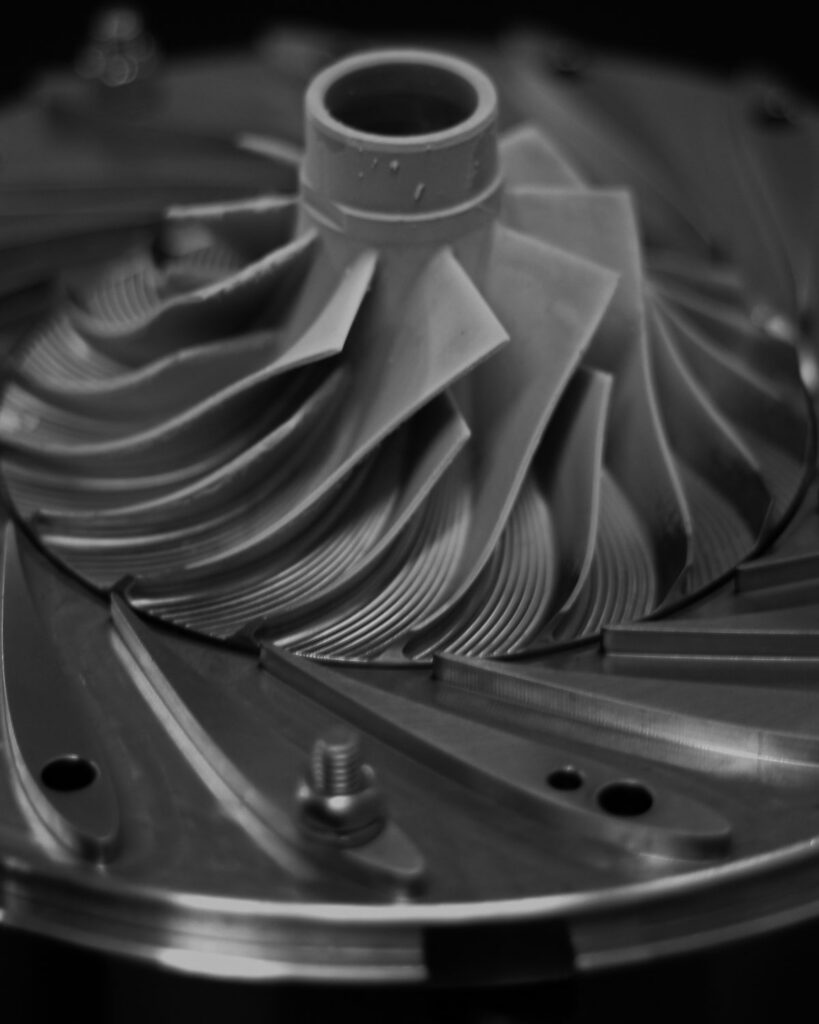
Ceramic components are first formed as a green body and then sintered at high temperature. In the process, they shrink and can distort. For a turbine rotor with a very high speed, every deviation counts.
Implementation
A ceramic turbine rotor was captured by 3D scan before and after sintering. The two point clouds were compared, above all at the turbine inlet and turbine outlet, the areas with the highest geometric requirements.
Result
The comparison shows where and how much the shape changes during sintering. This is the basis for sizing green bodies with an allowance so that the finished component is dimensionally accurate.
Geometry and flow
At the turbine inlet and outlet, blade angles, clearances and wall thicknesses determine how well the flow transfers energy to the wheel. Even small deviations change efficiency and imbalance, which is why the measurement focused on these areas.
[ Knowledge ]
Sintering ceramics: shrinkage, distortion and allowance
- Green body: formed, not yet sintered component with open porosity
- Linear shrinkage: typically around 15 to 20 percent for technical ceramics
- Allowance: oversize in the green body that compensates for shrinkage
- Target/actual comparison: distance between two point clouds after best-fit alignment
A ceramic green body consists of compacted powder and binder. Its density is usually well below that of the finished material. During sintering, the powder particles grow together at their contact points, the pores close and the component densifies almost completely. This densification shows up as shrinkage, linearly often in the order of 15 to 20 percent.
If the density in the green body is not uniform, for example due to pressing or injection moulding, the component shrinks unevenly. It distorts. This has a particular effect on a turbine rotor with thin, curved blades. That is why the green body is manufactured with an allowance: for a linear shrinkage s, green dimension = final dimension / (1-s). With 18 percent shrinkage, the green body is therefore about 1.22 times the size of the finished component.
A 3D scan, for example with structured light projection, captures the surface as a point cloud. After best-fit alignment, often using the iterative closest point algorithm, two states can be compared point by point. The result is a colour map of the deviations, from which a location-dependent allowance can be derived.
[ Technology ]
Externally fired micro gas turbine
Clean air instead of gas in the turbine and air bearings without oil: this is how the technology works that we have been developing within our group of companies for years.
[ References ]
Latest projects
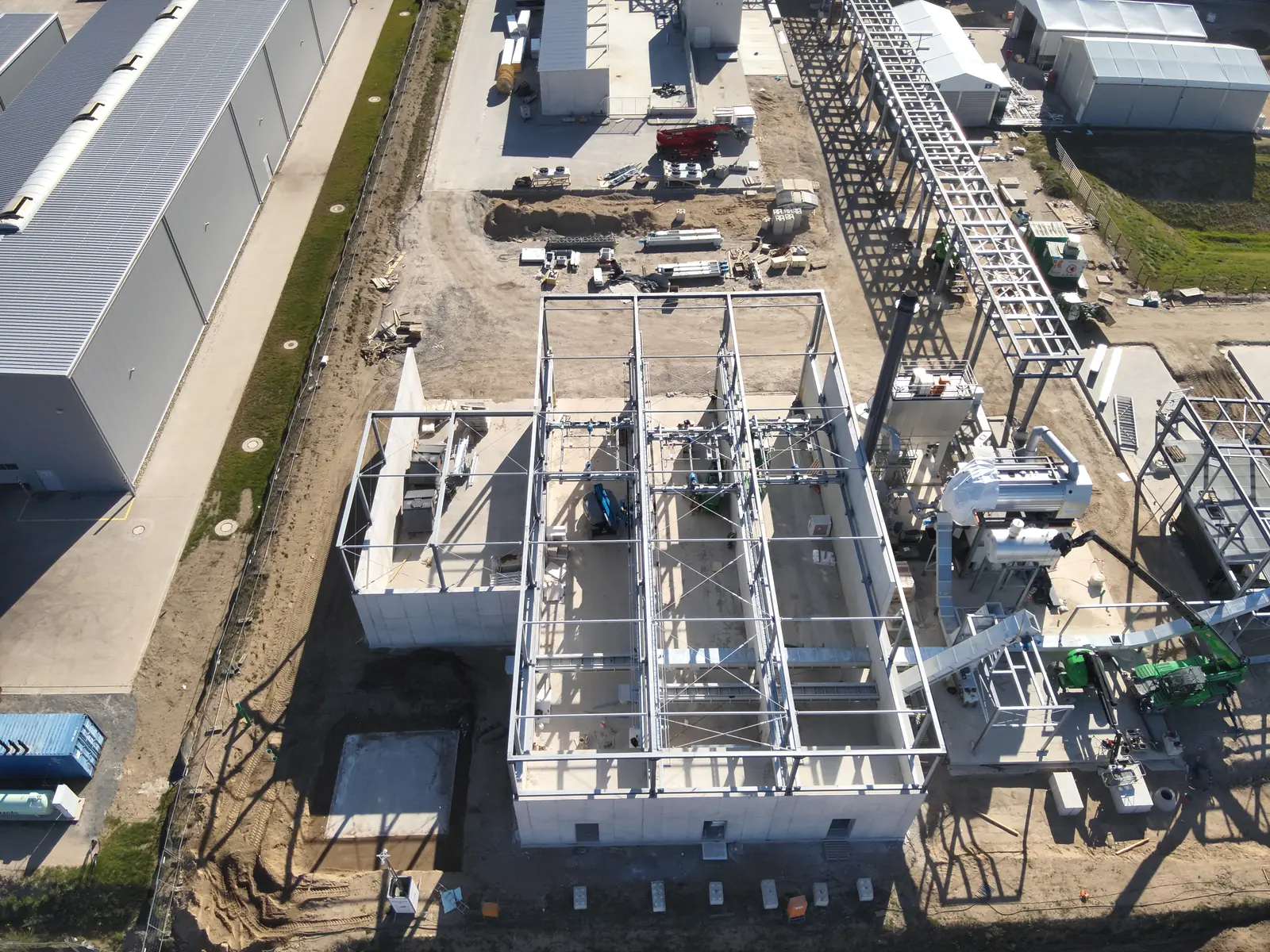
Biochar production at an industrial site in Mecklenburg-Western Pomerania
Three Pyro-ClinX 150 plants produce power, heat and biochar from industrial wood residues at an industrial site in Mecklenburg-Western Pomerania.

PyroPark Forst
PyroPark Forst is being developed in Lusatia as an integrated energy site that converts woody residues into electricity, usable heat, biochar and certified carbon removal.

ClinX Heat Power Generation from a Carbonization Plant in Darmstadt
ClinX Heat uses high-temperature energy from an existing carbonization plant to generate additional electricity on site.
 info@pyro-power.com
 +49 355 866 870 82
 pyropower GmbH