
Micro turbine generators in the 35 kW class
MTG35 and MTiG with integrated generator
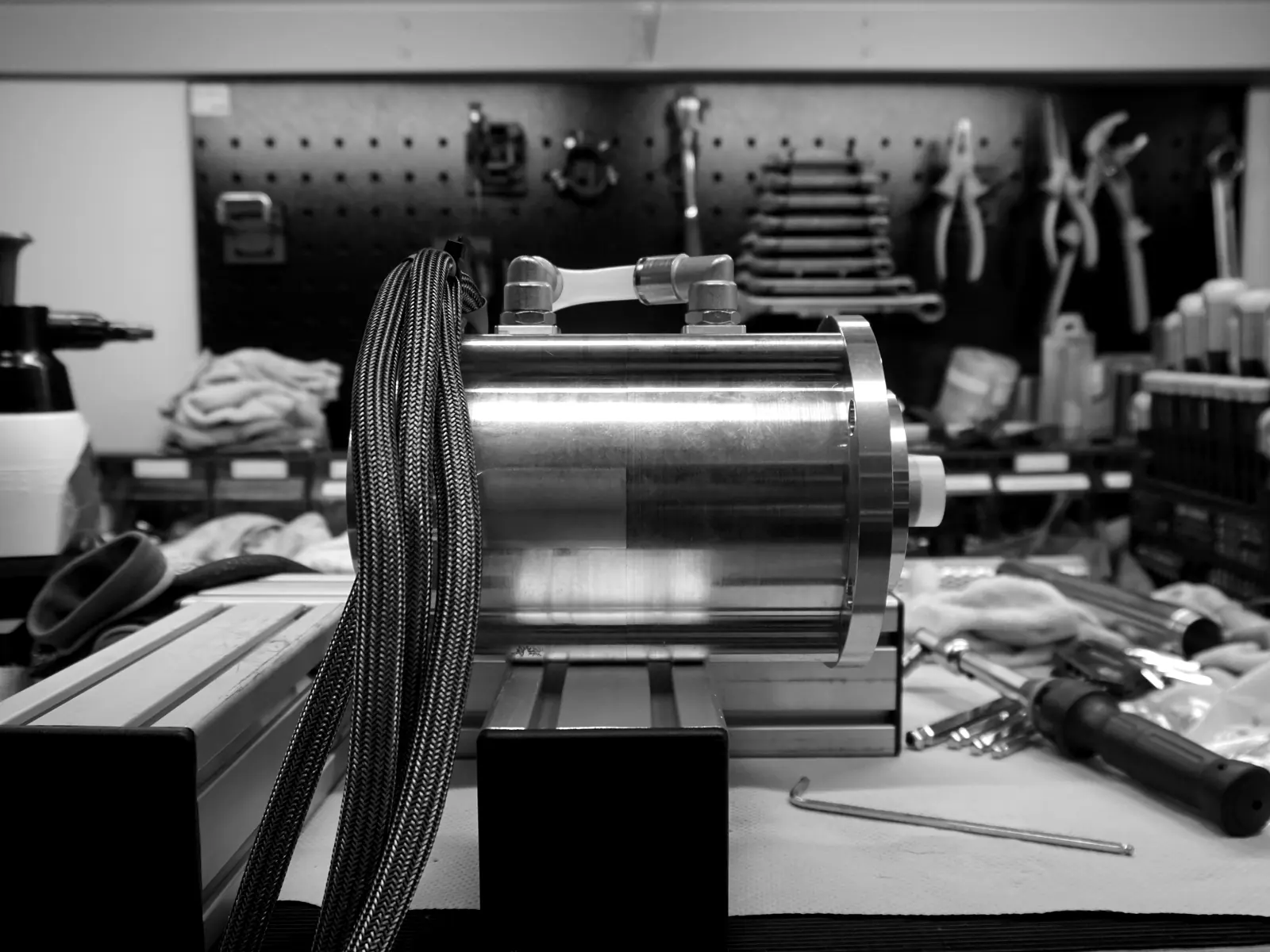
Project at a glance
| Project type: | Research and development |
|---|---|
| Technology: | MTG35 and MTiG micro turbine generators |
| Power class: | 35 kW |
| Development: | since 2016 |
| Partners: | international development partners |
| Implemented by: | pyropower group |
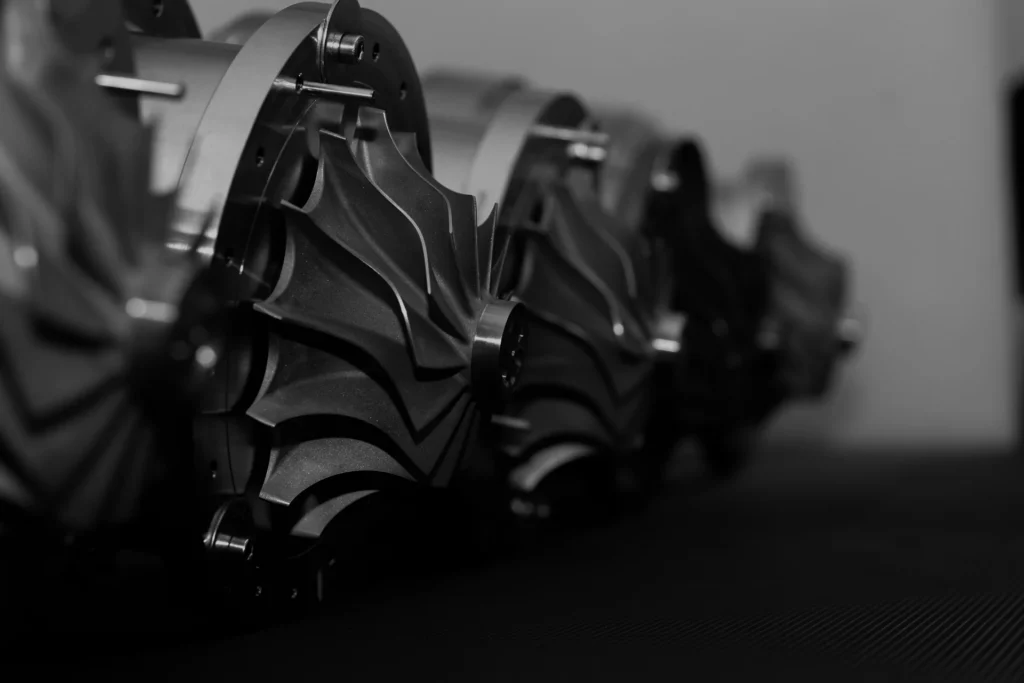
From development to series
Starting point
A micro turbine generator combines turbine and generator in one compact unit. International development partners were looking for such a unit for the 35 kW class.
Implementation
Since 2016, the group of companies has been developing the MTG35 for this purpose. In the MTiG variant, the generator is integrated directly into the turbine, which saves installation space and components. Development also includes adaptations to special operating conditions, such as a non-standard installation position.
Result
Micro turbines of this class have been delivered to customers and used in our own test rigs. This work reflects more than ten years of experience in developing and adapting micro gas turbines.
Integration as a development goal
The closer turbine and generator move together, the shorter and stiffer the shaft becomes. This simplifies the design, but places high demands on cooling, bearings and rotor dynamics.
[ Knowledge ]
High-speed generators: permanent magnets and power electronics
- Speed: micro gas turbines run at several tens of thousands of revolutions per minute
- Generator: permanent magnet synchronous machine directly on the shaft, without gearbox
- Power electronics: rectifies the high-frequency voltage and generates grid-compliant alternating current
- Rotor dynamics: critical speeds must lie outside the operating range
Small turbine wheels only reach their optimum circumferential speed at very high speeds; several tens of thousands of revolutions per minute are common in micro gas turbines. Instead of a gearbox, the generator usually sits directly on the shaft. Permanent magnet synchronous machines are used because they do without slip rings and excitation windings in the rotor and achieve a high power density.
At these speeds, the generator produces an alternating voltage with a frequency in the kilohertz range. Power electronics rectify it and convert it via an inverter into grid-compliant alternating current at 50 hertz. For start-up, the same machine works as a motor and brings the turbine up to ignition speed.
Mechanically, the rotor is the biggest challenge. The magnets have to be secured against enormous centrifugal forces, usually by a sleeve made of carbon fibre or a high-strength alloy. Eddy current losses heat the rotor, and the shaft has to be designed so that its critical speeds are not in the operating range. An integrated generator shortens the shaft and makes exactly this easier.
[ Technology ]
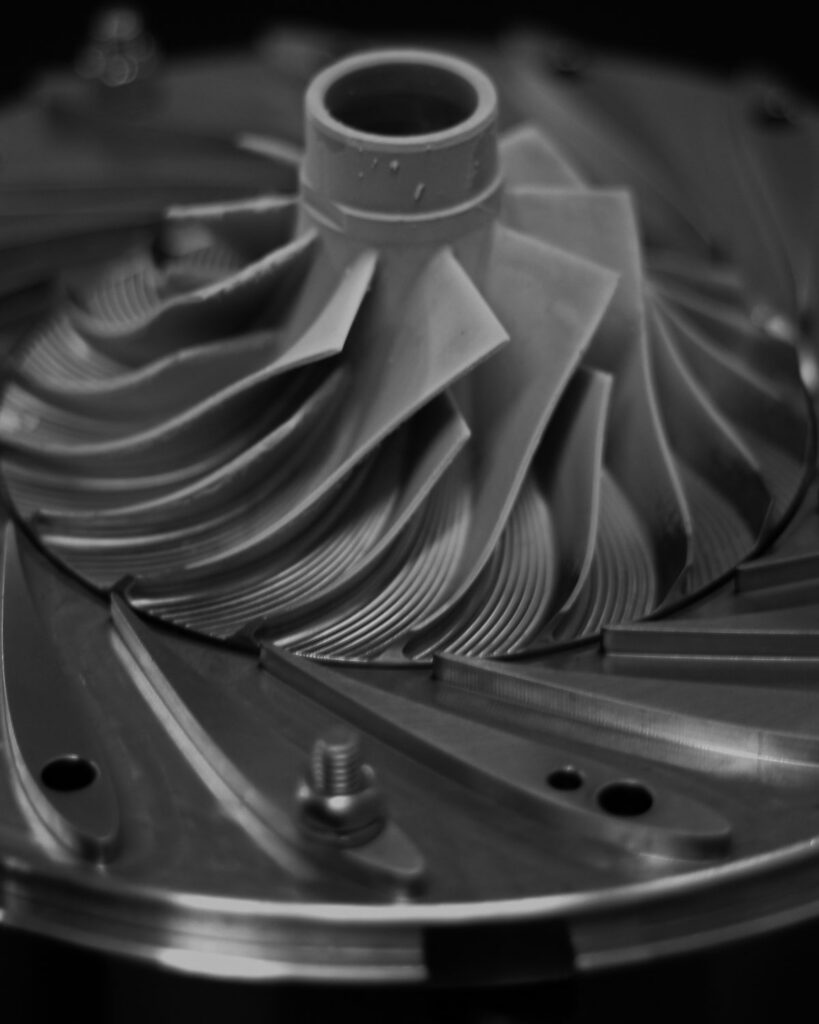
Externally fired micro gas turbine
Clean air instead of gas in the turbine and air bearings without oil: this is how the technology works that we have been developing within our group of companies for years.
[ References ]
Latest projects
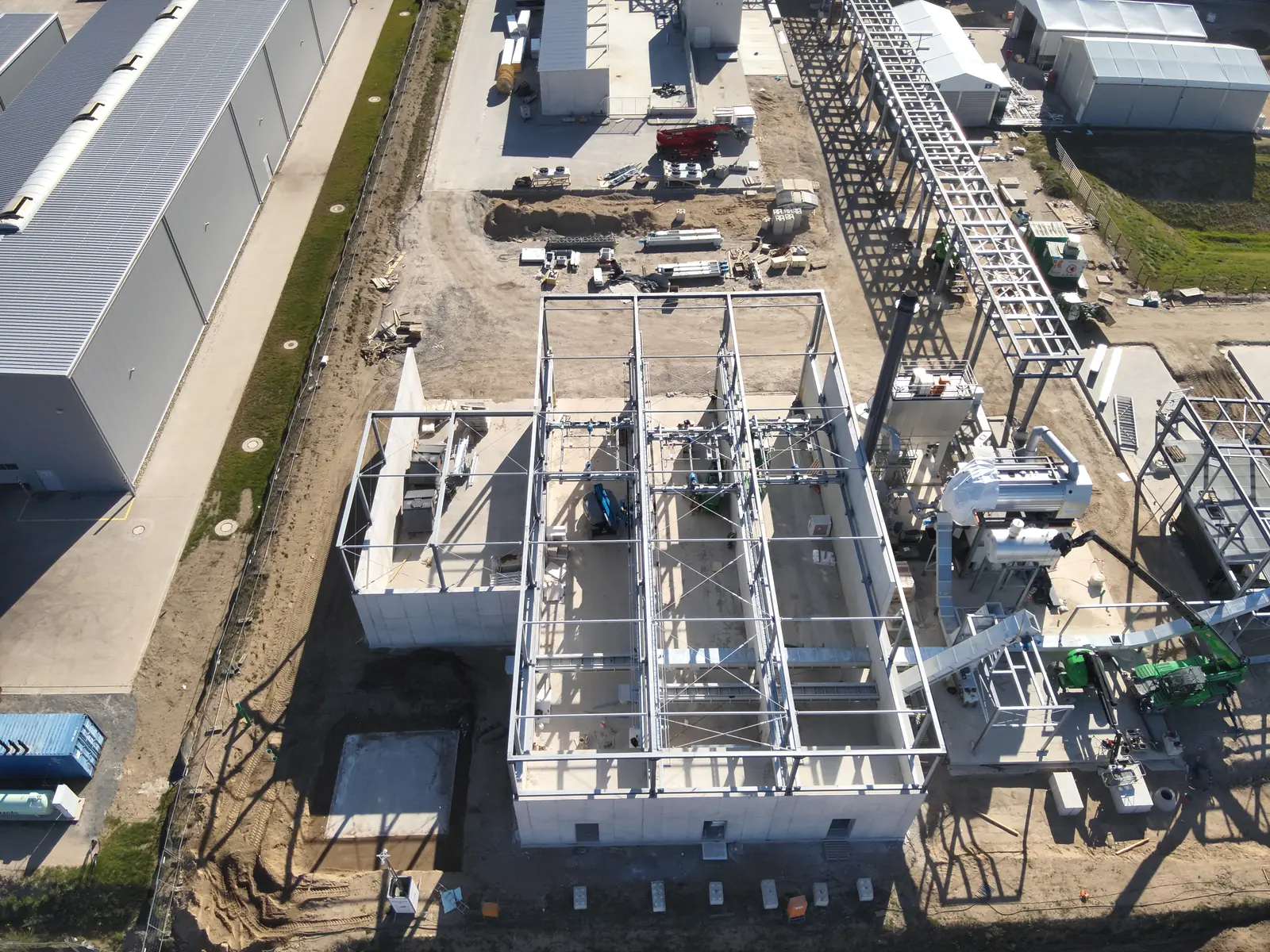
Biochar production at an industrial site in Mecklenburg-Western Pomerania
Three Pyro-ClinX 150 plants produce power, heat and biochar from industrial wood residues at an industrial site in Mecklenburg-Western Pomerania.

PyroPark Forst
PyroPark Forst is being developed in Lusatia as an integrated energy site that converts woody residues into electricity, usable heat, biochar and certified carbon removal.

ClinX Heat Power Generation from a Carbonization Plant in Darmstadt
ClinX Heat uses high-temperature energy from an existing carbonization plant to generate additional electricity on site.
 info@pyro-power.com
 +49 355 866 870 82
 pyropower GmbH