
Economic viability and schedule before the investment decision
Reliable figures for an energy project in a medium-sized company
Project at a glance
| Project type: | Consulting |
|---|---|
| Client: | Medium-sized company |
| Location: | Germany |
| Our scope: | Economic and schedule assessment |
| Input variables: | Energy prices, fuel costs, operating hours, effort for permitting and construction |
| Result: | Follow-up order |
| Implemented by: | ClinX Energy Systems GmbH, pyropower group |
A reliable basis for the decision
Starting point
A medium-sized company was planning an energy project and wanted to know before the investment decision whether it would pay off and how long implementation would take.
Implementation
ClinX Energy Systems prepared an economic and schedule assessment. The calculation took into account energy prices, fuel costs, operating hours and the effort for permitting and construction. At the same time, a schedule from planning to commissioning was drawn up.
Result
A follow-up order was placed on the basis of the results. The company was thus able to decide with clear figures and a realistic schedule.
Figures and time belong together
An economic calculation is only as good as its schedule: every month until commissioning shifts revenues, and permits or delivery times often determine the critical path. That is why both assessments were prepared together.
[ Knowledge ]
Economic viability of energy plants: payback, net present value, levelised costs
- Static payback: investment divided by annual savings, without interest
- Net present value: sum of all discounted payments over the service life
- Levelised costs: discounted costs per discounted kilowatt hour
- Sensitivity: how strongly the result reacts to prices and operating hours
The simplest key figure is the static payback period: investment divided by annual savings. It is easy to understand, but takes into account neither interest nor the time after payback. On its own, it is therefore not sufficient for energy plants with a long service life.
Dynamic methods discount all incoming and outgoing payments to the present. If the net present value is positive, the plant earns more than the required return. The levelised cost of energy (LCOE) divides the discounted costs over the entire term by the discounted energy generated, allowing a comparison with purchasing from the grid.
Because energy prices and fuel costs fluctuate, a sensitivity analysis is part of it: how does the result change if the power price falls, the fuel becomes more expensive or the plant runs fewer hours? For plants with high investment and low operating costs, operating hours are usually the strongest lever.
 From the blogSeven criteria for choosing a pyrolysis plantRead more ›
[ Technology ]
Engineering and concepts
From the pre-project phase through concept and economic viability to detailed engineering: we design energy plants for residues, process heat and heating networks.
[ References ]
Latest projects
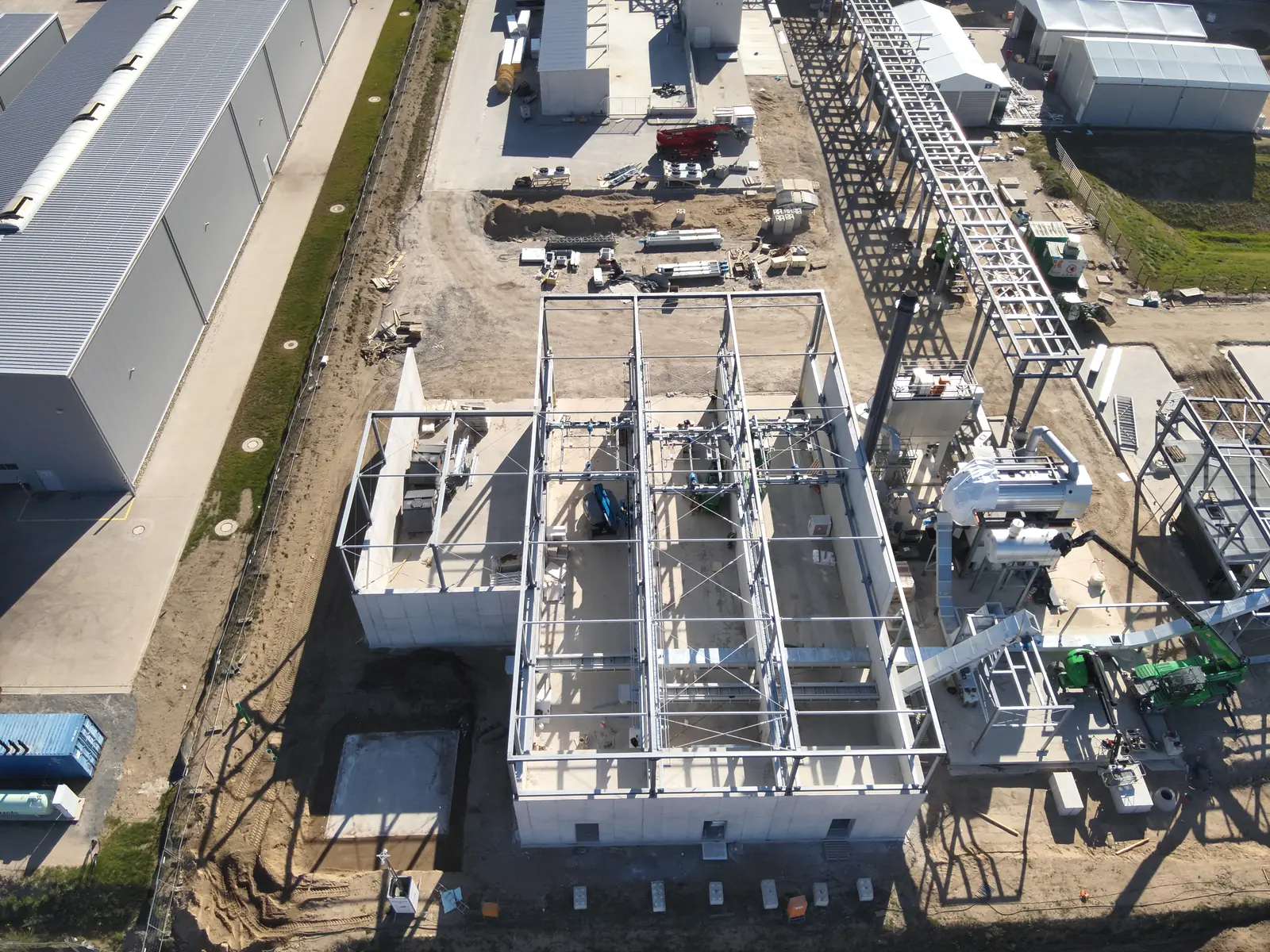
Biochar production at an industrial site in Mecklenburg-Western Pomerania
Three Pyro-ClinX 150 plants produce power, heat and biochar from industrial wood residues at an industrial site in Mecklenburg-Western Pomerania.

PyroPark Forst
PyroPark Forst is being developed in Lusatia as an integrated energy site that converts woody residues into electricity, usable heat, biochar and certified carbon removal.

ClinX Heat Power Generation from a Carbonization Plant in Darmstadt
ClinX Heat uses high-temperature energy from an existing carbonization plant to generate additional electricity on site.
 info@pyro-power.com
 +49 355 866 870 82
 pyropower GmbH