
Air bearings for micro gas turbines: oil-free at very high speeds
Own test rigs and bearings for the 35 kW class
Project at a glance
| Project type: | Research and development |
|---|---|
| Subject: | Air bearings for micro gas turbines |
| Result: | Air bearing test rigs and air bearings for the 35 kW class micro gas turbine |
| Partners: | Aerospace research institution |
| Funding: | Funding application in the BIG-FuE programme |
| Implemented by: | pyropower group |
Test rigs and bearing development
Starting point
In a micro gas turbine, the shaft rotates tens of thousands of times per minute. At these speeds, conventional oil bearings need oil circuits, pumps and maintenance.
Implementation
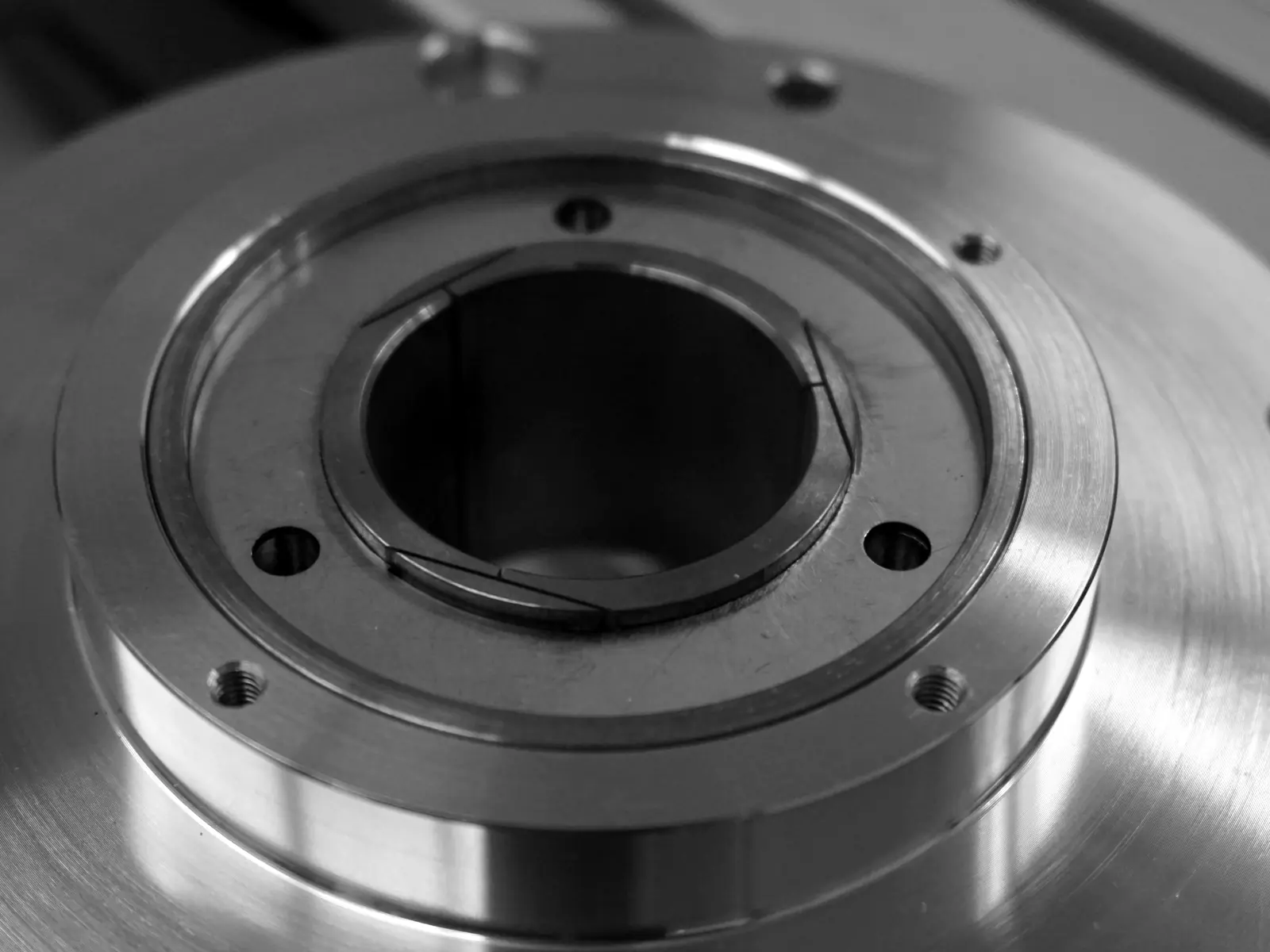
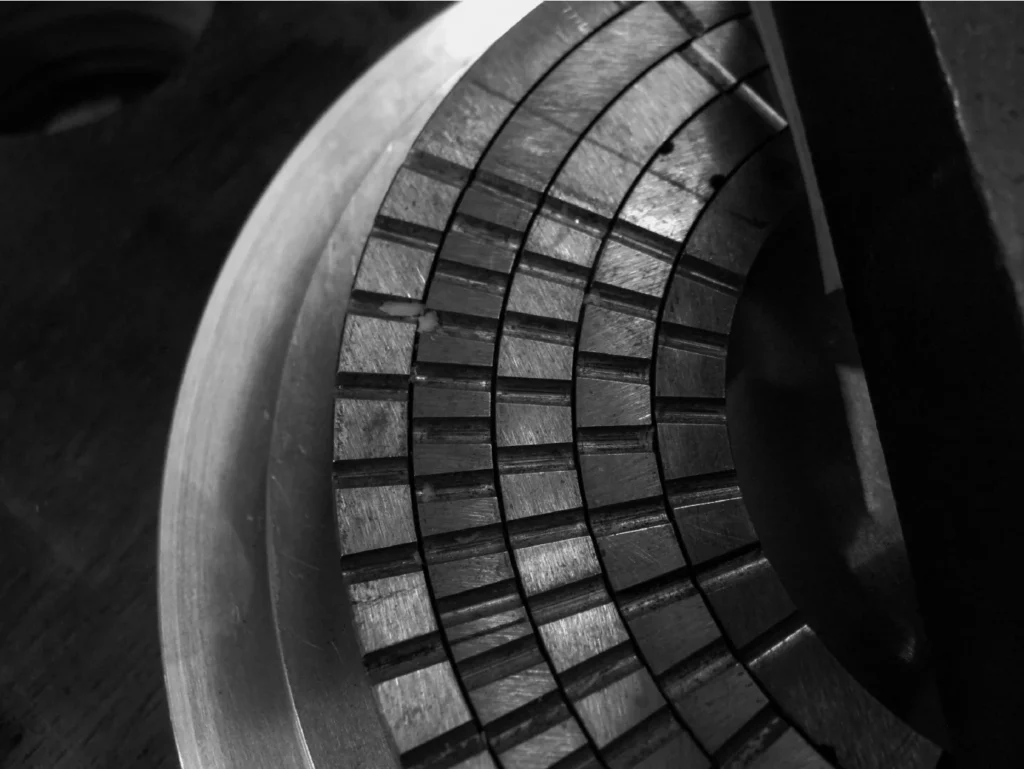
Air bearings support the shaft on a thin film of air and do without lubricating oil. From 2015, the group of companies built several air bearing test rigs and air bearings for the 35 kW class micro gas turbine. Together with an aerospace research institution, this was followed by a funding application for the air bearing of micro gas turbines.
Result
The experience from this work is now part of the Pyro-ClinX plants: their micro gas turbine runs on air bearings without lubricants or oil.
Own test rigs
Air bearings can only be calculated to a limited extent. Load capacity, damping and wear during start-up have to be measured on test rigs before a bearing is installed in a turbine. That is why bearings and test rigs were developed together.
[ Knowledge ]
Foil air bearings: carried on a film of air
- Principle: the rotating shaft draws air into a wedge-shaped gap and builds up pressure there
- Gap height: a few micrometres
- Bump foil: resilient base that provides compliance and friction damping
- Start and stop: solid contact below lift-off speed, hence sliding coatings
An aerodynamic air bearing works like a hydrodynamic plain bearing, only with air instead of oil. The rotating shaft drags air into a narrowing gap in which pressure builds up that supports the shaft. Because the viscosity of air is around three orders of magnitude lower than that of oil, friction is very low, but so is the load capacity. Air bearings are therefore particularly suitable for light, very fast rotating rotors.
In foil air bearings, a smooth top foil lies on a corrugated bump foil between shaft and housing. This arrangement adapts to thermal expansion and centrifugal growth of the shaft and dampens vibrations through friction between the foils. Unlike oil, air becomes more viscous as the temperature rises, which favours use close to hot turbine components.
The critical phase is the start: until the shaft reaches lift-off speed, foil and shaft rub against each other. Solid lubricant and wear protection coatings on the shaft or foil therefore determine the number of possible start-stop cycles. In operation, on the other hand, the bearing works without contact and without a lubricating oil circuit.

[ Technology ]
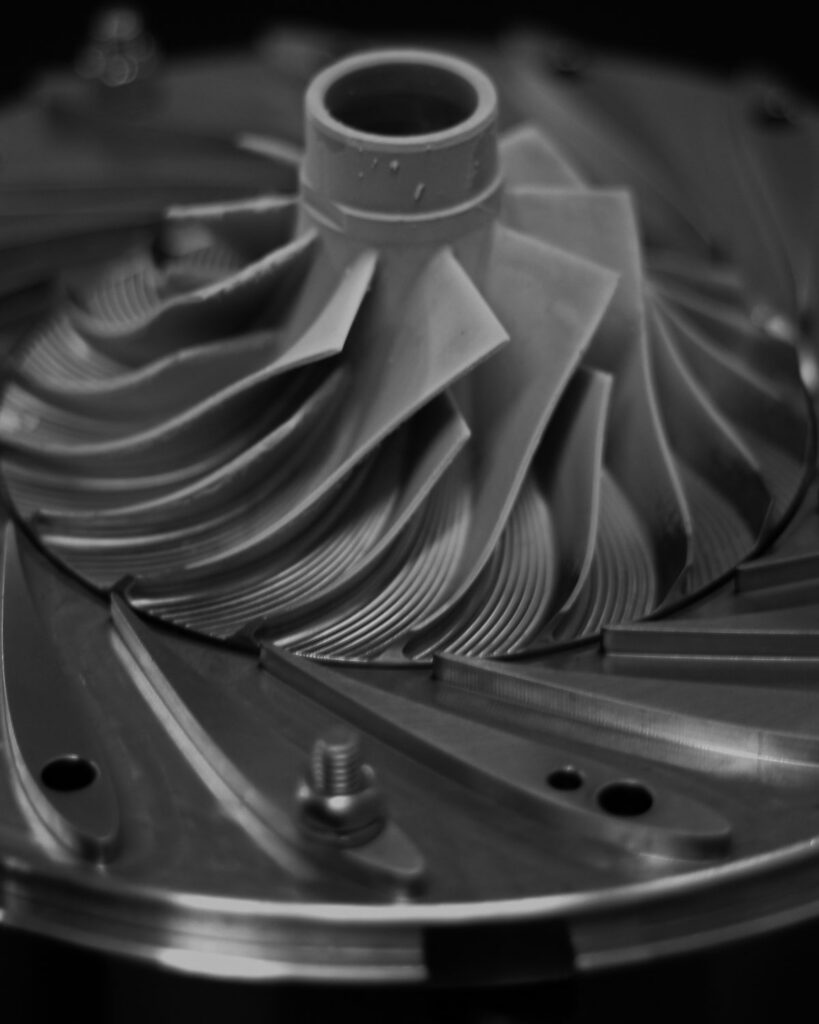
Externally fired micro gas turbine
Clean air instead of gas in the turbine and air bearings without oil: this is how the technology works that we have been developing within our group of companies for years.
[ References ]
Latest projects
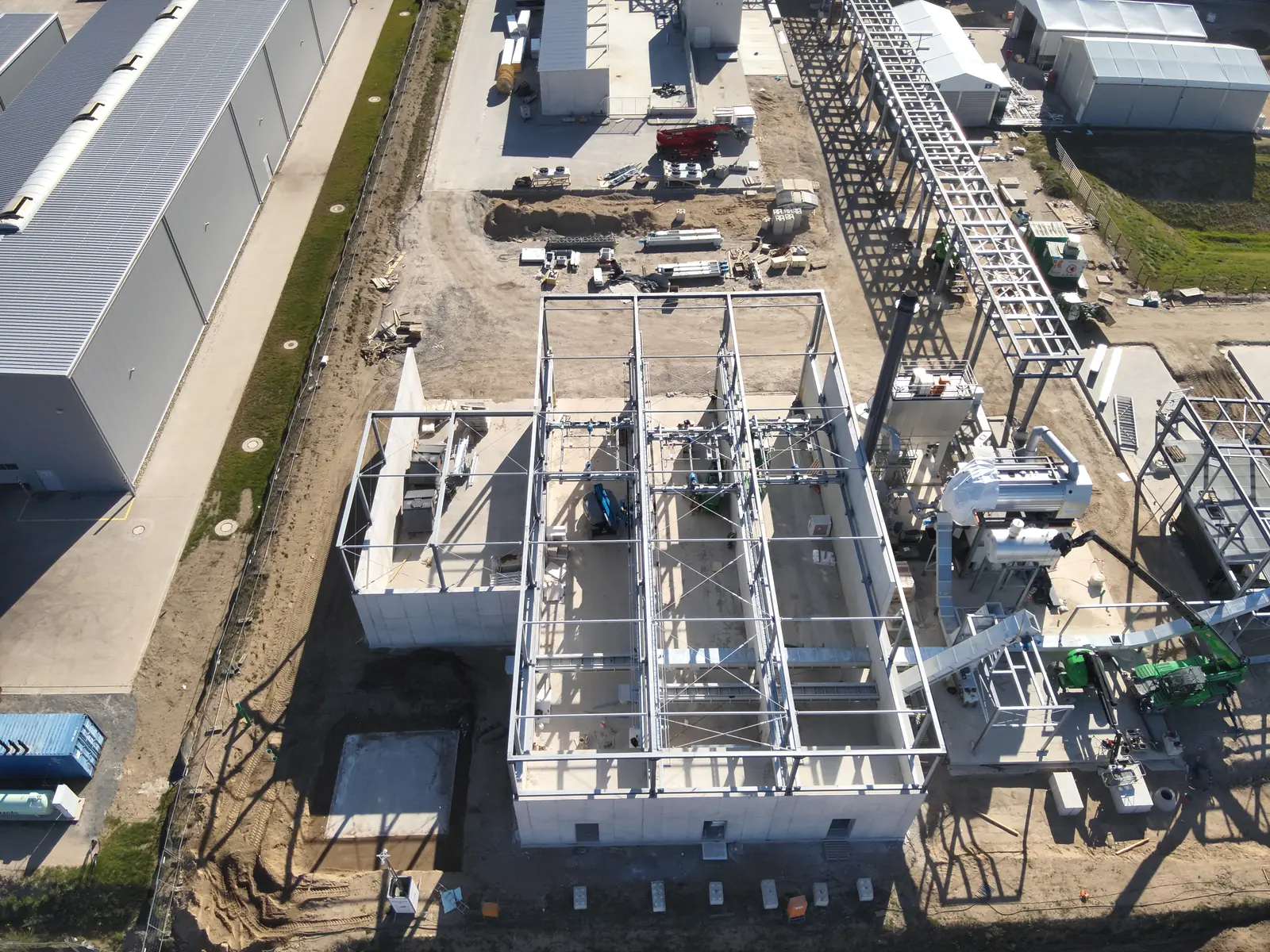
Biochar production at an industrial site in Mecklenburg-Western Pomerania
Three Pyro-ClinX 150 plants produce power, heat and biochar from industrial wood residues at an industrial site in Mecklenburg-Western Pomerania.

PyroPark Forst
PyroPark Forst is being developed in Lusatia as an integrated energy site that converts woody residues into electricity, usable heat, biochar and certified carbon removal.

ClinX Heat Power Generation from a Carbonization Plant in Darmstadt
ClinX Heat uses high-temperature energy from an existing carbonization plant to generate additional electricity on site.
 info@pyro-power.com
 +49 355 866 870 82
 pyropower GmbH