
Producing biochar: how a biochar plant works
20.11.2026
Producing biochar: how a biochar plant works
Biochar is produced when biomass is heated in the absence of oxygen. This process is called pyrolysis. In an industrial biochar plant, it runs continuously and under control: woody residues become biochar, and the pyrolysis gas released in the process provides energy. Modern plants use this gas to generate heat and electricity.
This article explains how production works, what a plant needs on site, what matters for quality and how a biochar plant pays off.
Sebastian Kießling
Managing Director Technology, pyropower GmbH

Key facts
- Biochar is produced by pyrolysis: biomass is heated in the absence of oxygen and breaks down into biochar and pyrolysis gas.
- Industrial plants operate continuously and use the pyrolysis gas for heat and, depending on the plant, also for electricity.
- Suitable feedstocks are untreated woody residues, such as wood chips from forestry, landscape management and the wood industry.
- For soil, feed or building materials, quality is what counts. The benchmark is the European Biochar Certificate (EBC).
- A biochar plant pays off when heat, electricity and biochar are used on site or sold.
How is biochar produced?
Biochar is produced by pyrolysis. Biomass is heated to several hundred degrees in the absence of oxygen. Because there is no oxygen, the material does not burn but breaks down: volatile components escape as pyrolysis gas, leaving behind a porous, carbon-rich solid, the biochar.
On a small scale, this is also possible with simple kilns. However, the German Environment Agency (UBA) points out that improper production can release soot, carbon monoxide and methane. Industrial plants therefore work with controlled temperature, closed gas handling and flue gas cleaning.
The steps in an industrial plant
- Feeding the fuel: wood chips enter the reactor airtight via a conveyor system.
- Pyrolysis: in the reactor, the wood breaks down into pyrolysis gas and biochar without oxygen.
- Using the gas: the pyrolysis gas is burned or oxidised flamelessly. The heat is used for processes, buildings or a heating network, and in some plants also to generate electricity.
- Cooling and filling the biochar: the char is cooled in a closed system and filled into silos or big bags.
What a biochar plant needs on site
Whether a plant is suitable for your site depends mainly on four points:
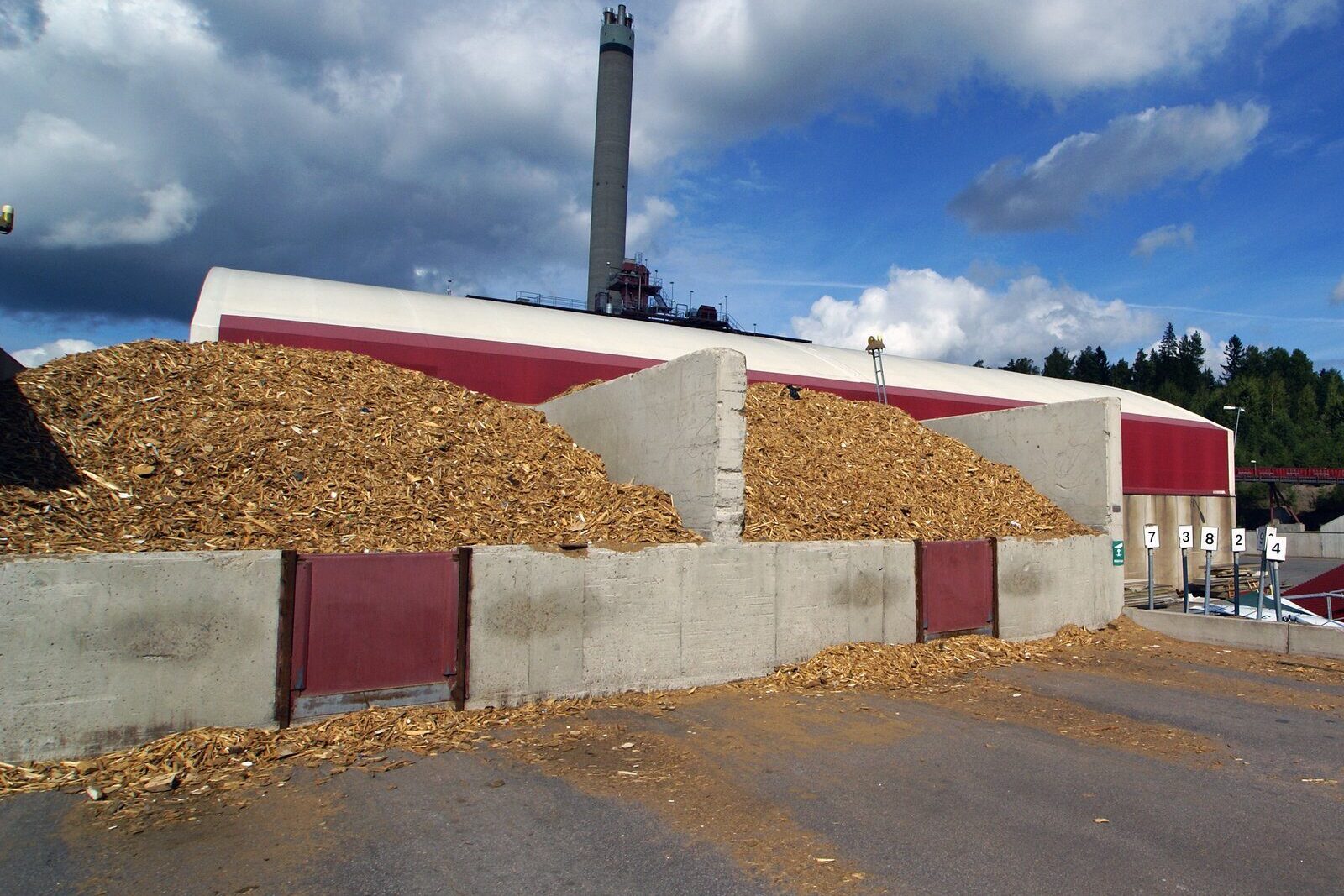
- Residues: Untreated woody residues from forestry, landscape management and the wood industry are well suited. For certified biochar, the feedstock must be on the positive list of the European Biochar Certificate. Treated waste wood is not included.
- Heat consumers: In addition to biochar, a biochar plant mainly produces heat. It becomes economical when this heat is used all year round, for example for drying, processes or a heating network.
- Offtake for the biochar: Plan early where the biochar will go: to your own farm, to composting plants, into building materials or to trade.
- Permits and space: Which permit is required depends on plant size, feedstock and location. We clarify this with you and the authorities in the pre-project phase.
How the Pyro-ClinX works
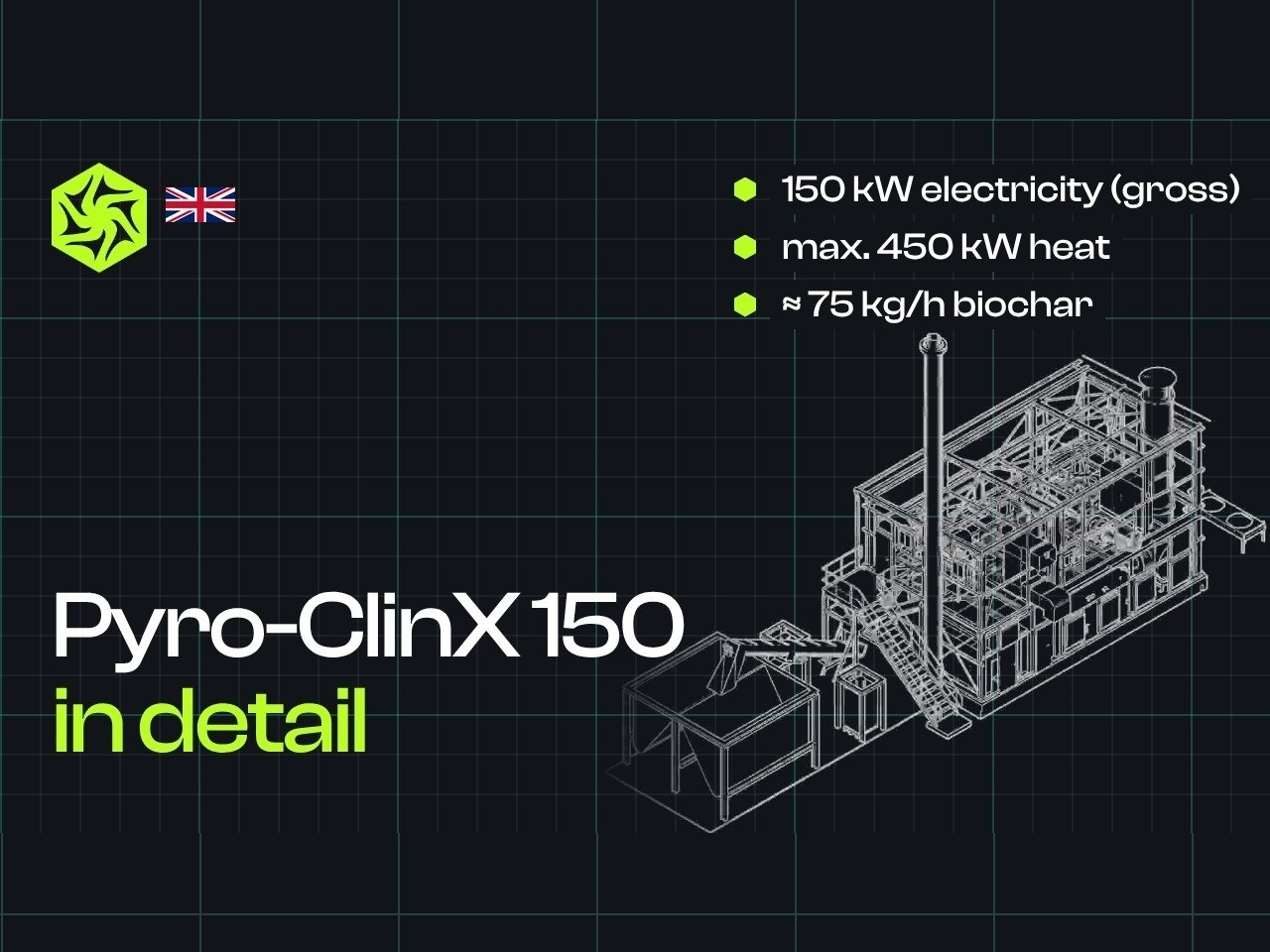
Our Pyro-ClinX is a biochar plant that produces electricity, heat and biochar from wood chips at the same time. In the tubular reactor, the wood breaks down at 650 to 800 °C without oxygen. The pyrolysis gas oxidises flamelessly at up to 1,200 °C. A high-temperature heat exchanger transfers this heat to clean, compressed air, which drives an externally fired micro gas turbine. The turbine never comes into contact with the pyrolysis gas. The video shows the path from wood chips to biochar in the big bag.
Clicking loads the video from YouTube. Data will be transferred to Google.
The Pyro-ClinX 150 in figures
- 150 kW of power gross, max. 450 kW of heat, process heat up to 360 °C
- around 315 kg of wood chips per hour, G30 to G45 with up to 25 % moisture content
- around 75 kg of biochar per hour (dry matter), which is 20 to 25 % of the input
- designed for 8,000 operating hours per year, which works out at around 600 t of biochar
- around 1,720 t of CO₂ equivalent per year bound in the biochar, excluding life cycle assessment
- fully automatic operation with remote monitoring
How to recognise good biochar
Not all biochar is the same. For soil, livestock farming or building materials, the feedstock, production and pollutant content matter. The benchmark in Europe is the European Biochar Certificate (EBC). Depending on the application, it distinguishes the classes Feed, AgroOrganic, Agro, Urban, ConsumerMaterial and BasicMaterial. Only feedstocks from the EBC positive list are permitted, the pyrolysis temperature must remain stable during operation, and an accredited sampler takes samples during the annual inspection.
For use in soil, biochar is approved in the EU as a soil improver. The German Environment Agency advises buying only biochar with the EBC seal for garden use.
The biochar from the Pyro-ClinX meets the EBC standard. According to our technical data, its content of polycyclic aromatic hydrocarbons (EPA16-PAH) is below 4 mg/kg, measured using the EBC method.
How a biochar plant pays off
A biochar plant has three revenue streams, four with electricity generation:
- Heat: replaces gas or oil for processes, halls or a heating network.
- Electricity: covers your own consumption or is fed into the grid.
- Biochar: is used yourself or sold, for example to agriculture, composting or building material manufacturers.
- Carbon removal certificates: the carbon bound in the biochar can be certified as a carbon sink and sold.
Our articles on pyrolysis plant costs and economics show how high investment and revenues are at your site. Which programmes can support you is covered in the article on funding for pyrolysis plants.
Conclusion
Producing biochar industrially means operating pyrolysis in a controlled and continuous way and using the pyrolysis gas as an energy source. A biochar plant pays off where woody residues arise, heat is needed and the biochar has a buyer. We assess whether this applies to your site together with you in the Utilization Check.
Frequently asked questions
How is biochar produced?
By pyrolysis: biomass is heated in the absence of oxygen and breaks down into pyrolysis gas and biochar. Industrial plants use the gas to generate heat and, in some cases, electricity.
How much biochar is produced from wood?
That depends on the plant and process control. With the Pyro-ClinX, it is 20 to 25 % of the wood input: around 75 kg of biochar per hour from around 315 kg of wood chips.
Which residues are suitable?
Untreated woody residues from forestry, landscape management and the wood industry; for the Pyro-ClinX, wood chips G30 to G45 with up to 25 % moisture content. For certified biochar, the feedstock must be on the EBC positive list.
Can I make biochar myself?
On a small scale, yes, for example with special kilns. The German Environment Agency recommends suitable equipment and dry, untreated wood, as soot and harmful gases can otherwise be produced. Selling biochar or generating carbon certificates requires controlled production and certification.
Does a biochar plant need a permit?
As a rule, yes. Which permit is required depends on size, feedstock and location. We clarify this with you and the authorities in the pre-project phase.
What does a biochar plant cost?
That depends on output, location and heat integration. Our article on pyrolysis plant costs gives an overview of investment and operating costs.
- Pyro-ClinX: electricity, heat and biochar from wood residues
- Biochar from pyropower
- What Is Pyrolysis? Explained Simply: From Wood Residues to Power, Heat and Biochar
- From sink to certificate: biochar as certified carbon removal
- Which Pyrolysis Plant Suits Your Business? Seven Criteria for Selection
You can find more videos and insights on our YouTube channel and on Instagram.
Sources
- European Biochar Certificate: Summary of the EBC certification
- German Environment Agency (UBA): Biochar (in German)
- pyropower: Technical data of the Pyro-ClinX 150
Learn more
Biochar from pyropower
Qualities, applications and sourcing at a glance on our product page.
Go to biochar page
 info@pyro-power.com
 +49 355 866 870 82
 pyropower GmbH