
Forest residues as feedstock: quality, availability and rules for pyrolysis
05.05.2026
Forest residues as feedstock: quality, availability and rules for pyrolysis
Key facts in brief
Using forest residues for pyrolysis makes sense: they arise regularly from thinning and harvesting, often close to businesses that need heat. For a plant to generate power, heat and biochar from them reliably, moisture, particle size, ash content and documented origin are what matter.
- According to the 2022 National Forest Inventory, Germany has around 11.5 million hectares of forest, about one third of its land area.
- Freshly harvested forest wood chips contain 49 percent water on average. The Pyro-ClinX is designed for max. 25 percent; 10 to 25 percent is ideal.
- Bark, needles and adhering soil increase the ash content. This affects both the plant and the biochar.
- For biochar in line with the EBC standard, traceable origin from certified, sustainable forestry is what counts.

Sebastian Kießling
Managing Director Technology, pyropower GmbH

Forest residues arise regularly
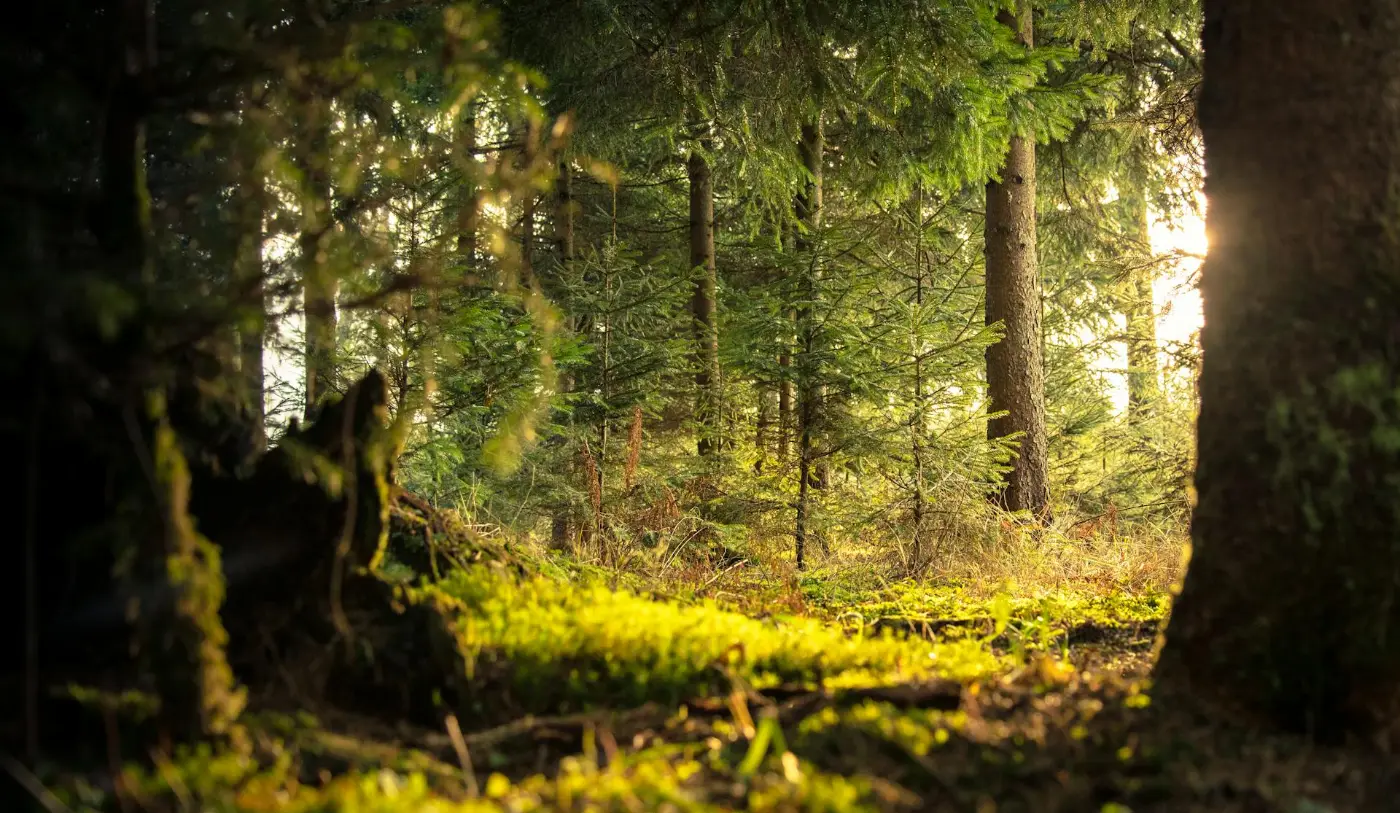
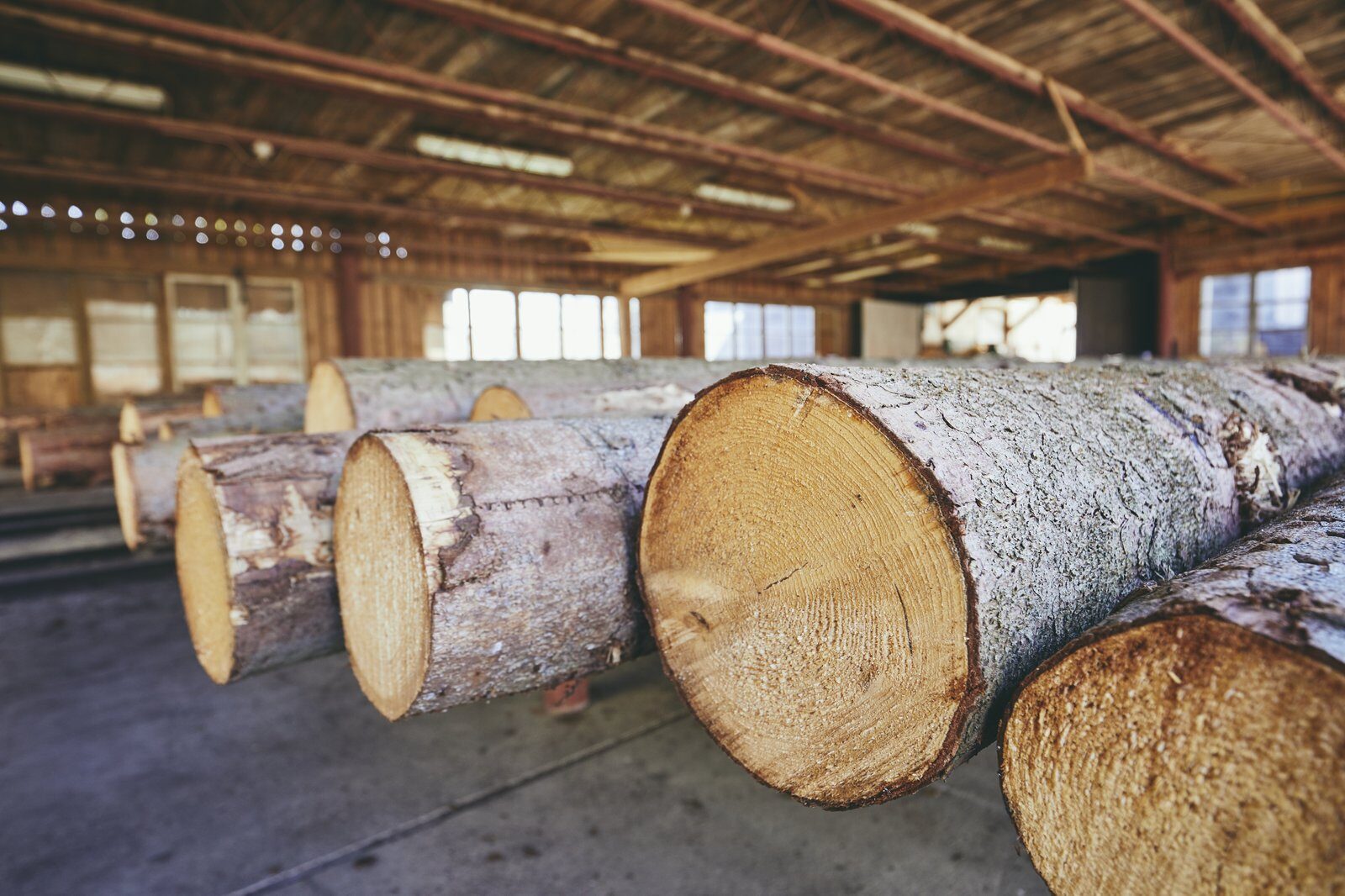
Forest residues are wood that arises from thinning and harvesting and is not sold as roundwood: crowns, branches, thin stems and material from tending operations. According to the fourth National Forest Inventory with reference year 2022, Germany has 11.5 million hectares of forest. Wood increment is 101.5 million cubic metres per year, 16 percent less than in 2012. Drought and bark beetles have hit spruce in particular: its area has fallen by around 460,000 hectares since 2012, and 60.1 million cubic metres of calamity wood were produced in 2020 (Thünen Institute, National Forest Inventory 2022).
For businesses, this means: wood from tending and damaged areas is available in many places, but quantity and quality vary with season, tree species and region. The inventory also shows that since 2017 the living biomass in the forest has been losing more carbon than it absorbs. Forest residues should therefore come from management that maintains the forest as a carbon store. How much material a site can source over the long term is one of the first points of every project assessment.
Our video shows which residues are suitable for pyrolysis.
Clicking loads the video from YouTube. Data will be transferred to Google.
Moisture, particle size and ash are decisive
For pyrolysis, forest residues are processed into wood chips. Three properties determine how well this works:
- Moisture content: In studies by the Bavarian State Institute of Forestry, freshly harvested forest wood chips contained 49 percent water by mass on average. The Pyro-ClinX 150 is designed for a moisture content of max. 25 percent; 10 to 25 percent is ideal. Wetter material can be dried beforehand, optionally in a moving floor dryer heated with waste heat from the plant.
- Particle size: The Pyro-ClinX processes wood chips of quality classes G30 to G45 with a maximum particle length of 120 mm. In the Bavarian measurements, only 36 percent of the samples met the size requirements for quality wood chips. Common causes were blunt knives, too many fines and overly long particles.
- Ash: There, forest residues had 0.8 to 5.4 percent ash by mass, energy roundwood only 0.4 to 1.7. Bark, needles and leaves bring minerals with them; samples with more than 10 percent ash contained mineral soil. Mineral components end up in the biochar after pyrolysis and influence its quality.
Source of the measured values: Kuptz and Hartmann, LWF, on waldwissen.net.
Keeping an eye on origin and documentation
For biochar in line with the EBC standard, the positive list of the European Biochar Certificate defines which biomasses are permitted. For bark, chippings and wood residues from forestry and wood processing, it requires material from certified, sustainable cultivation. FSC and PEFC are recognised, other evidence on application. Certification is per production site, and the achievable EBC class depends on the feedstock.
For larger biomass plants, the revised Renewable Energy Directive RED III tightens the sustainability requirements: the threshold falls from 20 to 7.5 megawatts of total rated thermal input (C.A.R.M.E.N.). A single Pyro-ClinX has a fuel heat input of 1,400 kW. In individual cases, the total output at the site is what matters. Complete documentation of origin pays off in any case, because it is a prerequisite for certifying the biochar and its carbon sink.
How we assess a feedstock
Before a plant is planned, we assess the feedstock in the residue utilisation check: quantity and availability including storage and transport, moisture content, calorific value, ash content and particle size as well as impurities and pollutants. On request, laboratory analysis and a practical trial are added. This shows whether forest residues can be used directly, whether drying makes sense and which biochar quality is realistic.
In the Pyro-ClinX 150 , wood chips are turned into 150 kW of power, max. 450 kW of heat and biochar in one process. Around one fifth to one quarter of the input remains as biochar. If you mainly need heat, the Pyro-Hex 315 is a pyrolysis plant for heat and biochar.
- Pyro-ClinX 150: power, heat and biochar from woody residues
- residue utilisation check: assessing residues technically and economically
- Biochar: quality, EBC classes and applications
- PyroPark Forst: an energy site for woody residues in Lusatia
- Carbon removal with energy generation: processes compared
Download
Brochure and data sheet Pyro-ClinX
Technical data, feedstocks, products and the course of a project at a glance (PDF).
Download brochure (PDF)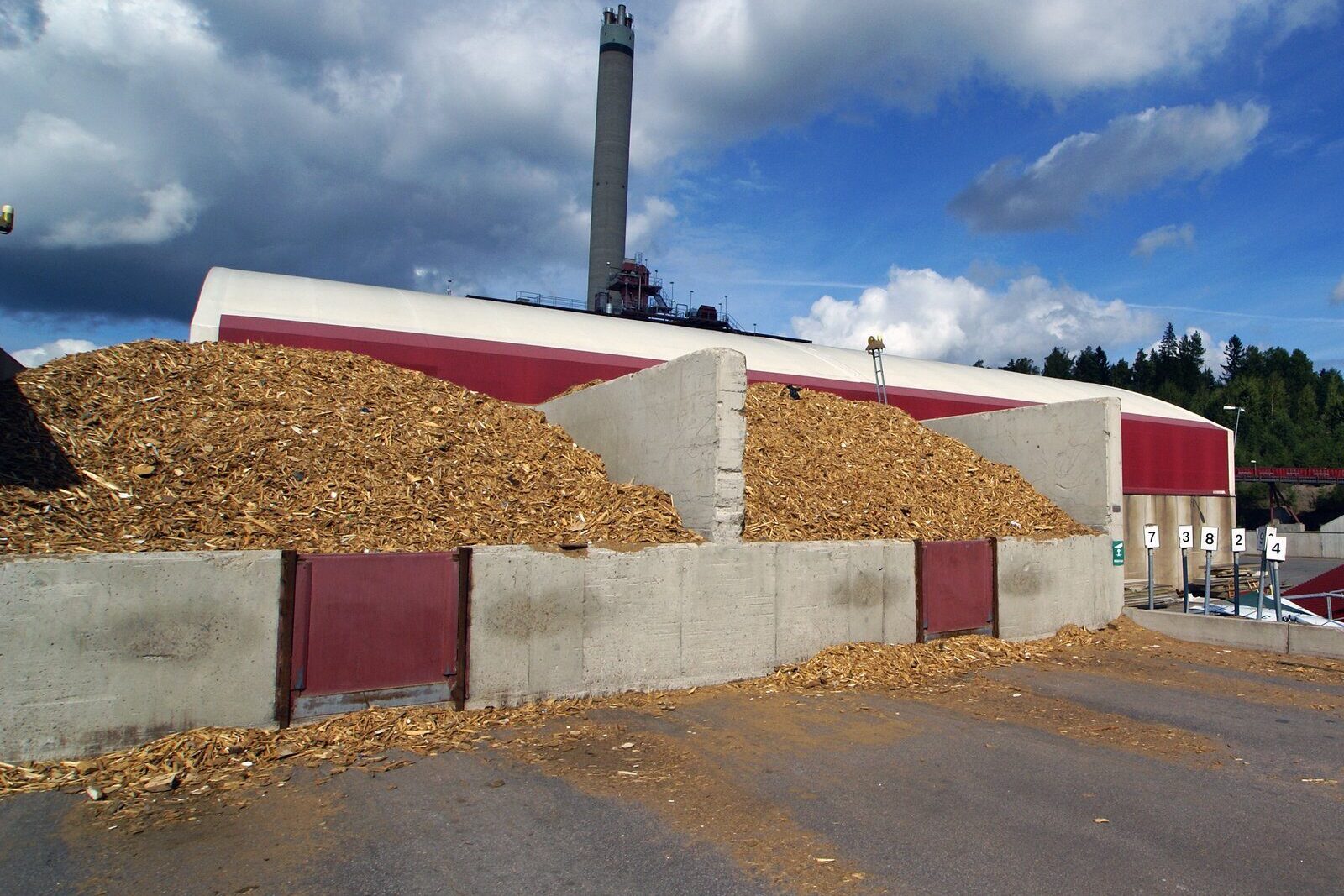
 info@pyro-power.com
 +49 355 866 870 82
 pyropower GmbH