
Heat and power for hotels: pool, spa and hot water from wood residues
12.11.2026
Heat and power for hotels: pool, spa and hot water from wood residues
In short: Hotels need heat every day of the year: for hot water, kitchen, pool and spa. Depending on the category, energy costs account for around 5 to 8 % of turnover in the German hotel industry. Since July 2026, Germany’s Building Modernisation Act has replaced the Building Energy Act. This article shows what that means for heating and which hotels could use their own pyrolysis plant supplying heat, electricity and biochar.

Lucie Töpfer
Managing Director, pyropower GmbH

Key points
- In hotels, hot water needs more energy than space heating. Heat is therefore needed all year round.
- Pool, sauna and spa create a base load that a plant with many operating hours can use well.
- The 65 % rule of the Building Energy Act no longer applies, and biomass remains permitted for heating.
- With up to 450 kW of heat, a Pyro-ClinX suits large hotels, resorts or several buildings in a cluster.
- Depending on the site, typical payback periods for pyrolysis plants are 3 to 8 years.
What a hotel needs energy for
The German hotel and restaurant association DEHOGA surveyed energy use per overnight stay. The figures date from 2014 but show the order of magnitude: around 73 kWh in hotels with up to two stars, around 53 to 56 kWh at three and four stars and around 121 kWh at five stars. Depending on the category, energy costs accounted for between 5 and almost 8 % of turnover.
Where the energy goes is shown by the official benchmark values for German energy performance certificates: for hotels and guesthouses, the value for hot water is 89.1 kWh per square metre and year, well above the 51.2 kWh for heating. In a hotel, heat is therefore not just a winter issue.
How pressing the topic remains is shown by a DEHOGA survey from February 2026: around two thirds of businesses call energy costs a pressing problem. Only staff costs are mentioned more often.
Pool and spa: heat every day
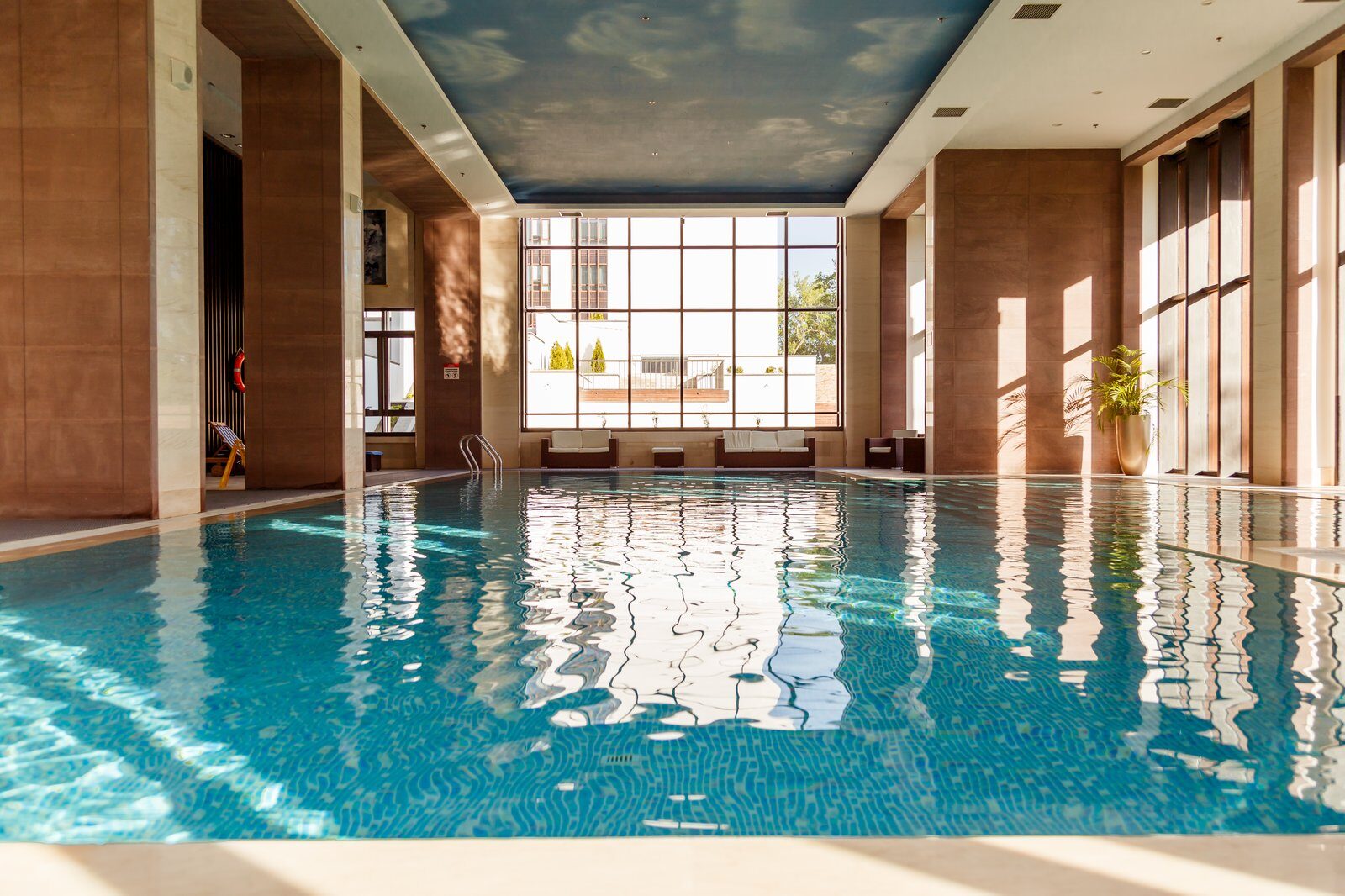
Swimming pools, saunas and spa showers need heat every day, in summer and winter alike. The German Hotel Association IHA speaks of considerable extra costs due to swimming pools. For on-site heat generation, this steady base load is exactly what matters: a pyrolysis plant works economically when it runs many hours a year and can deliver its heat.
In summer, when space heating is not needed, the pool, hot water and laundry continue to take heat. An absorption chiller can also convert heat into cooling for air conditioning and cold rooms.
What applies to heating in Germany in 2026
The Building Modernisation Act (GModG) has been in force since 29 July 2026. It replaces the Building Energy Act and with it the rule that new heating systems must run on 65 % renewable energy. Instead, new gas and oil heating systems must use gradually increasing shares of biogenic fuels: 10 % from 2029, 15 % from 2030, 30 % from 2035 and 60 % from 2040. Biomass, heat pumps and heating networks are not affected by these steps.
For non-residential buildings such as hotels, EU minimum standards also apply: buildings in the lowest efficiency classes are to be renovated step by step by 2030 and 2033. Anyone renewing their heating today should take this into account.
Replacing heating systems in non-residential buildings is funded through the Federal Funding for Efficient Buildings (KfW programme 522) with a 30 % grant, and biomass heating is generally eligible. Whether a combined heat and power plant such as the Pyro-ClinX qualifies, or whether other programmes are a better fit, is something we check case by case. An overview is given in our article Funding for pyrolysis plants 2026.
Which hotels a pyrolysis plant suits
A Pyro-ClinX 150 supplies up to 450 kW of heat as hot water at 90/70 °C, plus 150 kW of gross electrical output and biochar. At 8,000 operating hours, that is up to 3,600 MWh of heat a year. This suits:
- large hotels and resorts with spa, pool and year-round operation,
- several buildings on one site, such as hotel, conference centre and holiday homes, connected by a small heating network,
- hotels in rural areas with wood from forestry and landscape management nearby.
If heat is the main need, the Pyro-Hex 315 with around 750 kW of heat is an option. For smaller hotels, a plant of their own is usually too large. Connecting to a heating network may be the better route there.
Space and logistics need planning: the Pyro-ClinX measures 13.40 × 6.40 m and is 5.90 m high, plus a wood chip store and around three truck deliveries a week. The plant runs fully automatically with remote monitoring, and the existing boiler covers peaks and maintenance periods.
What the plant brings in
A pyrolysis plant pays off through several items: replaced heat from gas or oil, electricity used on site or fed into the grid, biochar and CO₂ certificates. Depending on the site, typical payback periods are between 3 and 8 years. What matters is how much of the heat the hotel actually uses over the year. More on this in our article Economics of a pyrolysis plant.
The biochar can be sold or handed over to pyropower, together with the certificates if desired. Whether a plant pays off for your hotel is something we check in advance using your consumption data.
Frequently asked questions
How much energy does a hotel use per overnight stay?
According to DEHOGA surveys from 2014, between around 53 and 121 kWh, depending on the category.
Does the 65 % rule still apply to hotels in Germany?
No. The Building Modernisation Act has applied since the end of July 2026, and the 65 % rule no longer exists. New gas and oil heating systems must use increasing shares of biogenic fuels from 2029.
From what size does a plant of your own pay off?
What matters is a heat demand of several hundred kilowatts throughout the year. Whether this is reached is shown by a heat load profile, which we evaluate in the pre-project phase.
What happens when the plant is being serviced?
Then the existing boiler takes over. The pyrolysis plant covers the base load, and the existing heating system covers peaks and maintenance periods.
- Economics of a pyrolysis plant: revenues, savings and key levers
- Funding for pyrolysis plants 2026: programmes, opportunities and deadlines
- Wood chip CHP, gasifier or pyrolysis plant: what suits which demand
- Heating networks and municipalities: base load from regional residues
Sources
- DEHOGA Bundesverband (2016): environmental brochure on saving energy in the hospitality industry, with data from 2014.
- Federal Ministry for Economic Affairs and Energy, Federal Ministry of the Interior (2021): rules for energy consumption values and benchmark values for existing non-residential buildings, Federal Gazette of 3 May 2021.
- DEHOGA Bundesverband (2026): business survey February 2026, reported by tageskarte.io.
- German Hotel Association IHA (2022): statements on energy costs of hotel swimming pools, reported by tageskarte.io.
- Building Modernisation Act (GModG), Federal Law Gazette 2026 I No. 226. gmodg.bund.de
- BDEW (2026): Building Modernisation Act adopted, 21 July 2026. bdew.de
- Görg Rechtsanwälte (2026): the GModG abolishes the GEG, 17 July 2026. goerg.de
- KfW (2026): heating subsidy for non-residential buildings (522), changes in July 2026. kfw.de
Download
Pyro-ClinX brochure and data sheet
Technical data, feedstocks, products and the course of a project at a glance (PDF).
Download brochure (PDF)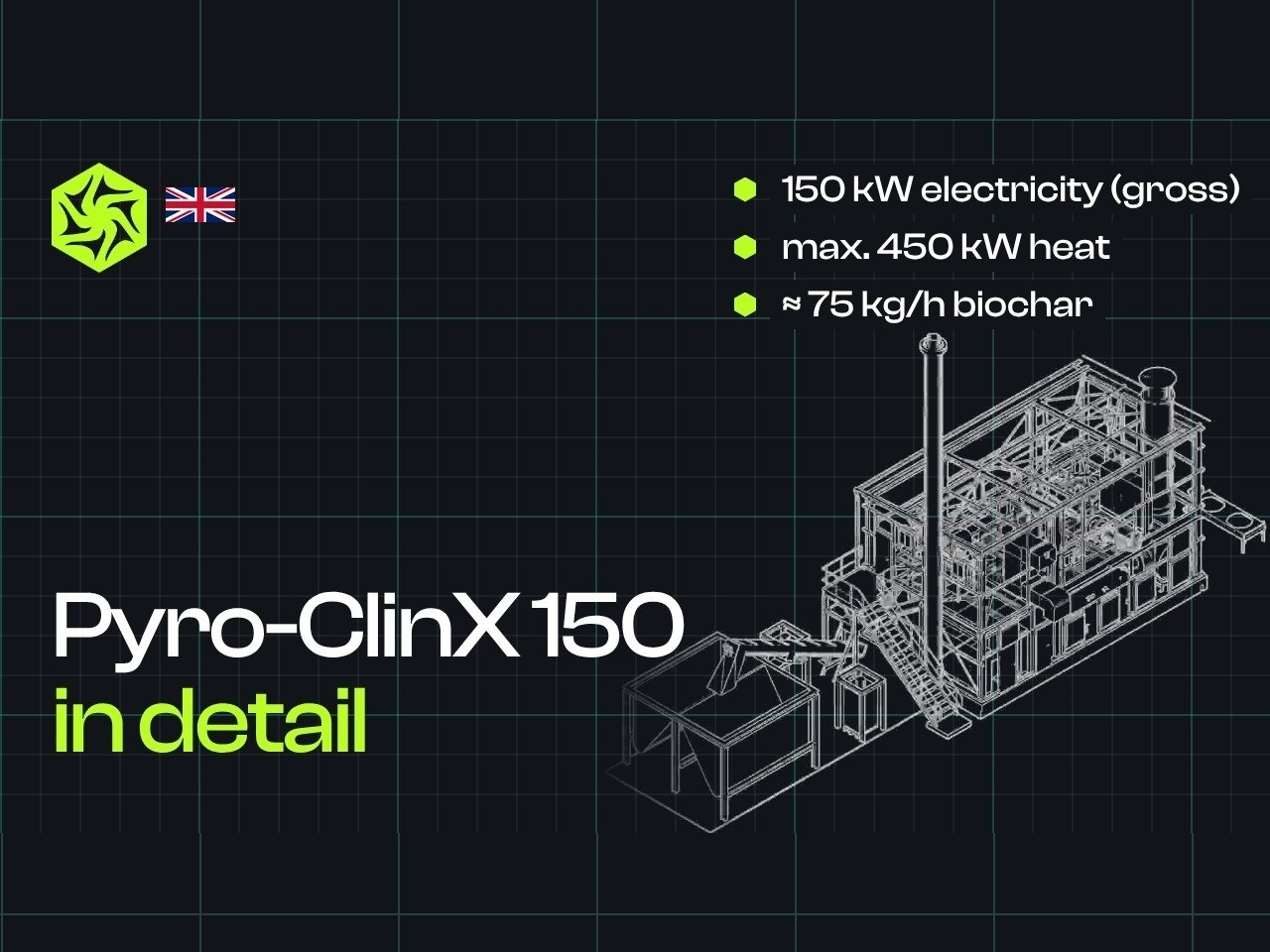

 info@pyro-power.com
 +49 355 866 870 82
 pyropower GmbH