
Livestock farming
Stabilisation in the cycle.
The biochar cascade
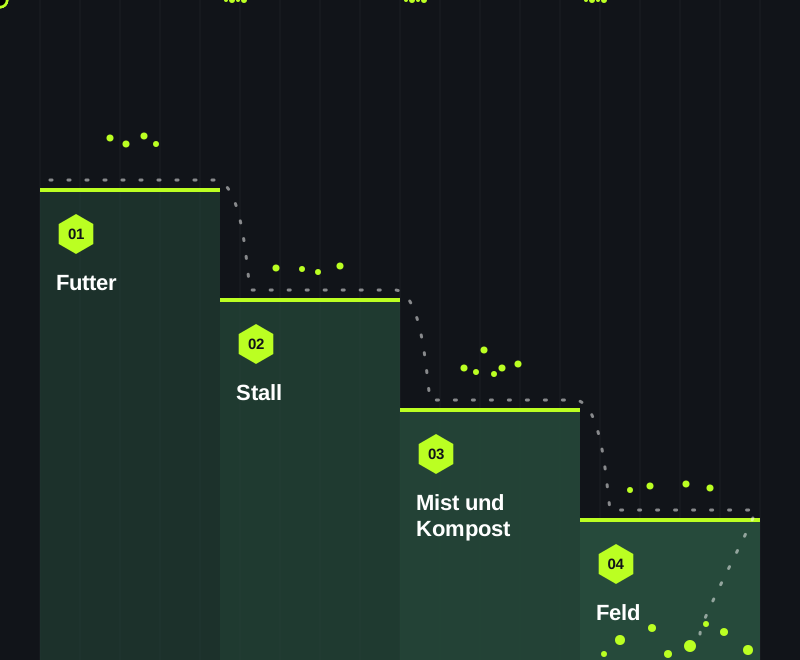
In livestock farming, biochar is used in feed, in bedding and in manure. It can work at every stage, and at the end it ends up on the field charged with nutrients.
In this way, biochar links the barn and the field. The prerequisite is a quality that is approved for the first stage. The biochar may then pass through all subsequent stages.
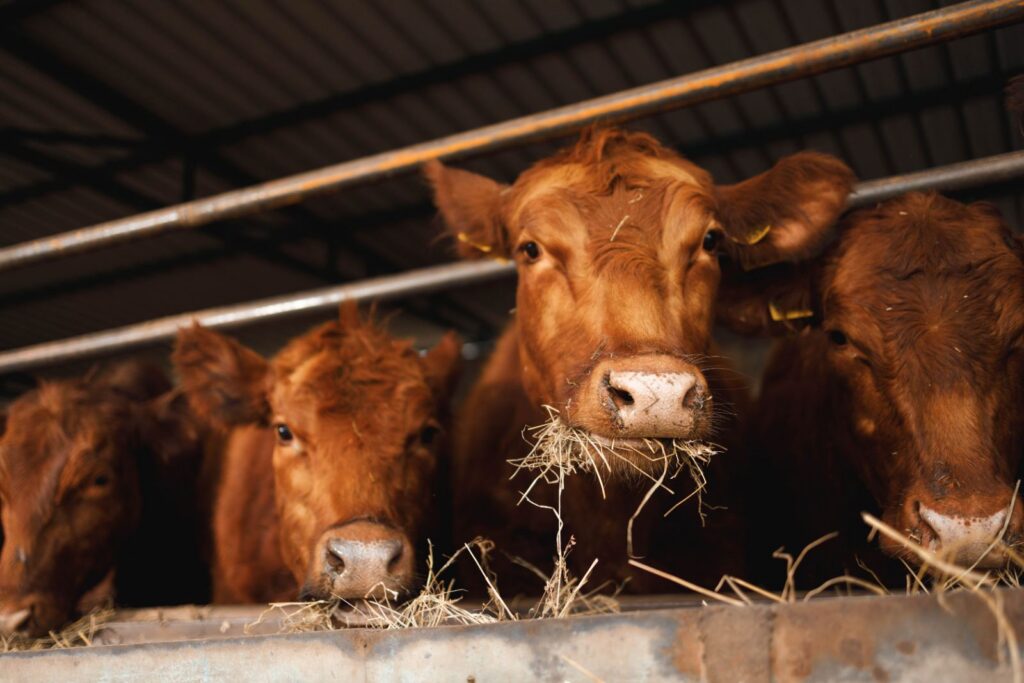
- 1FeedAs a feed material in small quantities, in feed quality according to EBC.
- 2BarnMixed into the bedding, it absorbs moisture and binds ammonia.
- 3Manure and compostDuring composting, it significantly reduces gas and nitrogen losses.
- 4FieldCharged with nutrients, the biochar goes into the soil and stays there in the long term.
Effect
From the barn to the field
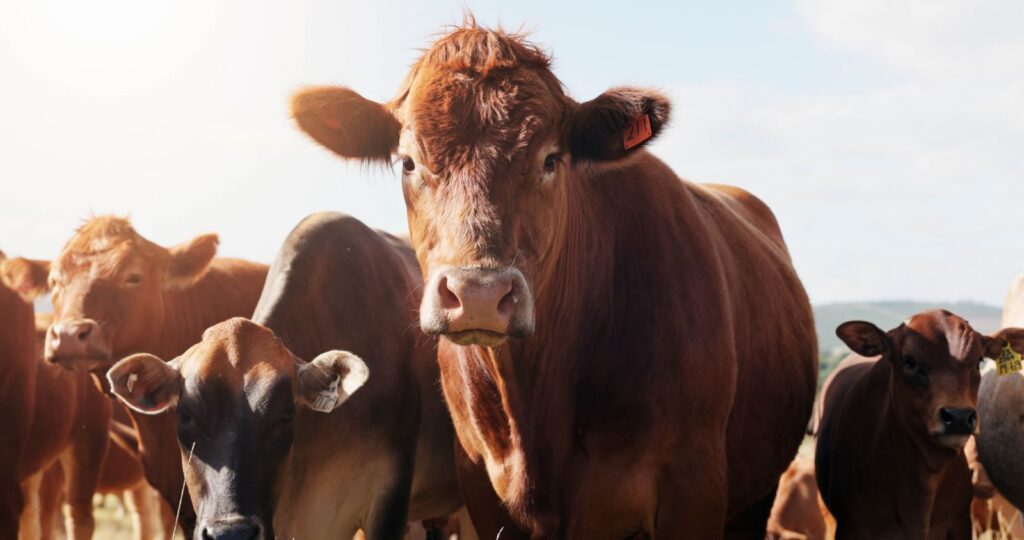
Biochar links livestock farming and arable farming. What starts in the barn returns to the land via farm manure as a valuable soil component.
What research shows
Biochar has the clearest effect in manure and during composting. In feed and bedding, dosage, quality and application are what matter.
−36 %
ammonia on average during composting with biochar. The reductions were greatest from a biochar share of 10 percent.
14% instead of 56%
share of broilers with footpad lesions when 1 percent biochar was in the feed, in an organic barn trial.
Source: Albiker et al. 2019
0.5 to 1%
of the ration: the range in which feeding trials show positive effects. Higher doses can reduce performance.
Source: LfL Bavaria, piglet trial 2023
Dry bedding, good barn climate
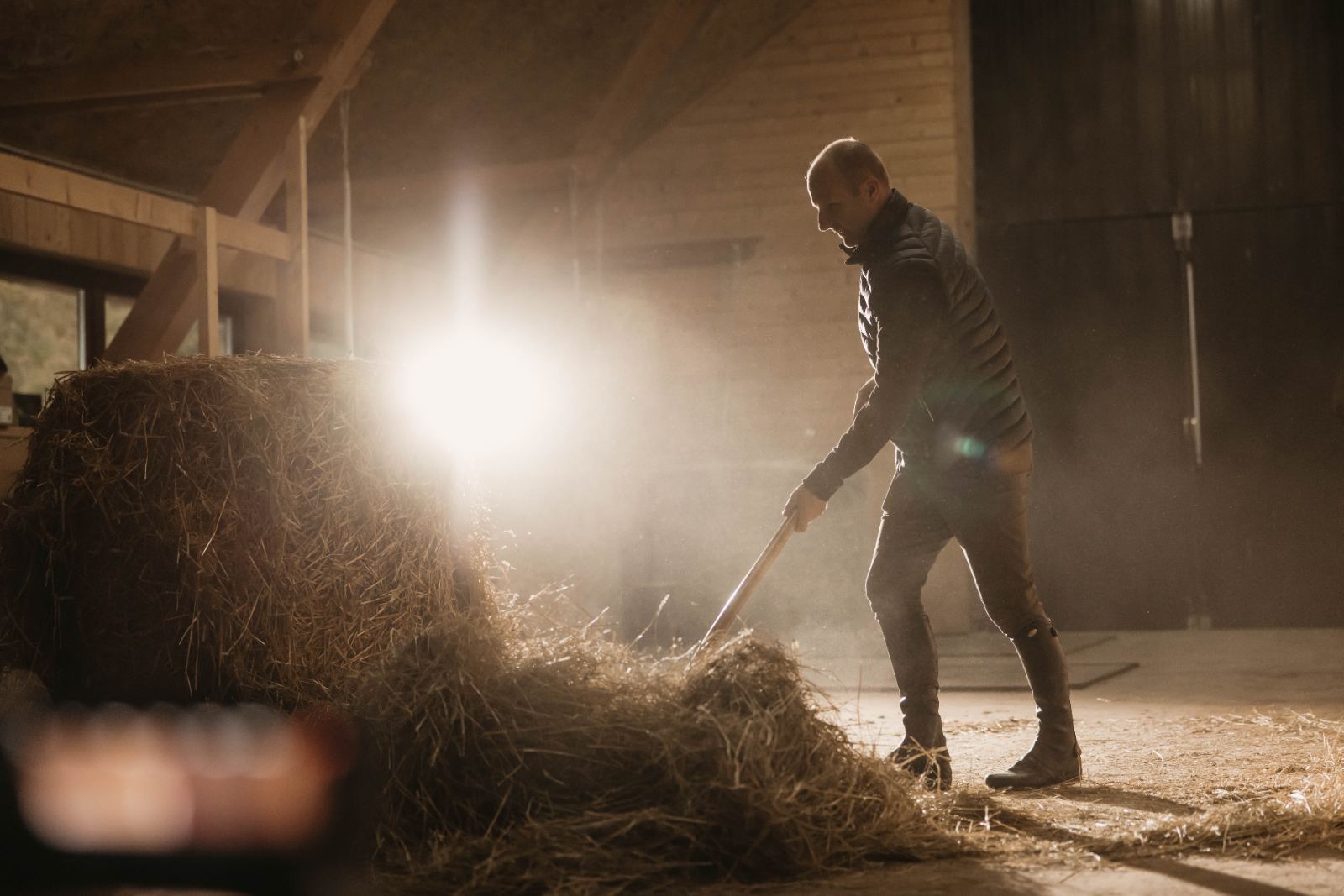
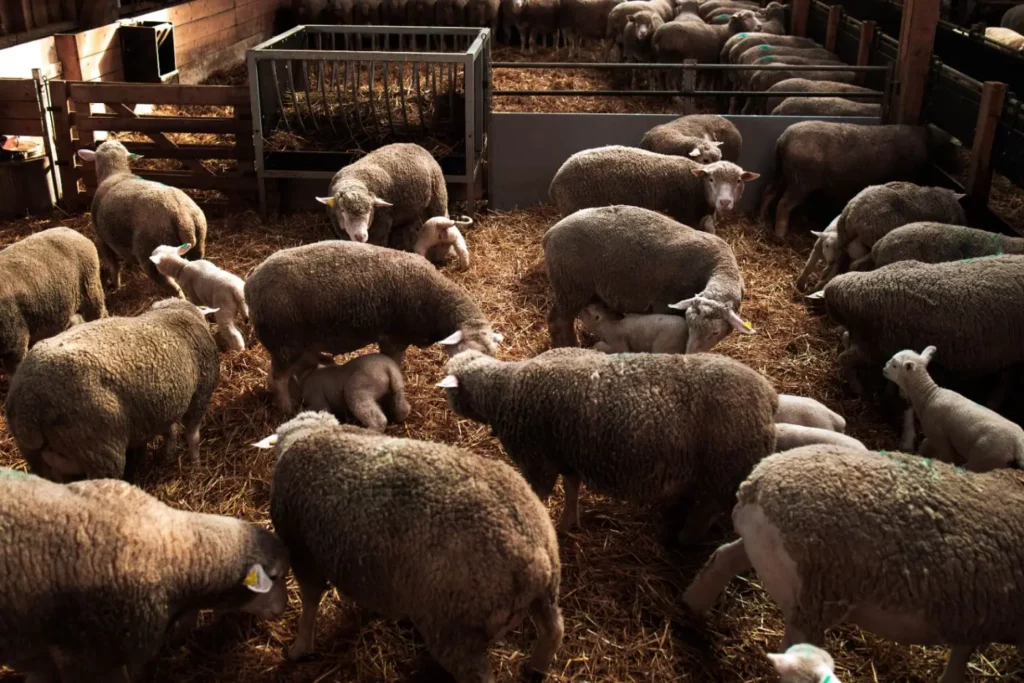
Mixed into the bedding, biochar absorbs moisture and binds ammonia. Many farms use it to improve the barn climate. The most important lever remains dry bedding: ventilation, drinkers and stocking density.
With the bedding, the biochar then goes into the manure and from there onto the field.
Fields of application
Where biochar works in livestock farming
- 01Feed additive
- 02Barn hygiene
- 03Bedding
- 04Manure composting
- 05Nutrient stabilisation
Process
How to get started on your farm
Biochar works best when used in a targeted way. We support you from the first trial to regular delivery.
Define the goal
Barn climate, manure quality or feeding: the goal determines where it is used, the quantity and the quality.
Choose the quality
Feed requires feed quality according to EBC. It allows later use in bedding, manure and soil.
Start small
A barn section or a manure store as a trial shows how the biochar works on your farm.
Close the cycle
The charged manure goes onto your fields as compost or farm manure.
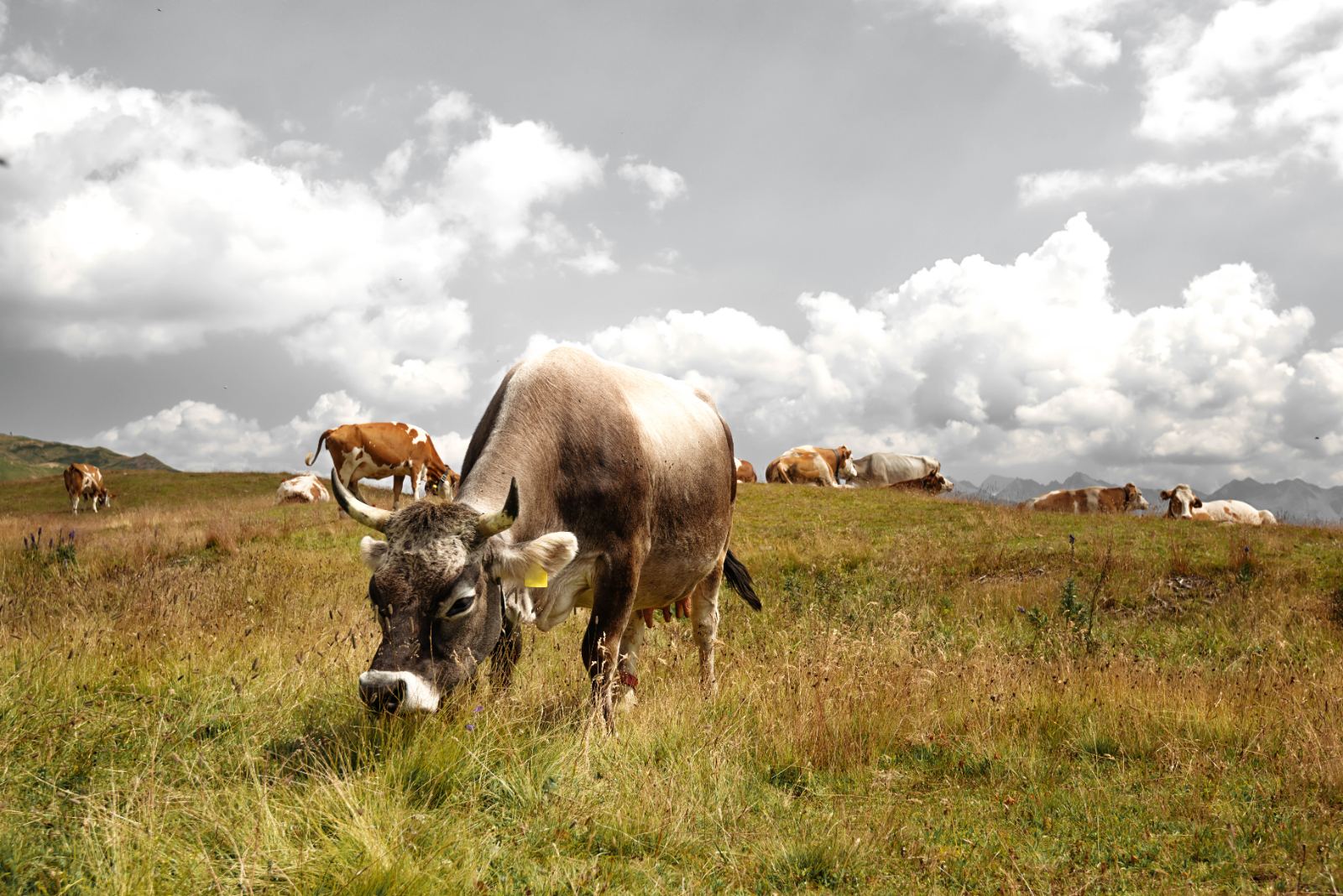
A closed cycle between barn and soil
Biochar stabilises organic residues and improves the quality of farm manures.
This creates a cycle between livestock farming and soil application in which every stage benefits from the material.
Substance for agricultural cycles.
Our biochar is produced in Pyro-ClinX plants from woody residues. We produce it in line with the EBC standard, with documented raw material origin and regular laboratory analyses. This keeps the quality traceable from batch to batch.
Analyses and data sheets for your batch are available on request.
Frequently asked questions from livestock farming
Can’t find your question? Write to us using the contact form.
Is biochar approved as a feed material?
Yes. Biochar is listed in the EU Catalogue of feed materials. Only biochar in feed quality from registered manufacturers, with tested contaminant levels, may be used. In line with the EBC standard, this class will be called EBC-FeedPlus from 2027. We will advise you on which quality suits your use.
Does more nitrogen stay in the fertiliser with biochar?
Yes, this is one of the well-documented effects. When composting with biochar, considerably less ammonia and nitrous oxide is lost. An evaluation of 123 studies shows 36 percent less ammonia on average. The nitrogen stays in the fertiliser and benefits your fields. This turns your manure into a more valuable farm fertiliser.
Is it enough to sprinkle biochar on the bedding?
It is better to mix the biochar into the bedding. There it absorbs moisture and binds ammonia directly where it is produced. Spread loosely on top or scratched deep into the litter by poultry, it loses effect. Store the biochar dry, and its absorption capacity is retained. We will be happy to show you how this fits into your work routines.
Does biochar also work in manure and slurry?
In solid manure and during composting, the effects are well documented: less ammonia, less nitrous oxide and more nitrogen in the fertiliser. The biochar is charged with nutrients and then goes onto your fields in upgraded form. For liquid slurry, we advise you on the right combination with other measures, such as separation.
Is there a recommended dosage in feed?
Feeding trials show positive effects mainly with small quantities of about 0.5 to 1 percent of the ration. Higher doses bring no additional benefit and can reduce performance. A good start is therefore a low dosage that you agree with your feed adviser and observe over a few weeks.
Does biochar help with footpad lesions in poultry?
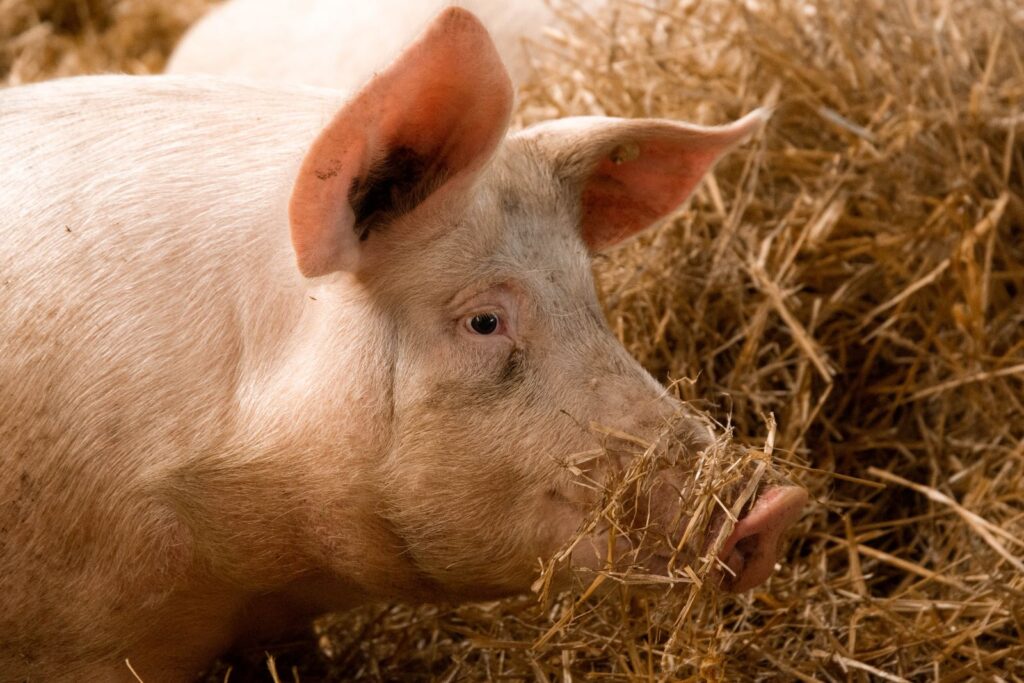
In an organic barn trial, the share of broilers with footpad lesions fell from 56 to 14 percent when 1 percent biochar was in the feed. Biochar only in the bedding brought no improvement in this trial. For poultry farms, feed is therefore the more interesting place of use. We will be happy to support you with a trial of your own.
Does biochar need special storage?
Biochar absorbs moisture and should therefore be stored dry and protected, for example in a closed big bag under a roof. Slightly moistened, it produces less dust during handling, which makes work in the barn more pleasant. We deliver in big bags and match quantities to your consumption.
Can the same biochar be used several times?
Yes, that is exactly the idea of the cascade. After feed, biochar in feed quality may continue to work in bedding, manure, compost and soil. At each stage it fulfils a task and absorbs nutrients. Finally, you apply it charged to your fields, where it improves the soil in the long term and stores carbon.
Knowledge
Expert articles on livestock farming


Biochar for your farm
Would you like to use biochar in the barn or in manure composting? We will advise you on quality, quantity and delivery.