
Agriculture
Strengthen soil. Secure yields.
In the soil
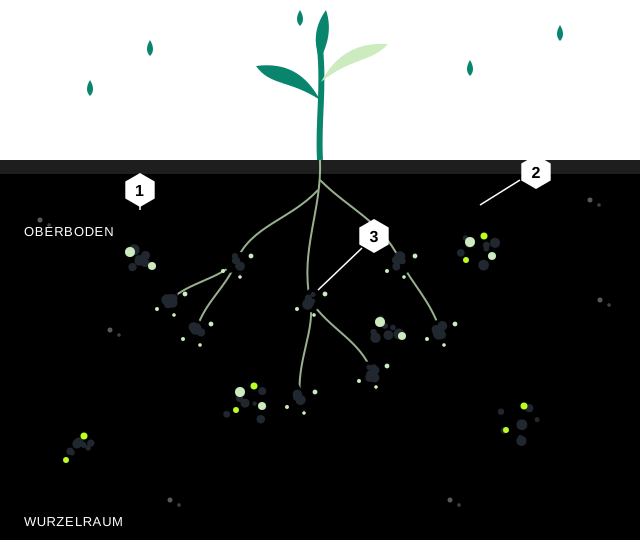
A sponge in the root zone
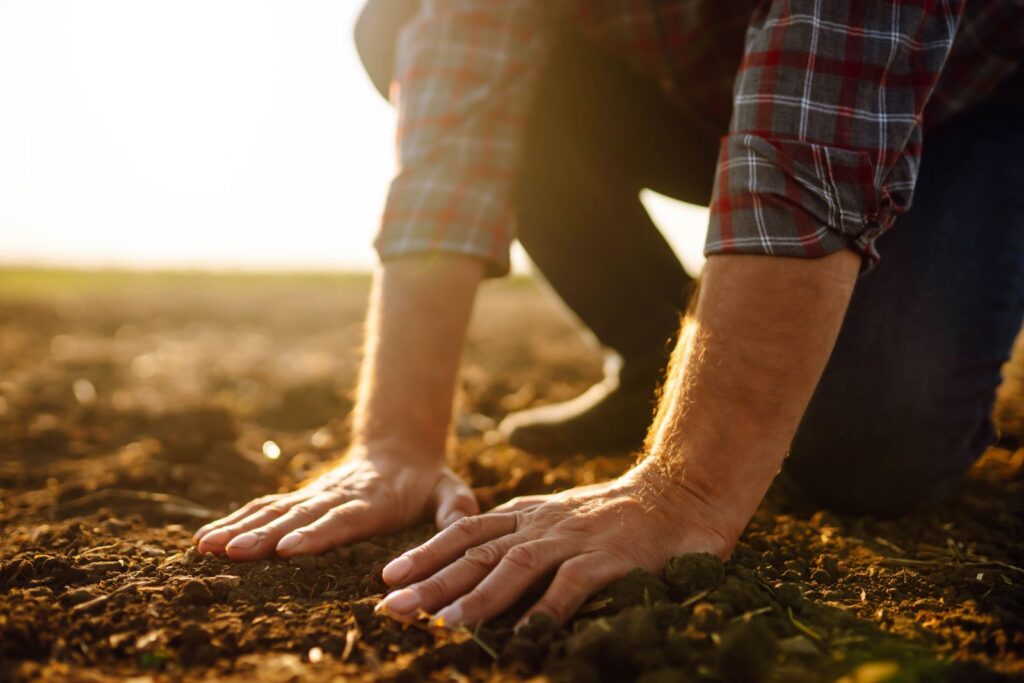
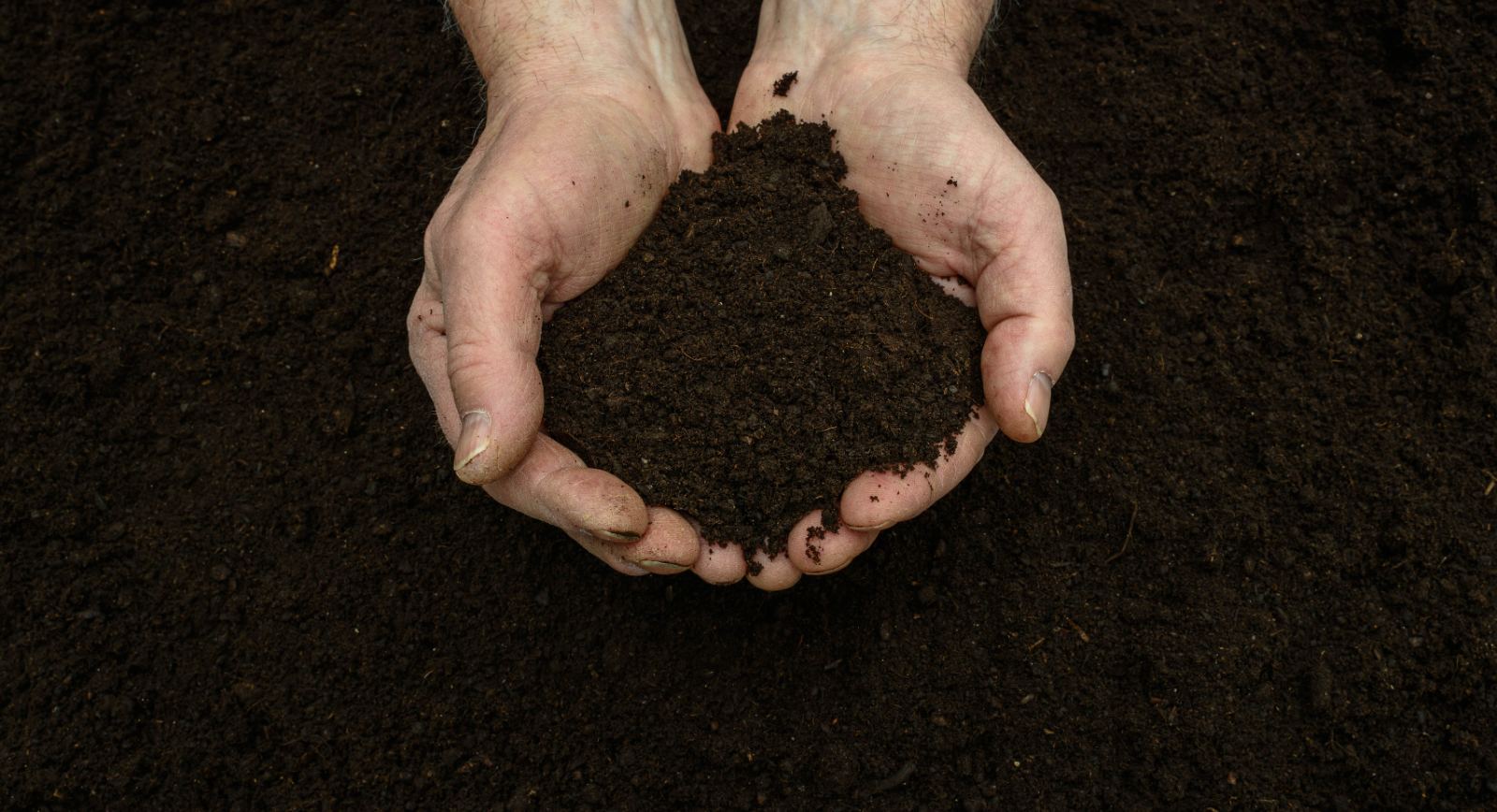
In agriculture, biochar is used specifically to improve soil. Its fine pore network can hold water and nutrients, promote soil life and store carbon in the soil in the long term.
This makes a difference especially on light, sandy soils, which are common in Brandenburg and Lusatia: there, rain seeps away quickly and nutrients are easily washed out.
- 1Stores waterThe pores absorb water and release it slowly to the roots during dry spells.
- 2Holds nutrientsNutrients attach to the large internal surface. Less is washed out.
- 3Promotes soil lifeMicroorganisms and roots find a habitat in and on the biochar.
Effect
What biochar does in the soil
The effect depends on the soil, how the biochar is worked in and how it is prepared. Used correctly, biochar improves conditions in the root zone for many years.
What research shows
Biochar shows strong effects especially on light soils and in compost. How strongly it works depends on the soil and the application. These figures come from meta-analyses and field trials.
+51 %
more field capacity on average in coarse, sandy soils. How strong the effect is depends on the soil type.
approx. 2×
plant-available water in the Brandenburg field trial with compost and biochar on sandy soil.
−36 %
ammonia, −50% nitrous oxide and −54% methane on average when biochar is added during composting.
In practice
Charge first, then apply
Fresh biochar is like an empty sponge. Before it goes onto the field, it is charged with nutrients, for example via compost, manure or digestate. In trials, uncharged biochar even slowed plant growth, whereas co-composted biochar clearly promoted it.
This way, the biochar does not take nutrients from the soil but brings them with it. We will be happy to advise you on quantity, grain size and preparation for your farm.
Fields of application
Where biochar works in arable farming
- 01Soil improvement
- 02Substrates and soils
- 03Humus formation
- 04Water holding capacity
- 05Regenerative agriculture
Process
Onto the field in four steps
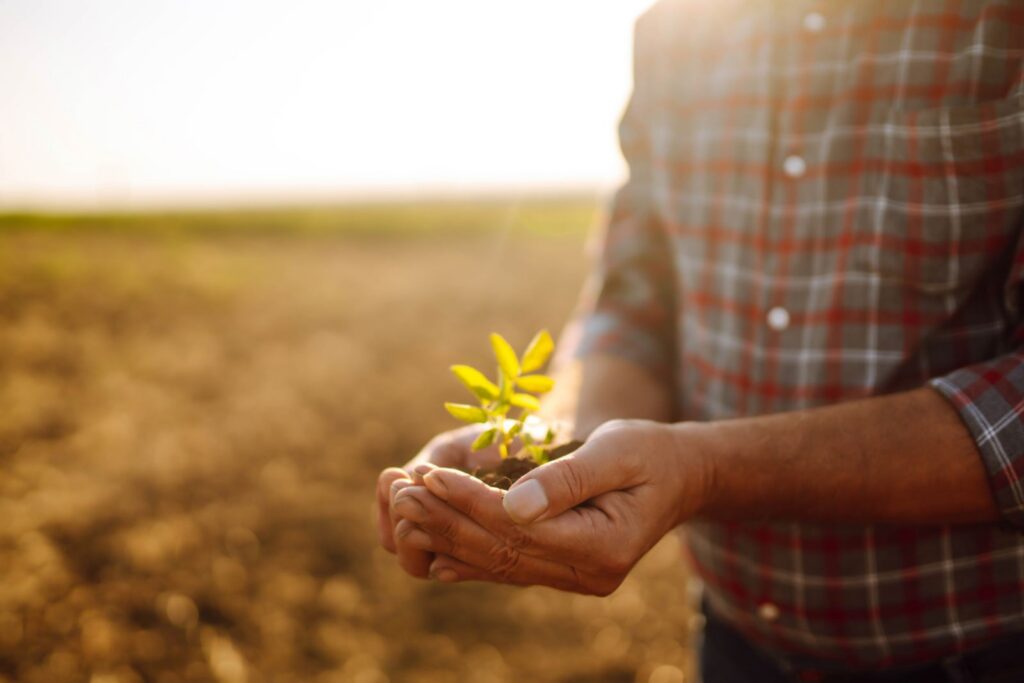
Biochar is an investment in building up the soil. With this process, you can use it in a targeted way.
Assess the site
Soil type, humus content and crop determine where biochar pays off. Light soils benefit the most.
Choose the quality
For soil, what counts is EBC-Agro quality, contaminant analyses and a fine grain size.
Charge
The biochar is mixed with compost, manure or digestate, often at a share of 10 to 20 percent during composting.
Work it in
The charged biochar is worked into the root zone. Smaller applications over several years build up the effect.
Cycle
From residue back to the field
Our biochar comes from woody residues from the region. In the Pyro-ClinX, they are turned into power, heat and biochar in one process.
The biochar returns the carbon to where it has the greatest effect: the soil. If its use is documented, the carbon storage can be certified.
Quality that is reproducible .
Our biochar is produced in Pyro-ClinX plants from woody residues. We produce it in line with the EBC standard, with documented raw material origin and regular laboratory analyses. This keeps the quality traceable from batch to batch.
Analyses and data sheets for your batch are available on request.
Frequently asked questions from agriculture
Can’t find your question? Write to us using the contact form.
Is there a guide quantity per hectare?
In practice, smaller applications of 0.5 to 2 tonnes of biochar per hectare per year, charged with compost or farm manure, have proven effective. This way the effect builds up over several years without you having to use large quantities all at once. The right quantity depends on soil type, humus content and crop. We will be happy to work out a quantity for your fields with you and plan delivery in big bags.
Does biochar have to be charged before application?
Yes, we recommend it. Fresh biochar is like an empty sponge and can bind nutrients in the first few weeks. That is why it is mixed with compost, manure or digestate beforehand. This brings a double benefit: in compost, biochar reduces gas and nitrogen losses, and on the field it arrives already charged with nutrients.
Is biochar approved as a soil additive?
In Germany, charcoal from chemically untreated wood is approved under the Fertiliser Ordinance as a starting material for growing media and as a carrier material. At EU level, biochar is included as a component in the Fertilising Products Regulation. This provides clear routes for use in substrates, compost and fertilisers. We will inform you about the current status and supply the necessary analyses in line with the EBC standard.
Does biochar pay off on all fields?
Biochar is particularly beneficial on light, sandy, low-humus sites, which are common in Brandenburg and Lusatia. There it holds water and nutrients in the root zone that would otherwise seep away quickly. It can also be used well in compost, substrates and special crops. We will help you find the fields on your farm where its use pays off most.
Does grain size matter?
Yes. For arable land, fine to medium-grained biochar that mixes well with compost or manure is suitable. In trials, fine particles hold more water than coarse pieces because they come into closer contact with the soil. For substrates and soils, we match the grain size to your recipe. We will be happy to provide samples in different grain sizes.
May biochar be used in organic farming?
For organic farming, there is the stricter EBC-AgroOrganic quality class with lower limit values. Whether your farming association permits its use is best clarified in advance with your inspection body. We provide the necessary analyses of our biochar so that the coordination is quick.
Does the effect last for several years?
Yes. The carbon in biochar is very stable and remains in the soil for decades. Unlike manure or green manure, it is not broken down within one season. The effect on water and nutrients builds up over several years and is retained as long as the biochar is in the soil. Every application is therefore an investment in long-term soil building.
Can CO₂ certificates be generated from use on arable land?
Yes, if the use is documented. Biochar binds carbon in the soil over the long term, and this storage can be certified. Delivery notes, fields and quantities applied count for this. On request, we take care of certification and marketing for you, so that you can concentrate on your farm.




Biochar for your farm
Would you like to use biochar on your fields? We will discuss quantity, delivery and application with you.