

Building materials
Carbon storage in the building structure.
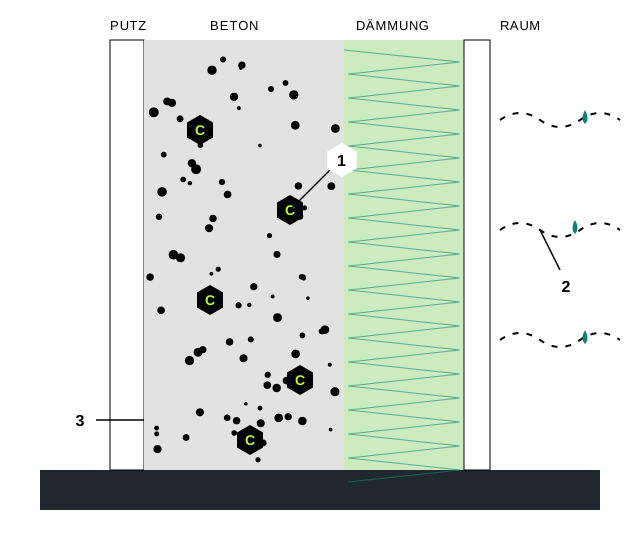
In the component
Carbon that stays in the wall
As an additive in mineral and natural building materials, biochar brings carbon into the building for the long term. It can regulate moisture, influence material properties and enable new building concepts.
Under the rules of the European Biochar Certificate, concrete, mortar, lime and clay plasters are considered a long-term carbon sink as long as the component exists and is not burned.
- 1Binds carbonThe carbon of the biochar remains bound in the component over its entire service life.
- 2Buffers moistureIn clay and lime plasters, the pore network can absorb moisture and release it again.
- 3Shapes the materialDepending on the recipe, biochar influences weight, thermal conductivity and workability.
Effect
What biochar does in building materials
Buildings are not only built, they can also store carbon. Biochar makes this store measurable.
What research shows
Biochar in building materials is research and practice at the same time. Dosage, preparation and a clean balance are decisive.
+7 %
compressive strength after 28 days on average when less than 2.5 percent of the binder is replaced with biochar. Higher shares have a negative effect.
0.06 to 0.18
W/(m·K) thermal conductivity of clay and biochar composites for interior insulation.
Source: University of Innsbruck, Case Stud. Constr. Mater. 2024
100 %
Under EBC, carbon retention applies to biochar in concrete, mortar, lime and clay plaster if the installation site is registered.
Source: EBC, positive list of matrices
Material
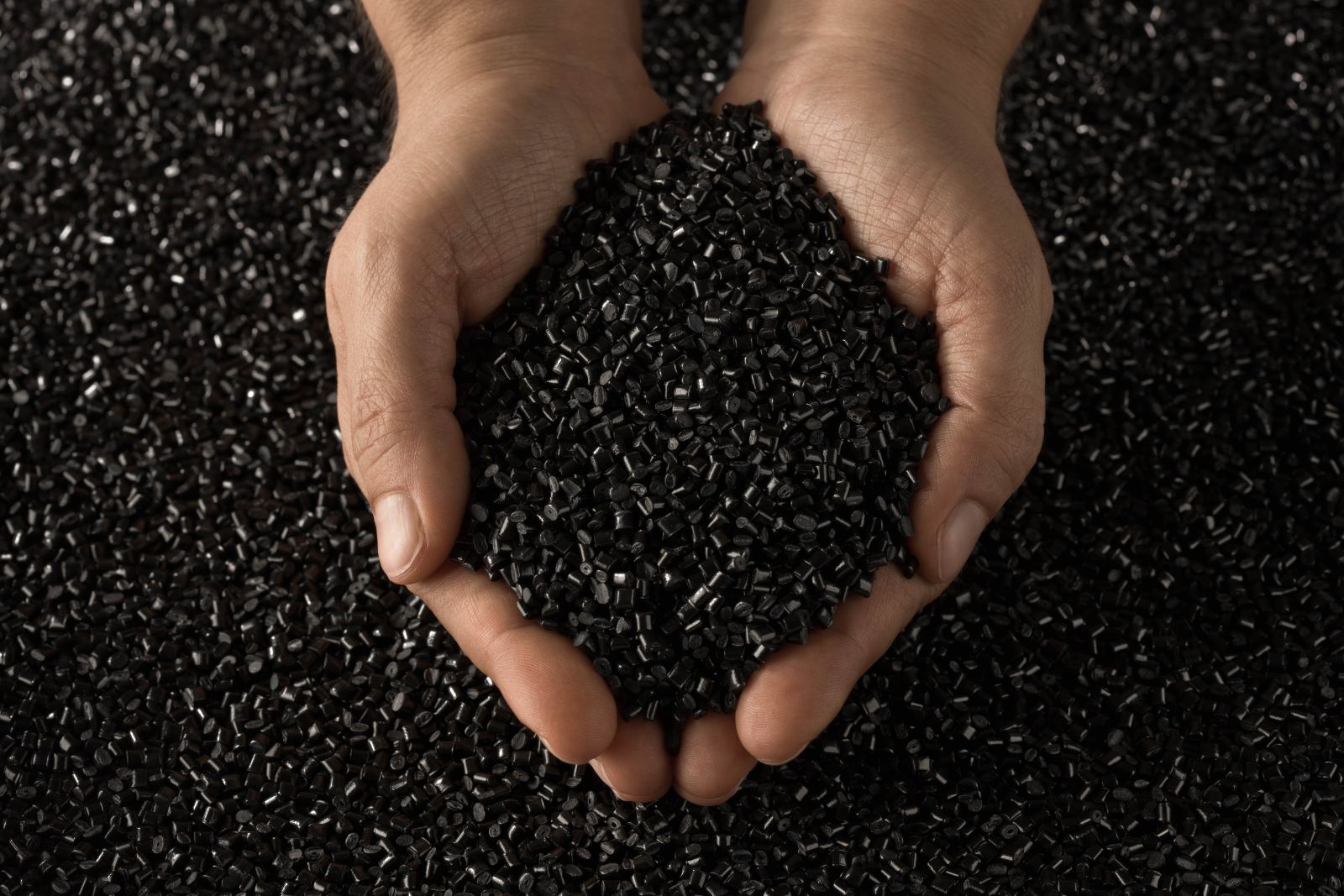
An aggregate with structure
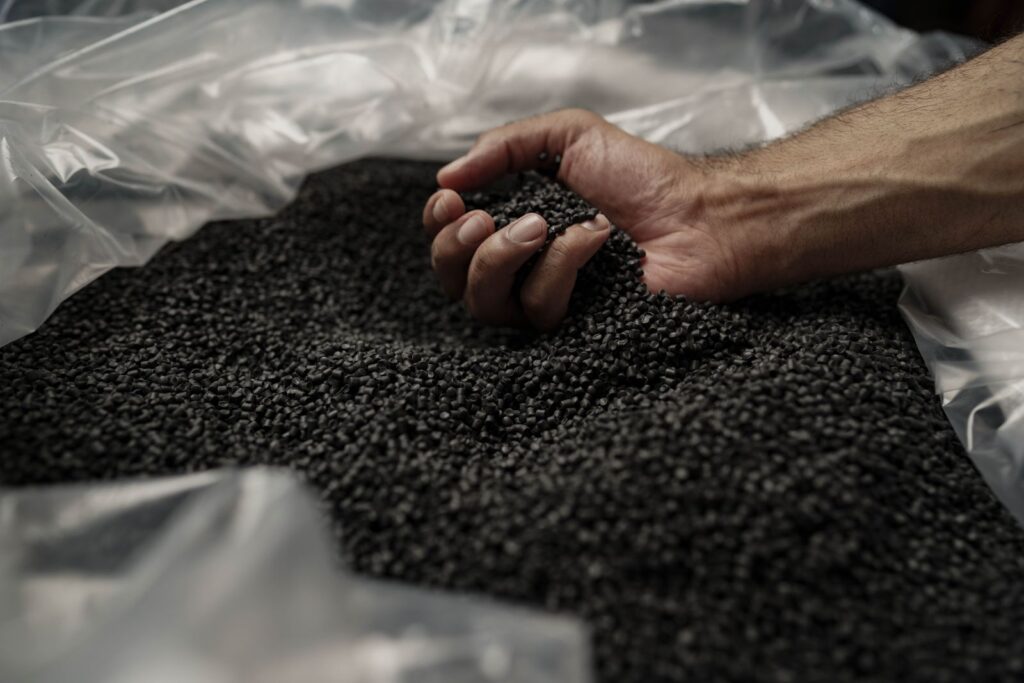
For building materials, grain size, fineness and consistent quality count. Finely ground biochar from pyrolysis above 450 °C shows the best results in studies. Because it absorbs water, the recipe has to take this into account, for example by pre-saturating it.
We supply biochar with defined properties and documented origin. For trials with concrete, clay or insulation materials, we provide samples and analyses.
Fields of application
Where biochar is used in construction
- 01Concrete additives
- 02Clay building materials
- 03Insulation material
- 04Moisture regulation
- 05CO₂ storage in the building structure
Process
From idea to recipe
Biochar in building materials needs development. This is how we work with manufacturers and planners.
Clarify the application
Concrete, plaster or insulation: the application determines grain size, quantity and quality class.
Test samples
With samples and analyses, you test strength, workability and moisture behaviour in your recipe.
Draw up the balance
Emissions from transport and processing are set against the stored quantity.
Document the sink
If the installation site is registered, the carbon storage can be certified.
Architecture
Buildings as long-term carbon stores
Every tonne of biochar in a component holds carbon for the entire lifetime of the building. In December 2025, the first buildings in Switzerland were certified according to a dedicated standard for carbon storage in construction.
If the whereabouts are documented, the storage can be certified. If required, we take care of certification and marketing.
Store. Build. Repeat.
Our biochar is produced in Pyro-ClinX plants from woody residues. We produce it in line with the EBC standard, with documented raw material origin and regular laboratory analyses. This keeps the quality traceable from batch to batch.
Analyses and data sheets for your batch are available on request.
Frequently asked questions from construction
Can’t find your question? Write to us using the contact form.
Is there a sensible dosage in concrete?
Studies see good results with 2 to 5 percent biochar relative to the cement. In this range, strength is maintained and sometimes increases slightly. Above that, it usually decreases. Anyone wanting to incorporate higher shares uses biochar pellets that replace part of the aggregate. We provide samples for your recipe trials.
Are there standards for biochar in concrete?
There is not yet a dedicated standard for biochar as a concrete additive. Load-bearing components therefore require testing on a case-by-case basis. For plasters and non-load-bearing components, getting started is easier. This is exactly where many manufacturers gain their first experience, and we support you with material and analyses.
Does the carbon count in the life cycle assessment?
In environmental product declarations, biogenic carbon is reported separately. This shows how much carbon is stored in the building material. It is important to use the sink only once: either as a certificate or as a product property. We support you with data on the carbon content and origin of our biochar.
Can we get samples for our own trials?
Yes. For your trials, we provide samples in different grain sizes, each with analyses of carbon content and contaminants in line with the EBC standard. This allows you to test recipes in the laboratory before planning larger quantities. Get in touch and we will agree quantity and grain size with you.
Do pellets have advantages over loose biochar?
Pellets made of biochar and cement replace part of the aggregate. This avoids typical challenges such as water absorption and dust during mixing and allows much higher shares in concrete. This also increases the amount of stored carbon per cubic metre. For precast plants, this is an interesting route.
Is biochar suitable for clay and lime plasters?
Yes, both are well suited for getting started. In clay, high shares of 20 to 50 percent are possible, in lime rather small shares of around 2 percent. Because no load-bearing capacity has to be proven, trials can be carried out quickly. This takes you swiftly from idea to your first product with biochar.
Does the carbon remain stored after demolition?
For the carbon storage to be maintained, building materials containing biochar should be reused as building material or aggregate after demolition. Incineration at the end of life is excluded under EBC. If this is observed, the carbon remains bound throughout the life cycle of the building and beyond.
Is biochar suitable for indoor use?
Yes, with the right quality. For plasters and components indoors, biochar should have low contaminant levels. We supply analyses of PAHs and heavy metals in line with the EBC standard so that you can demonstrate suitability for your product.
Knowledge
Expert articles on building materials



Biochar for your recipe
Are you developing building materials with biochar? We supply samples and analyses for your trials.