
Decentralized Energy Supply: Energy Independence for Industry and Municipalities

20.03.2026
Decentralized Energy Supply: Energy Independence for Industry and Municipalities
Decentralised energy supply means generating electricity and heat where they are needed: at the industrial site, in the business park, in the municipality. For companies and towns, this is less a question of technology than of structure: which base load can be covered on site, which reserves remain on the grid, and which residues are available locally? This article explains the terms energy independence and resilience, gives an overview of the technologies and describes how industry and municipalities build a decentralised supply concept.

Lucie Töpfer
Managing Director

Key facts
- Decentralised means generation at the point of consumption, with the grid connection as a reserve rather than the only source.
- Energy independence describes the degree of self-supply, resilience the ability to withstand disruptions without production downtime. Both can be planned and measured.
- For industry and municipalities, the base load counts: anyone consuming electricity and heat around the clock can cover this share economically on site.
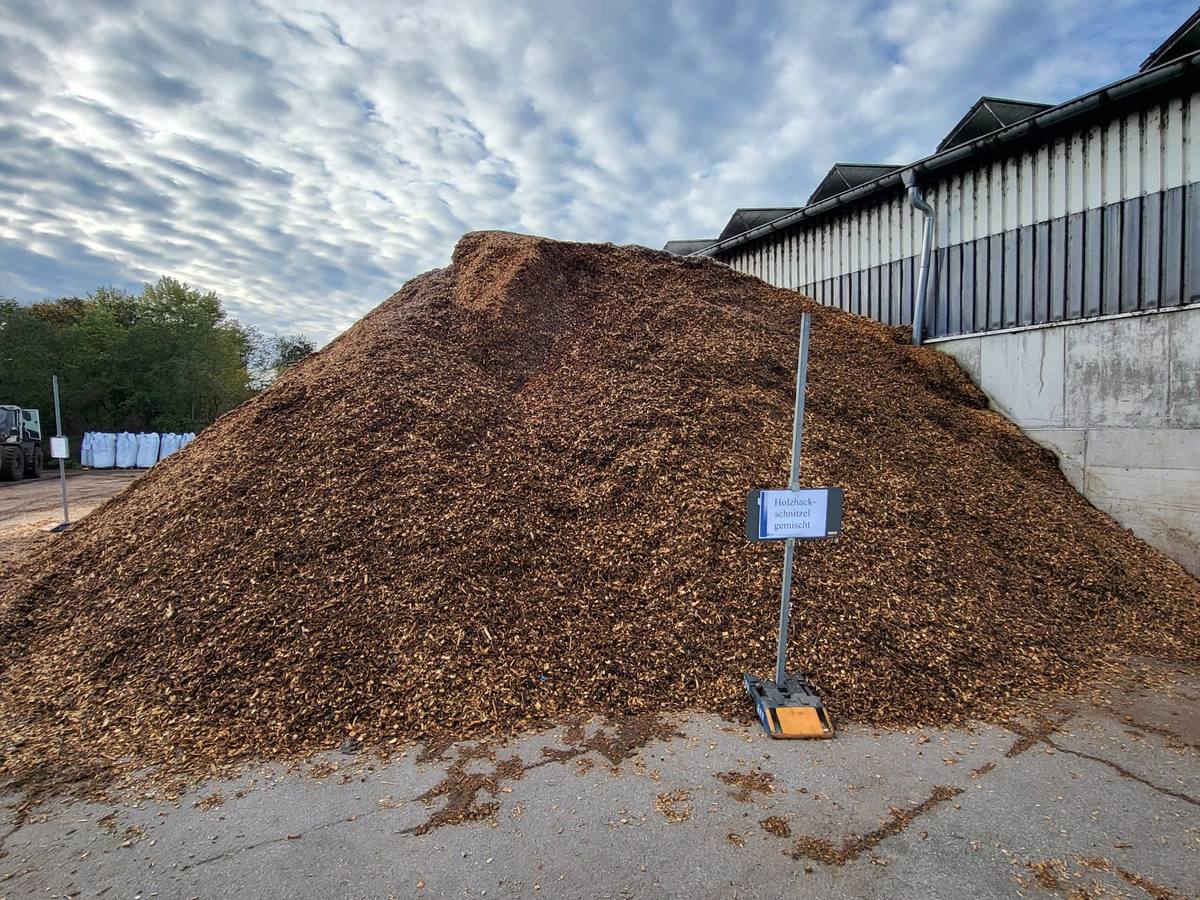
- Biogenic residues from the region and the company are a reliable energy source, available independently of weather and spot market.
Why decentralised energy is gaining importance
Three developments are driving industry and municipalities towards their own generation. First, price volatility: since 2022, electricity and gas prices have fluctuated so strongly that long-term calculations based on the spot market have become almost impossible. Second, grid bottlenecks: new connection capacity is years away at many sites, holding back expansion and electrification. Third, reporting obligations: companies increasingly have to document their energy sources and emissions, and on-site generation from defined sources makes this easier.
Decentralised supply does not solve all three points completely, but it shifts the lever from the market to the company’s own site. What is generated there can be calculated.
Key concepts: energy independence and resilience
Energy independence (autarky) describes the share of energy demand covered by own generation. A site with 60 % electricity independence draws 40 % from the grid. Complete independence is rarely economical for production sites because the peak load would have to be held permanently. What makes sense is a high degree of independence for the base load and grid supply for peaks.
Resilience describes how well a site withstands disruptions: grid outage, price jump, fuel supply bottleneck. A supply is resilient when it combines several sources and keeps operating if one source fails. Independence without resilience is a risk, resilience without independence is expensive. Both together are the goal.

Technologies for decentralised supply
Photovoltaics supplies electricity during the day, with storage also into the evening hours. It is inexpensive and quickly installed, but covers neither night shifts nor process heat. Natural gas CHP units deliver electricity and heat in continuous operation but carry the gas price risk. Biomass heating plants supply heat networks and process heat but generate no electricity. Battery storage caps load peaks and bridges minutes to hours.
Pyrolysis CHP combines several functions: biogenic residues are heated in the absence of oxygen, the pyrolysis gas drives electricity generation via a FLOX burner and an externally fired micro gas turbine, and the waste heat is available as process heat up to 360 °C, or up to 550 °C in a special configuration. Part of the biomass remains as biochar. For sites with constant electricity and heat demand, this is the technology with the highest base-load coverage from regional sources.
Applications: industry and municipalities
In industry, decentralised supply fits wherever base load occurs: wood and paper industry, food processing, metalworking and mechanical engineering, production sites with drying or steam. Companies with their own biogenic residues have the additional advantage that disposal costs turn into energy costs.
Municipalities use decentralised generation for heat networks, swimming pools, wastewater treatment plants and municipal buildings. Green cuttings, landscape maintenance material and wood from municipal forests come into question as fuel. Municipal heat planning requires an inventory of local potential anyway; decentralised generation is the consequence of it.
Energy independence is not a percentage to aim for but the result of a clean base-load analysis. Anyone who knows their base load knows how much independence is economically worthwhile.
Sebastian KießlingManaging Director Technology, pyropower GmbH
Steps to implementation
In practice, the path to a decentralised supply concept follows five steps. First, the inventory: electricity load profile over a year, heat demand by temperature level, current energy costs. Second, the potential analysis: which areas, residues and grid connections are available? Third, the technology comparison over the lifetime, not over the purchase price. Fourth, permitting and funding, which vary by technology and region. Fifth, construction, commissioning and operation, where maintenance and fuel logistics must be settled from the start.
The first step is decisive. Without a reliable load profile, no plant can be sized correctly, and an incorrectly sized plant is the most common reason why decentralised concepts fall short of expectations.
Examples from practice
With ClinX Heat, a plant is in operation in Darmstadt that supplies heat from biogenic residues. Externally fired micro gas turbines have been developed since 2012. The lesson from this: decentralised concepts work reliably when fuel supply, heat offtake and operation are settled before the investment, not afterwards. For municipalities, a second pattern emerges: projects with a fixed heat consumer, such as a swimming pool or a school, run more stably in economic terms than projects waiting for a heat network that has yet to be built.
Conclusion
Decentralised energy supply is not all-or-nothing for industry and municipalities. What makes sense is a high own share of the base load, combined with grid and storage for the peaks. Which technology fits depends on load profile, heat demand and available residues. Anyone who knows these three figures can plan independence and resilience instead of hoping for them.
Frequently asked questions about decentralised energy supply
What does energy independence mean for a company?
The share of energy demand covered by own generation. In practice, a high share of the base load makes sense, not of the peak load.
Is decentralised generation worthwhile without own residues?
Yes, if there is a constant demand for electricity and heat. Wood chips and other biogenic fuels can be sourced regionally. Own residues further improve the economics.
How large is a typical decentralised unit?
Pyrolysis CHP systems in the 150 kW class deliver around 130 kW of electricity and up to 450 kW of heat. Larger sites combine several units; municipalities often start with one heat consumer.
What role does municipal heat planning play?
It obliges municipalities to record local potential. Decentralised generation from regional residues is one of the options that emerge from it and can be combined with heat networks.
How long does a project take from idea to operation?
Depending on technology, site and permitting, typically twelve to eighteen months. The inventory and potential analysis are possible within a few weeks.


 info@pyro-power.com
  +49 355 866 870 82
  pyropower GmbH