
Data centres and Germany’s Energy Efficiency Act: what applies and where pyrolysis can fit

12.11.2026
Data centres and Germany’s Energy Efficiency Act: what applies and where pyrolysis can fit
In short: Under Germany’s Energy Efficiency Act (EnEfG), data centres with a connected load of 300 kW or more must source all their electricity from renewable energy on a balance-sheet basis from 2027, and new data centres must also reuse part of their energy. An amendment is intended to extend deadlines but has not yet been passed. This article explains what applies today and where a pyrolysis plant supplying electricity, heat for cooling and biochar can be one building block, and where it cannot.

Lucie Töpfer
Managing Director, pyropower GmbH

Key points
- The Energy Efficiency Act applies in its current version. The amendment has not yet been passed by the Bundestag (as of November 2026).
- From 1 January 2027, data centres must cover all their electricity from renewable energy on a balance-sheet basis. The government draft postpones this to 2030.
- New data centres must reuse 10 to 20 % of their energy. In the register, the average value is just under 3 %.
- Waste heat from data centres is at 25 to 60 °C and usually needs a heat pump for existing heating networks.
- A pyrolysis plant supplies electricity from wood residues and hot water for absorption cooling. It does not count towards the energy reuse quota.
What the Energy Efficiency Act requires today
Under the Energy Efficiency Act (EnEfG), a data centre is a facility with a non-redundant nominal electrical connected load of 300 kW or more. The act measures energy efficiency using the PUE, the ratio of total consumption to IT consumption. Reused energy, such as waste heat delivered to others, is measured by the ERF.
| Obligation | Existing (operating before 1 July 2026) | New (operating from 1 July 2026) |
|---|---|---|
| Energy efficiency (PUE) | max. 1.5 from 1 July 2027, max. 1.3 from 1 July 2030 | max. 1.2 |
| Reused energy (ERF) | no quota | 10 % if operation starts from 1 July 2026, 15 % from 1 July 2027, 20 % from 1 July 2028 |
| Renewable electricity, balance-sheet basis | 50 % since 2024, 100 % from 1 January 2027 | as for existing data centres |
| Report | annually by 31 March | annually by 31 March |
New data centres must reach PUE and ERF as an annual average no later than two years after starting operation. Exceptions apply, for example, if no nearby heating network takes the waste heat at cost price. Companies with an annual energy consumption of more than 2.5 GWh must also report their waste heat to the federal waste heat platform.
The planned amendment: status November 2026
On 24 June 2026, the German government adopted an amendment that relaxes obligations for data centres. The Bundestag held its first reading in September and heard experts in October. It has not yet been passed, so the current law applies until then. Among other things, the government draft provides for:
- PUE for existing data centres of max. 1.6 from July 2027 and 1.4 from July 2030,
- PUE 1.2 for new builds as before, but with four instead of two years to reach it,
- the ERF steps of 10, 15 and 20 % remain, own heat use counts, and there are more exceptions,
- 100 % renewable electricity only from 1 January 2030,
- a threshold of 500 kW installed IT capacity instead of 300 kW connected load.
The industry association Bitkom supports parts of this but wants to keep the 2027 date for renewable electricity. According to Bitkom, much of the industry already sources renewable electricity today. We will update this article as soon as the law is passed.
Waste heat: high volume, low temperature
Almost all the electricity used by a data centre becomes heat. But its temperature is low: with air cooling, waste heat is at around 25 to 35 °C, with direct liquid cooling at 50 to 60 °C. Existing heating networks usually run at 80 to 120 °C. Feeding in therefore usually requires a large heat pump, which itself consumes electricity.
Accordingly, use has been low so far: in the German data centre register, the average share of reused energy is just under 3 %. It works well where a low-temperature heating network, buildings or greenhouses are nearby. Which technology generates electricity from waste heat at which temperature is shown in our article Power from waste heat.
Where a pyrolysis plant can be one building block
A pyrolysis plant such as the Pyro-ClinX 150 produces electricity, heat and biochar from wood chips. For data centres, this offers three starting points.
Electricity from biomass on site
The Pyro-ClinX supplies 150 kW of gross electrical output around the clock, independent of wind and sun. Under the German Renewable Energy Sources Act (EEG), biomass counts as renewable energy. Whether and how this electricity counts towards the EnEfG quota depends on the proof, for example via guarantees of origin, and needs a legal check in each case. For large data centres, the output is a small contribution; for small data centres and edge sites it can cover a noticeable share. Several plants can be combined.
Heat for cooling
Data centres mainly need cooling. An absorption chiller converts heat into cooling. According to manufacturers, hot-water absorbers work from around 60 °C and are often designed for 90/72 °C, with a coefficient of performance of 0.7 to 0.8. That matches the hot water from a Pyro-ClinX at 90/70 °C. Up to 450 kW of heat thus becomes around 300 to 360 kW of cooling by calculation. The data centre’s own waste heat is too cold for this. The German federal Cooling and Air Conditioning Directive also funds sorption cooling, with applications possible until 31 December 2026.
Biochar and CO₂ certificates
Biochar stores carbon from the wood for the long term if it is not burned. This carbon sink can be certified, and the certificates are an additional source of revenue. More on this in our article From sink to certificate.
In the municipal heating network
Where a municipality feeds waste heat from a data centre into a heating network via heat pumps, a pyrolysis plant can be a second heat source with a 90 °C flow temperature. More on this on our page Heating networks and municipalities.
What a pyrolysis plant does not do
- It does not improve the energy reuse factor (ERF): its heat is not waste heat from the data centre.
- Whether absorption cooling improves the PUE depends on how the heat supplied is accounted for under DIN EN 50600-4-2. This must be calculated for each case.
- It does not replace an emergency power supply or an uninterruptible power supply.
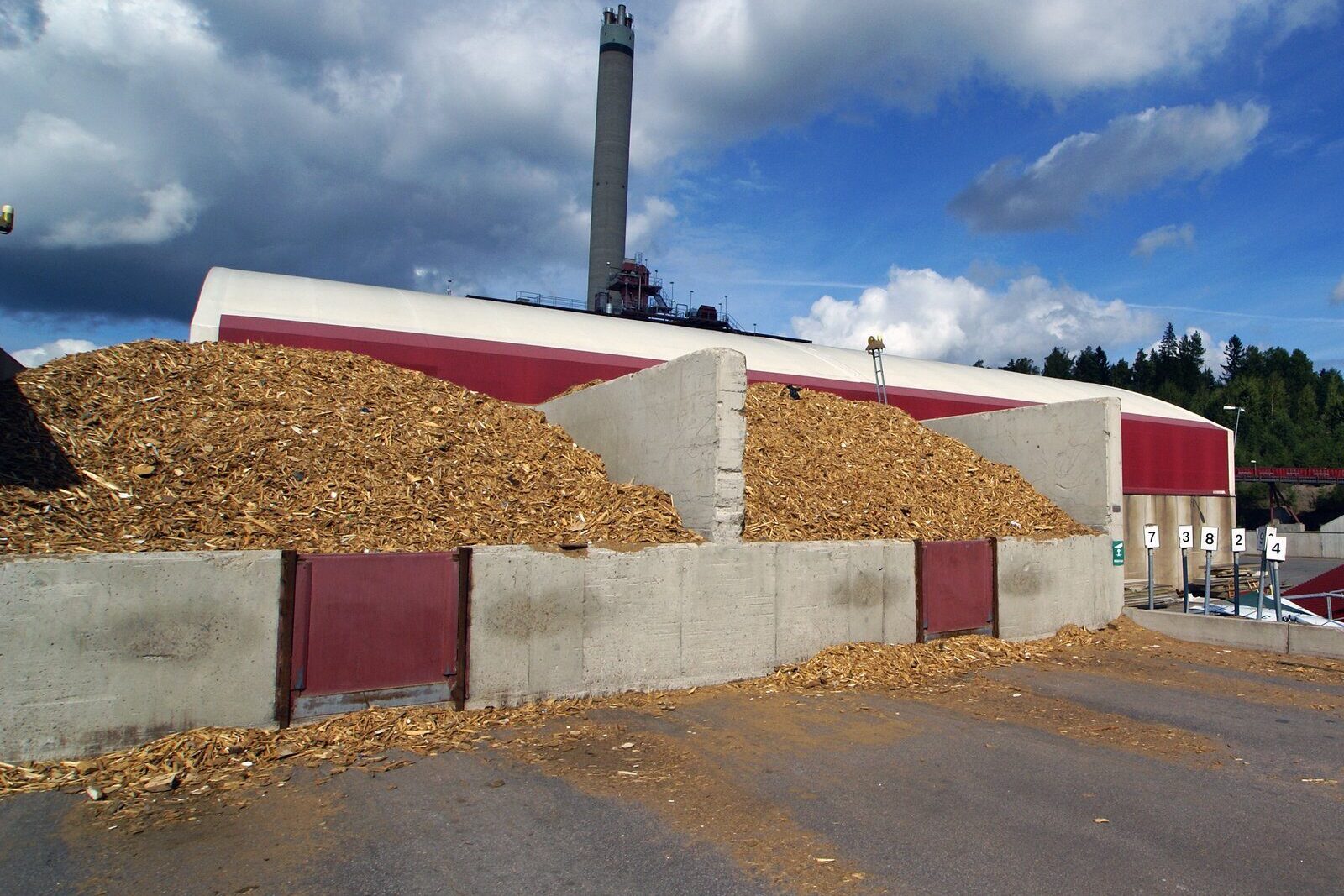
- It needs space for the plant and fuel store and regular deliveries of wood chips. In densely built-up industrial areas, this is not always possible.
Our assessment: for most large data centres, grid electricity with guarantees of origin remains the main route. A pyrolysis plant is worth a look where smaller sites need electricity, cooling and heat from a single source and wood residues are available in the region.
Frequently asked questions
Does the 100 % renewable electricity obligation apply from 2027?
Under current law, yes, on a balance-sheet basis. The amendment would postpone the date to 2030 but has not yet been passed (as of 12 November 2026).
What temperature does data centre waste heat have?
Around 25 to 35 °C with air cooling, 50 to 60 °C with direct liquid cooling. Heating networks at 80 to 120 °C usually need a heat pump.
Can a pyrolysis plant cool a data centre?
Indirectly: its heat can drive an absorption chiller. Up to 450 kW of heat from a Pyro-ClinX becomes around 300 to 360 kW of cooling by calculation.
Does electricity from a pyrolysis plant count as renewable?
Under the German Renewable Energy Sources Act, biomass is a renewable energy. How the electricity is proven for the obligations under the Energy Efficiency Act needs a legal check in each case.
- Power from waste heat: which technology suits which temperature
- Outlook 2027: dates and rules for businesses with residues and waste heat
- Energy security: a more independent supply for your site
- Pyro-ClinX 150: pyrolysis and micro gas turbine in one plant
Sources
- Energy Efficiency Act (EnEfG), sections 3, 11, 13 and 17. gesetze-im-internet.de
- German Bundestag (2026): printed paper 21/8027, government draft amending the Energy Efficiency Act. bundestag.de
- German Bundestag (2026): hearing in the Committee on Economic Affairs and Energy on 5 October 2026. bundestag.de
- Bitkom (2026): statement on the cabinet draft of the EnEfG amendment. bitkom.org
- netzpolitik.org (2026): report on the regulation of data centres, 23 October 2026.
- Institute of Energy Economics and Rational Energy Use, University of Stuttgart (2024): waste heat from data centres. ier.uni-stuttgart.de
- B E T on behalf of NRW.Energy4Climate (2026): study on waste heat from data centres. energy4climate.nrw
- Thuringian Energy Agency ThEGA (2024): fact sheet on cooling generation. thega.de
- Bälz: manufacturer information on hot-water absorption chillers.
- Federal Environment Ministry (2026): announcement on the Cooling and Air Conditioning Directive, 15 June 2026.
- Renewable Energy Sources Act (EEG), section 3 no. 21. gesetze-im-internet.de
Download
Pyro-ClinX brochure and data sheet
Technical data, feedstocks, products and the course of a project at a glance (PDF).
Download brochure (PDF)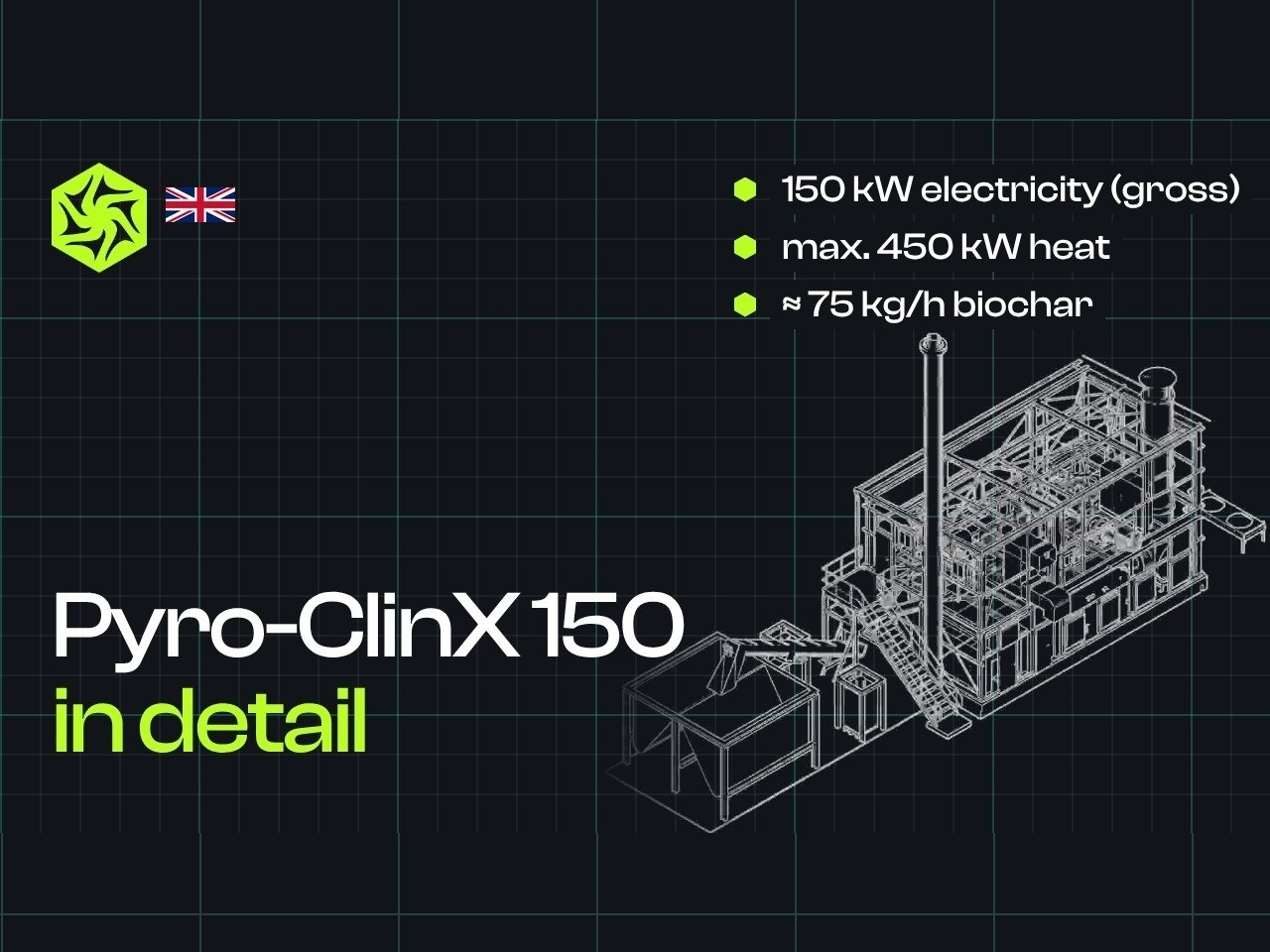
 info@pyro-power.com
 +49 355 866 870 82
 pyropower GmbH