
Energy security for your production.
What still runs when power, gas or heat fails?
In two stages
We show you which parts of your production keep running if power, gas or heat fails, and what you should do first. Stage 1 delivers the answer and the first measures within two to four weeks. Stage 2 turns it into a fully calculated plan.
The problem
Three supplies, one site. And if one fails, nobody knows for sure what keeps running.
Power, gas and fuel come from outside. Transformers, boilers and backup generators distribute them across the plant. At the end of the chain are the processes that make money. If one supply fails, it is decided within minutes whether cooling, steam or filling keep running.
In most plants, part of this is documented, part is only assumed, and part nobody has ever asked about. We bring exactly these three categories together on one page for your site.
Sound familiar?
When should a site check its energy supply?
Secure operations
There is a backup generator in the yard, but nobody can show which parts of production it actually supplies in an emergency.
- What has been verified, and what is only assumed?
- How does production come back in a controlled way?
Reduce dependencies
Your process heat depends on gas or on a single supply route, and there is no reliable comparison of the alternatives.
- Which dependency do you want to get rid of?
- Which new one would you accept in return?
Review an investment
An electric boiler, heat pump, new transformer or plant expansion is coming up, but grid connection, load profile and backup concept have never been looked at together.
- Does the investment only maintain the old function?
- Or does it also remove a critical dependency?
Stage 1
Review: Will your supply hold up in an emergency?
Within two to four weeks, you know where your site is vulnerable and what to tackle first. One site, up to three critical process chains, €7,500 net.
What Stage 1 coversStage 2
Plan: Which option makes you more independent?
Three fully calculated options with costs and an implementation plan that purchasing and maintenance can work with right away. Up to five process chains, scenarios from 4 to 72 hours, four to six weeks. Quote on request.
What Stage 2 deliversAt a glance
Stage 1 or Stage 2: Which fits your site?
Stage 1: Review
The quick answer to one question: Does your backup supply hold up, or is that only assumed?
- One site, up to three critical process chains
- Two interviews with plant management and engineering, on-site visit only if needed
- Short report and prioritized action list
- €7,500 net, two to four weeks
Stage 2: Plan
The plan for sites that need more than an answer: which option, at what cost, in what order.
- Up to five critical process chains
- Scenarios from 4 to 72 hours without power, gas or heat
- Three fully calculated options, implementation plan, decision paper
- Quote on request, four to six weeks
Which stage fits?
Three questions are enough:
- Does it involve more than one critical process chain?
- Is an investment of around €250,000 or more coming up?
- Does a customer, insurer or bank require proof?
- Zero or one yes: Stage 1. Two or three yes answers: Stage 2, and Stage 1 is the first step toward it.
Stage 1
What Stage 1 covers
Supply routes: power, gas, heat, cooling, compressed air
We trace every route from the point of supply to the consumer, per medium, for your critical process chains (up to three). Backup and on-site supply are assessed based on your documents. The scope of the site is defined in writing.
Grid connection and distribution
Grid interconnection, transformer, medium voltage, main and sub-distribution, switching states and transfer points. Critical loads with power rating and starting behavior, generators, UPS systems, batteries and fuel reserves. The documents are checked against the actual installation.
Critical processes and loads
Production steps, batches and minimum throughput, minimum function per process, tolerable interruption and restart. Auxiliary loads such as pumps, controls and cooling are included, as is quality release after restart.
Interviews with plant management and engineering
Two interviews of 45 to 60 minutes each: one with plant management and one with maintenance and engineering together. Statements are checked against the documents. Contradictions are recorded, not smoothed over.
Optional on-site visit
A walk along the supply routes, not through the whole plant: nameplates, rated outputs, years of manufacture, backup supply, transfer switching and fuel storage. The result is a photo log and a list of deviations. Surcharge €1,000 net, agreed with you in advance.
What is verified and what is only assumed
Every key statement in the report gets one of four labels: documented (stated in your documents or on the equipment), plausible (sound from an engineering standpoint, but not documented), tested (with date and conditions) or open (no reliable statement available). This way you know what you can rely on and where you need to follow up.
Short report, action list and handover
A short report of about five pages as Word and PDF files, written for management and engineering alike: the dependency chain per process, the prioritized gaps and an action list for the next steps, including the option of commissioning nothing further. Handover in a 60-minute meeting with plant management and engineering. No report that ends up in a drawer: your maintenance team can start on it Monday.
Stage 1
How Stage 1 works
1. Initial call
20 minutes on the phone. We clarify which decision you are facing and whether Stage 1 is the right size for it. We do not need any documents yet.
2. Documents and interviews
You provide existing documents. We talk with plant management as well as maintenance and engineering and check their statements against the documentation.
3. Analysis
Supply routes, grid connection, process mapping and restart are assessed. An on-site visit is added only if the documents are not sufficient.
4. Handover
Short report and action list as Word and PDF files, plus a 60-minute meeting with the people responsible. Two to four weeks after we receive your data.
Stage 1
€7,500 net
One site, up to three critical process chains, short report and action list within two to four weeks. With on-site visit €8,500 net, travel costs within Germany included. Payment: 50 percent on order, 50 percent on handover.
Book an initial callStage 2
When an answer is not enough: Stage 2 plans the way forward
For sites with several critical process chains (up to five), ahead of a major investment, or when customers, insurers and investors require solid proof. Within four to six weeks, we assess scenarios from 4 to 72 hours without power, gas or heat, compare three solution options with costs and deliver an implementation plan that maintenance and purchasing can work with directly. Stage 1 is always the first step.
Stage 2
What Stage 2 delivers
Decision paper for management
Three to five pages: the key findings, the achievable operating targets, the need for action and the next investment decision. Written so it can be decided in a single meeting.
Register of your processes and loads
An editable register of all functions considered, with supply routes, loads and auxiliary media, owner per entry, data basis and status. It stays with you and can be kept up to date.
Scenario overview: what keeps running when
For each process chain and each scenario, it shows which function can be maintained: short interruption, power outage of 4, 24 and 72 hours, gas and heat interruption. Plus the limiting factors and the open points.
Comparison of options
The current state and usually three solution options, each with prerequisites, cost ranges and limits of effectiveness. Our own and third-party technology are assessed by the same criteria.
Implementation plan
Immediate measures, medium-term and long-term steps, each with owners, dependencies and success criteria. So the analysis becomes a plan that maintenance and purchasing can work with right away.
Calculation appendix and data
Versioned assumptions, calculations and sensitivities, data gaps and the next required checks, plus the rights of use for the results. Traceable for your engineering team and for third parties such as insurers or banks.
Final workshop and handover
Presentation of the results to engineering and management, with decisions recorded in the minutes. Handover at the end of the project as Word, PDF and Excel files. Quote on request, usually within five business days after the initial call.
Stage 2
Request a quote for Stage 2
The scope depends on your site: number of process chains, energy sources, scenarios, additional measurements. That is why we prepare each quote individually, usually within five business days after the initial call.
Request a quoteTo be frank
We build energy systems. That is why we know when you don't need one.
pyropower develops and supplies its own energy systems: Pyro-ClinX and ClinX Heat. That is why we keep assessment and implementation separate: our own technology is assessed by the same criteria as third-party technology, and the recommendation may be to order nothing. An order from pyropower is neither a prerequisite for nor a consequence of this assignment.
- No blackout promise. The question is what an internal bottleneck, a planned change or a supplier would trigger at your site.
- No self-sufficiency guarantee. Every alternative reduces one dependency and creates another. We name both.
- No overall score. Safety-critical gaps cannot be offset by good scores in other areas.
Who it's for
Which companies is this designed for?
Management
A concise decision paper instead of an expert report: site risks, production capability and investment priorities on just a few pages.
Plant management and maintenance
Traceable engineering documentation on supply routes, bottlenecks, loads and feasibility.
Finance
Cost ranges and sound assumptions, no unproven savings promises.
Quality and customer management
A building block of evidence for customer audits, contingency plans and restart requirements, for example under IATF 16949.
Who and for whom
Who reviews and plans?
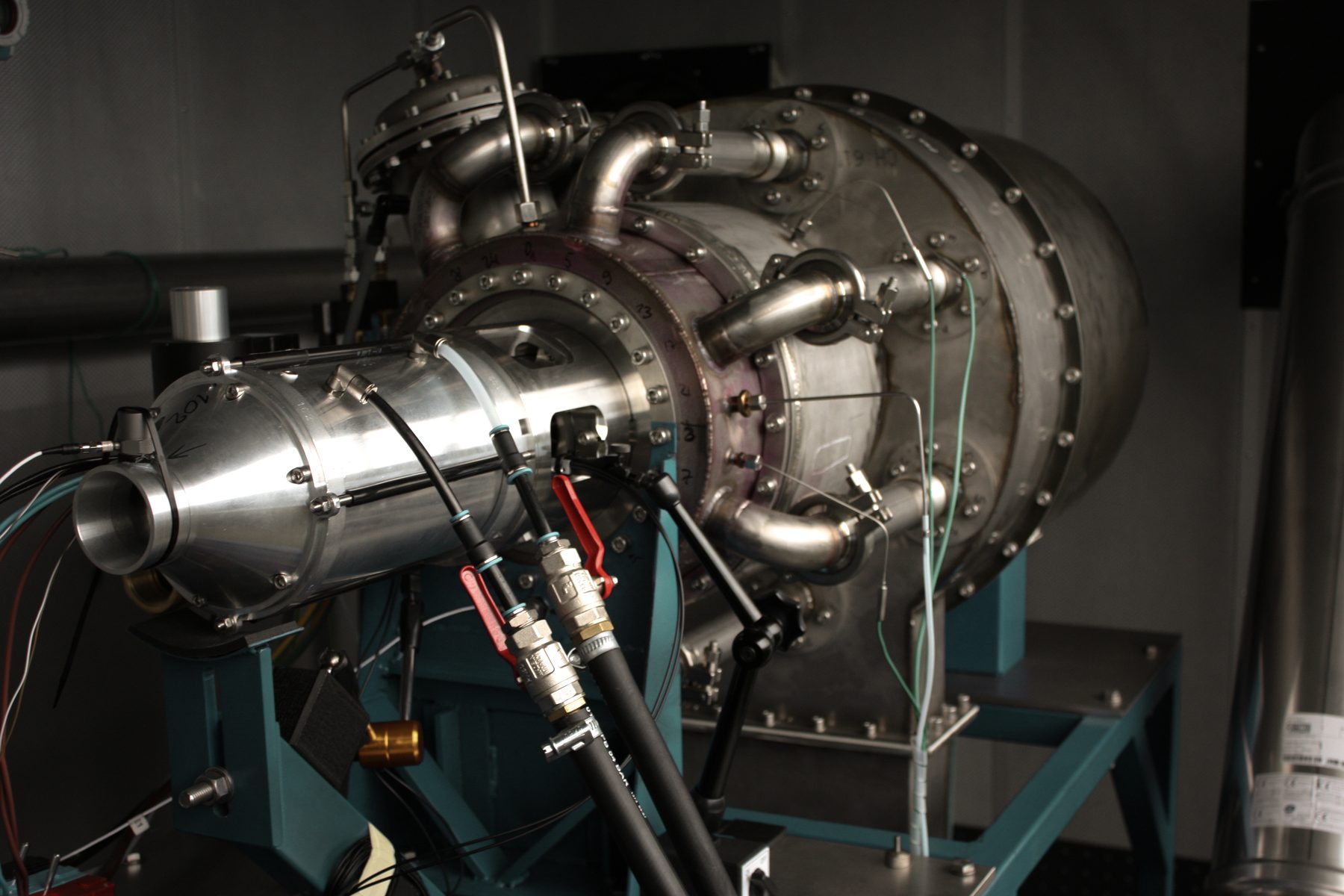
pyropower GmbH is an energy technology company from Lusatia, Germany. We develop externally fired micro gas turbines and pyrolysis systems and bring this plant engineering experience to the question of how a site identifies and deliberately changes its energy dependencies.
Both stages are designed for plants that need process heat, steam, cooling or drying and where downtime is expensive: food and beverage, plastics and metal, wood and drying, industrial laundries, throughout Germany, typically with 50 to 1,000 employees.
Technical responsibility: Sebastian Kießling, Co-Founder & Co-CEO.
FAQ
Frequently asked questions about backup power, backup supply and energy security
01 We already have an energy audit. Do we still need this?
Yes, because it answers a different question. Your audit shows where you can save energy. Stage 1 shows what keeps running during a disruption. We use your existing audits and contingency plans for this, which saves you time and money.
02 Our grid practically never fails. Why should we have this reviewed?
The grid is rarely the problem. Most interruptions originate inside your own plant: a bottleneck, a transfer switch that has never been tested, a supplier who terminates a contract. Stage 1 shows what your production can withstand in that case.
03 What belongs in a backup power concept for production?
Critical loads with power rating and starting behavior, transfer conditions, fuel autonomy, auxiliary media such as controls, cooling and compressed air, and a restart plan. A generator in the yard is not yet a concept.
04 How long does an industrial plant need to be able to bridge a power outage?
There is no general legal requirement. Germany's Federal Office of Civil Protection and Disaster Assistance (BBK) recommends 72 hours without external refueling for critical infrastructure operators; for other businesses, the duration follows from the process. We assess 4, 24 and 72 hours as analysis horizons, not as a guarantee.
05 What happens to process heat if the gas supply fails?
That depends on whether there is an alternative heat supply and which operating states are permissible for how long. Often, both are missing from the documentation. Stage 1 identifies which processes can run without gas and for how long, and where an alternative is missing.
06 Is a PV system with battery storage enough as a backup power supply?
Only if the system is capable of island operation and switching over to your critical loads has been technically verified. A high annual self-consumption rate says nothing about what runs during a disruption.
07 What proof of energy supply do customers, insurers or banks require?
Automotive customers under IATF 16949 require contingency plans that cover supply interruptions; insurers ask about precautions for business interruption coverage; banks ask about operational capability before financing. Stage 1 provides an energy engineering record you can add to your documentation. It is not a certification.
08 Is Stage 1 an expert report or a certification?
Neither, and that is intentional. Stage 1 is an engineering review to support your decision. We evaluate your documents, talk with plant management and engineering and visit the plant if needed. Afterwards, you know what keeps running in an emergency and have an action list in hand. Measurements, load tests and official expert reports are not included. Where they would be worthwhile for you, the short report says so.
09 What happens to our documents?
Your documents remain confidential. We use them only for this assignment and delete them after completion on request. We exchange technical documents only after a confidentiality agreement is in place and via a secure channel. We name you as a reference only with your written approval.
010 What will I have in hand after Stage 1?
A reliable answer to whether your backup supply holds up in an emergency. Plus the most urgent areas for action and first to-dos for your site. This involves four to five engineer days. If your topic is smaller, we will tell you in the initial call.
 info@pyro-power.com
  +49 355 866 870 82
  pyropower GmbH