

Example 01
Verge along a footpath
A compacted, bare strip was restored with a biochar substrate. A few months later, the area is densely planted.
Image: Cecilia Lane
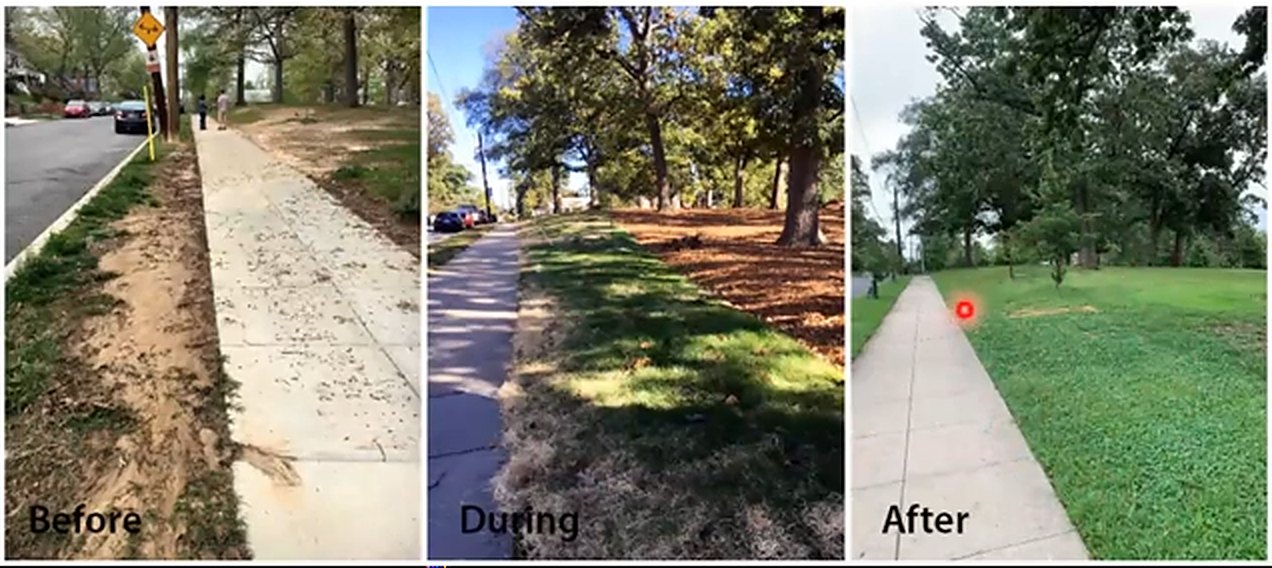 BeforeDuringAfter

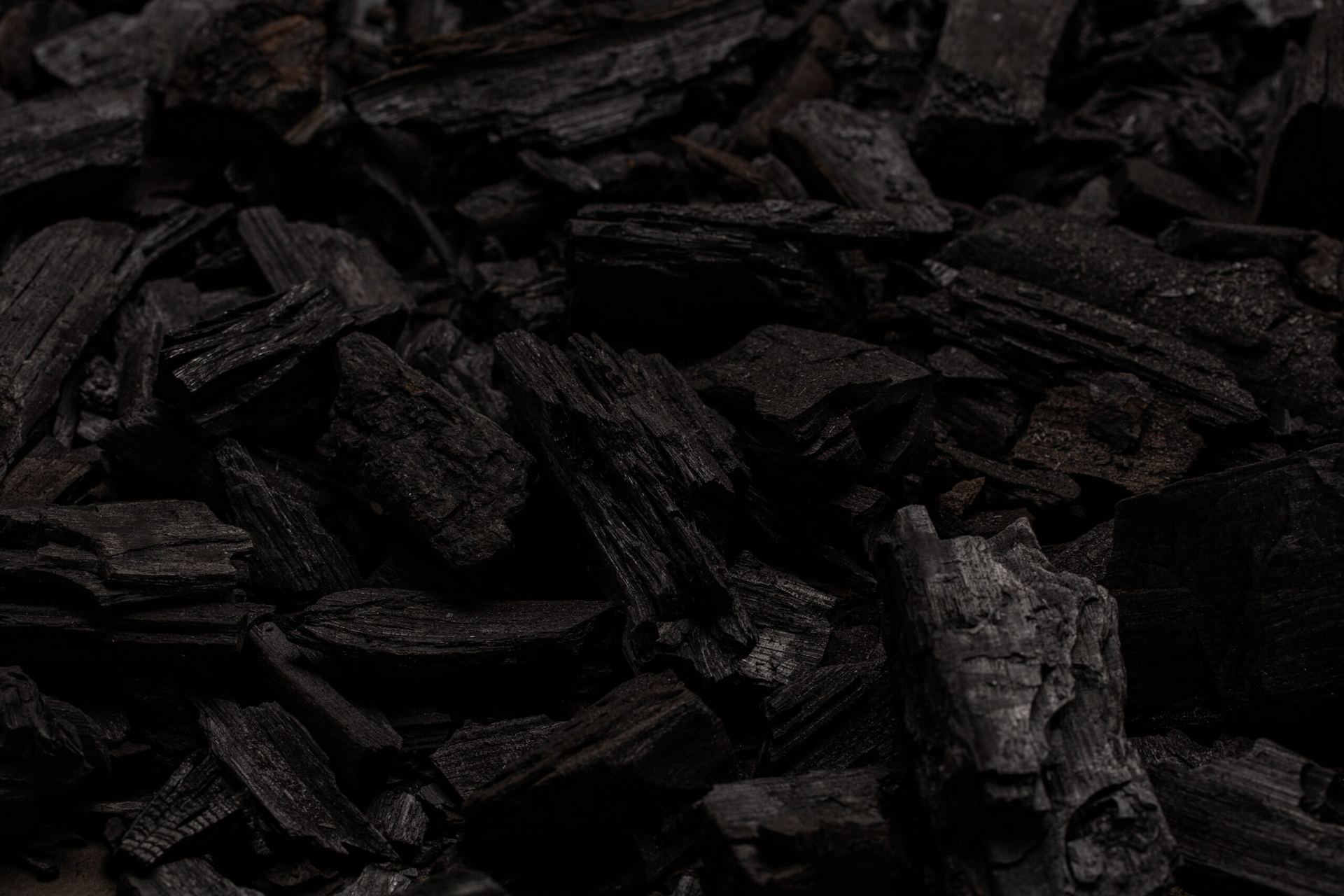
[ Biochar ]
From woody residues, for agriculture, growing media, building materials and industry.
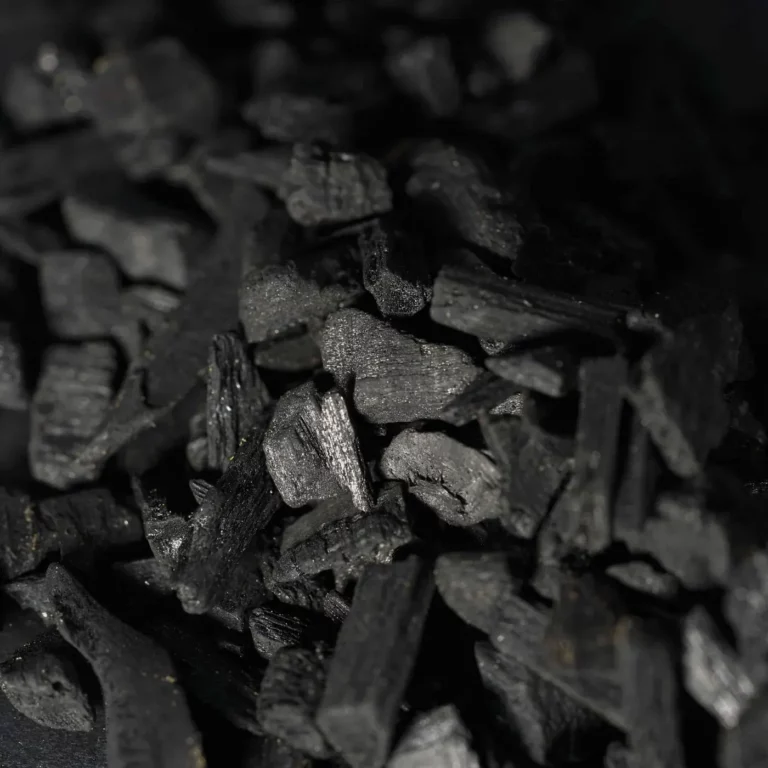
Biochar is produced by pyrolysis: biogenic residues such as wood are heated in the absence of oxygen. A large part of the carbon that the plants absorbed from the air as they grew is converted into a stable form. The result is a porous material with a large internal surface.
This structure makes biochar useful in many applications: it stores water and nutrients, binds pollutants and can be incorporated into building materials and plastics. The principle is old: the black earth terra preta in the Amazon region owes much of its fertility to biochar worked into the soil.
This carbon makes biochar a CO₂ sink: depending on its carbon content, one tonne binds up to around 3 tonnes of CO₂ equivalent. If the carbon stays bound in its application and the whereabouts of the biochar are documented, this storage can be certified. If required, we take care of certification and marketing of the CO₂ certificates.
Personal
At pyropower, you talk to the people who produce your biochar. Lucie Töpfer has been working on pyrolysis and biochar since her university studies, and Sebastian Kießling has been developing decentralised energy plants for more than 15 years.
Turning what is left over into something valuable.
Our answer is a system in which nothing is lost. Wood residues from the region are turned into electricity, heat and biochar at the same time. The value stays in the region. That is why we sell our biochar ourselves: you deal directly with us, without intermediaries.
Under the microscope
During pyrolysis, the cell structure of the wood is preserved as a fine pore network. A single gram of biochar can have an internal surface area of several hundred square metres.

100×magnified
 1Growth2Water storage3Humus4Loosening5Nutrients6Groundwater protection
Effect
In soil, the pore network acts as a reservoir for water and nutrients.
The effect depends on the soil, on how the biochar is worked in and on how it is prepared.
Biochar is well researched. Meta-analyses and pilot plants show what it can achieve in soil, compost, concrete and wastewater.
+51%
more field capacity on average in coarse, sandy soils. How strong the effect is depends on the soil type.
−36%
ammonia, −50% nitrous oxide and −54% methane on average when biochar is added during composting.
+7%
compressive strength after 28 days on average when up to 2.5 percent of the binder is replaced with biochar.
91%
average removal of 12 micropollutants with activated biochar in a pilot plant at a wastewater treatment plant in Luxembourg.
Source: Interreg project WOW!, 2023
Example
Two examples that show what biochar can change in soil. Move your mouse over the images.
BeforeDuringAfter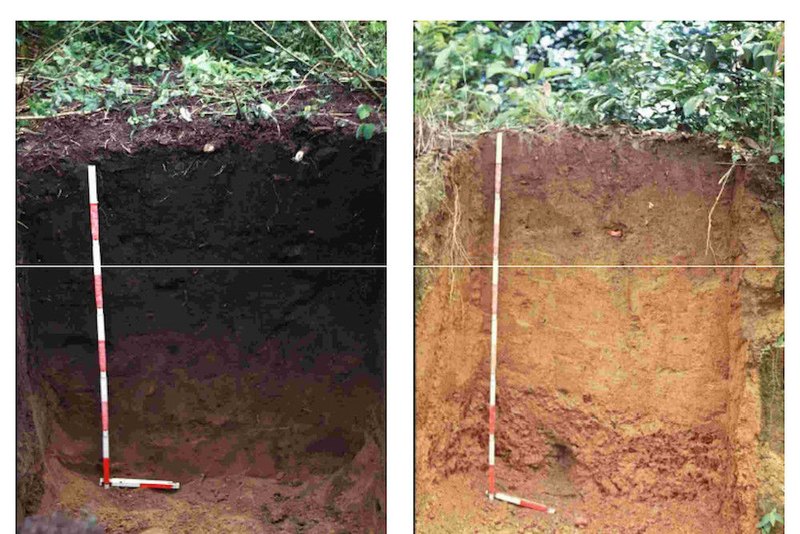 WithoutbiocharWithbiocharVS
Examples for illustration. How strongly biochar works depends on soil, climate, preparation and care.
Every industry has its own requirements for quality, grain size and quantity. The industry pages describe effects, fields of application and research results in detail.
On top of that, there are 51 further applications, from filters to batteries.
Based on H.-P. Schmidt: 55 uses of biochar, Ithaka Journal 2012.

We produce our biochar in line with the EBC standard and make its quality transparent for you.
Our biochar at a glance. Tell us the quantity and delivery location, and we will get back to you with an offer and the analysis values.
 €460per big bag
Request a big bag, sample or data sheet
Non-binding. We usually reply within two working days.
Biochar is a carbon-rich material produced from biogenic residues by pyrolysis. The carbon that the plants previously absorbed from the air is converted into a stable form.
As a soil improver and substrate additive, as feed char and bedding, in tree substrates following the sponge city principle, as an additive in concrete, asphalt and plastics, and as a filter and adsorption medium.
We produce in line with the requirements of the European Biochar Certificate (EBC). Certification is per production site. Which class is achieved depends on the residue used. You will receive the current status and the analysis values with the offer.
The price depends on EBC class, grain size, preparation and quantity. We quote prices on request and agree fixed contingents for annual quantities.
The stable fraction of the carbon remains bound for centuries. Decisive factors are the pyrolysis temperature and the ratio of hydrogen to organic carbon (H/Corg), which must be below 0.7 according to the EBC.
If the carbon stays bound in its application and the whereabouts of the biochar are documented, the carbon storage can be certified as a C-sink according to a recognised standard. An independent body verifies this, and the certificates are recorded in a registry.
Yes. With the Pyro-ClinX pyrolysis plant you produce around 75 kg of biochar per hour while generating 150 kW of power (gross) and max. 450 kW of heat. You can use your own wood residues for this.
Yes. If you wish, there are two options for operators of a Pyro-ClinX: we market the biochar on your behalf or buy it at an agreed price. We provide the conditions on request.
Terra preta is a very fertile black earth from the Amazon region. Its fertility is largely due to biochar worked into the soil. The principle is a model for today's soil applications.
The EBC distinguishes classes by intended use: EBC-FeedPlus for feeding and bedding, EBC-AgroBio for organic farming, EBC-Agro for agriculture and horticulture, EBC-Urban for tree substrates and green spaces, EBC-Materials for products with consumer contact and EBC-Basic for industrial processing. Which class your biochar achieves depends on the residue used. We define the specification together with you.
pyropower supplies biochar in line with the EBC standard, with deliveries starting in December 2026, for example in XXL big bags. Which EBC class is achieved depends on the feedstock; all classes up to feed grade are possible. Enquiries for agriculture, livestock farming, building materials and industry go directly through the contact form.


 info@pyro-power.com
 +49 355 866 870 82
 pyropower GmbH