
FLOX: What Flameless Oxidation Is and Why We Use It for Pyrolysis Gas
08.10.2026
FLOX: What Flameless Oxidation Is and Why We Use It for Pyrolysis Gas
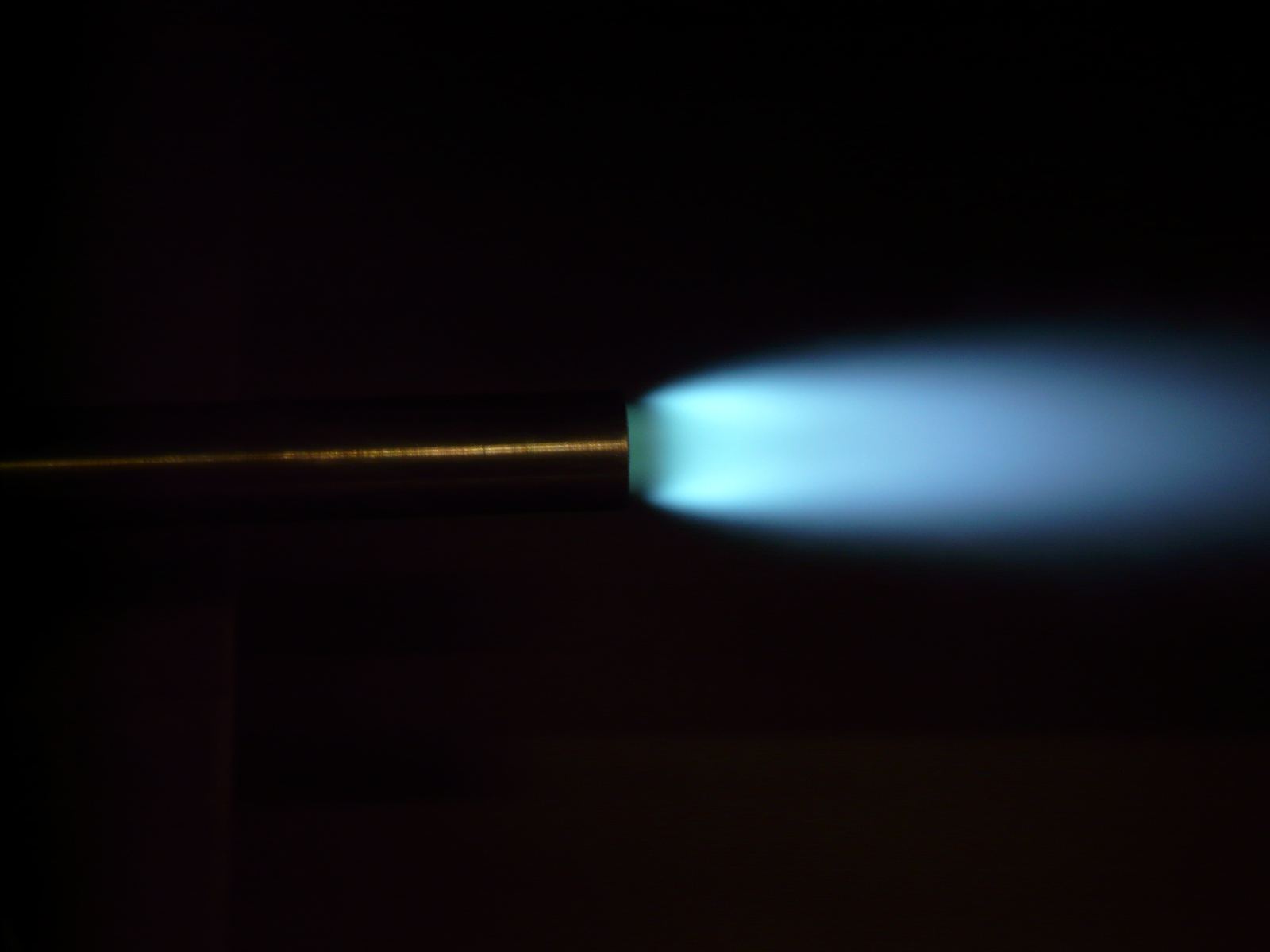
In short: FLOX stands for flameless oxidation. Hot exhaust gas is recirculated into the combustion zone so strongly that the fuel reacts without a visible flame, distributed throughout the combustion chamber. Without temperature peaks, significantly fewer nitrogen oxides are formed.
Pyrolysis gas is a demanding fuel. Its composition and calorific value vary with the residue, its moisture and the operating point. At the same time, combustion should run cleanly, form few nitrogen oxides and heat the downstream heat exchanger evenly. In the Pyro-ClinX we solve this with flameless oxidation, FLOX for short.
In this article I explain what lies behind the process, why it suits pyrolysis gas so well and where its limits are.

Sebastian Kießling
Managing Director Technology, pyropower GmbH

Key points at a glance
- In flameless oxidation, hot exhaust gas is strongly recirculated into the combustion zone. The reaction is spread over a large volume and there is no visible flame front.
- Because there are no local temperature peaks, significantly fewer thermal nitrogen oxides are formed.
- The process burns stably even when the gas quality changes. That suits pyrolysis gas well.
- The even temperature protects the high-temperature heat exchanger that drives the micro gas turbine.
- To start, the combustion chamber needs a minimum temperature. Until then, the FLOX burner runs in flame mode.
How does flameless oxidation work?
In a conventional flame, fuel and air meet in a thin reaction zone. It gets very hot there, often well above 1,500 °C. These temperature peaks are the main cause of thermal nitrogen oxides.
With FLOX, the combustion air is injected at high velocity. It entrains large amounts of hot exhaust gas from the combustion chamber and mixes with it before it meets the fuel. The oxygen content drops, but the temperature of the mixture is already above the ignition temperature. Oxidation then no longer takes place at a flame front but is distributed throughout the volume. The combustion chamber glows evenly and no flame is visible.
The principle was described by Joachim A. Wünning and Joachim G. Wünning (1997). In research it is also known as MILD combustion; Cavaliere and de Joannon (2004) summarised its fundamentals.
Why fewer nitrogen oxides are formed
Thermal nitrogen oxides form mainly where it is locally very hot. Because FLOX avoids these peaks, nitrogen oxide levels stay low even with strong air preheating. This is an important advantage, because preheated air improves efficiency but drives nitrogen oxides up in a normal flame.
Flame or FLOX? The comparison
| Feature | Conventional flame | FLOX |
|---|---|---|
| Reaction zone | thin flame front | distributed throughout the combustion chamber |
| Temperature peaks | high | low |
| Nitrogen oxides with preheated air | rise sharply | stay low |
| Visibility | visible flame | no visible flame |
| Start-up | immediate | needs a hot combustion chamber |
Where does FLOX come from?
The process was developed in the 1990s for industrial furnaces, for example for the heat treatment of steel. There it allowed strong preheating of the combustion air without nitrogen oxides rising. Since then, flameless oxidation has also been researched for other applications, for example for gas turbines and for fuel gases of varying composition.
Why does FLOX suit pyrolysis gas?
Stable with changing gas quality
Pyrolysis gas consists mainly of carbon monoxide, hydrogen, methane and carbon dioxide. The proportions change with the wood, its moisture and the temperature in the reactor. A flame reacts sensitively to this; it can become unstable or lift off. Flameless oxidation is more robust here because the reaction takes place in the hot, mixed volume anyway.
Even heat for the heat exchanger
The high-temperature heat exchanger sits downstream of the FLOX combustion chamber. It heats the clean, compressed air that drives the micro gas turbine. An even temperature distribution without hot spots protects the material and keeps heat transfer constant.
Warm turbine exhaust air as combustion air
The air leaving the turbine is still hot and contains a lot of oxygen. In the Pyro-ClinX it is fed into the combustion chamber as preheated combustion air. This keeps the energy in the process, and FLOX ensures that the strong air preheating does not lead to more nitrogen oxides.
How does FLOX work in the Pyro-ClinX?
The gas path is short: in the pyrolysis reactor, woody residues produce pyrolysis gas. It flows directly into the FLOX combustion chamber, where it is fully oxidised. The hot flue gas transfers its heat to the turbine air in the high-temperature heat exchanger, then to the heating water in the economiser. Only then does it leave the plant via the stack.
The micro gas turbine never comes into contact with the pyrolysis gas or the flue gas because it is externally fired. Only clean, hot air flows through it.
Limits of the process
Flameless oxidation needs a hot combustion chamber. On start-up, the FLOX burner therefore runs in flame mode first until the required temperature is reached. In addition, the combustion chamber must be designed so that exhaust gas recirculation works at all load conditions. That is engineering work we have done in-house for the Pyro-ClinX.
Frequently asked questions
What does FLOX mean?
FLOX is short for flameless oxidation. Fuel and air react without a visible flame, distributed throughout the combustion chamber.
Is flameless oxidation a form of combustion?
Chemically yes, the fuel reacts with oxygen to form CO₂ and water. The difference lies in the type of reaction: without a flame front and without temperature peaks.
Why are fewer nitrogen oxides formed?
Nitrogen oxides form mainly at very high temperatures at the flame front. With FLOX these peaks do not occur because the reaction is evenly distributed in the space.
What temperature does the FLOX combustion chamber of the Pyro-ClinX reach?
The pyrolysis gas is oxidised there at up to 1,200 °C.
Is FLOX the same as MILD combustion?
Very similar. MILD stands for Moderate or Intense Low-oxygen Dilution and describes the same principle from the perspective of combustion research.
Does FLOX need a special fuel?
No. The design of the combustion chamber is what matters. Natural gas, biogas or pyrolysis gas can be oxidised flamelessly.
Sources
- Wünning, J. A., Wünning, J. G. (1997): Flameless oxidation to reduce thermal NO-formation. Progress in Energy and Combustion Science 23, 81 to 94.
- Cavaliere, A., de Joannon, M. (2004): Mild combustion. Progress in Energy and Combustion Science 30, 329 to 366.
- Al-attab, K. A., Zainal, Z. A. (2015): Externally fired gas turbine technology: A review. Applied Energy 138, 474 to 487.
- Bridgwater, A. V. (2012): Review of fast pyrolysis of biomass and product upgrading. Biomass and Bioenergy 38, 68 to 94.
Download
Pyro-ClinX product brochure
Technical data, feedstocks, products and the course of a project at a glance (PDF).
Download brochure (PDF, German)
 info@pyro-power.com
 +49 355 866 870 82
 pyropower GmbH